
Power points mapped before the letters go in
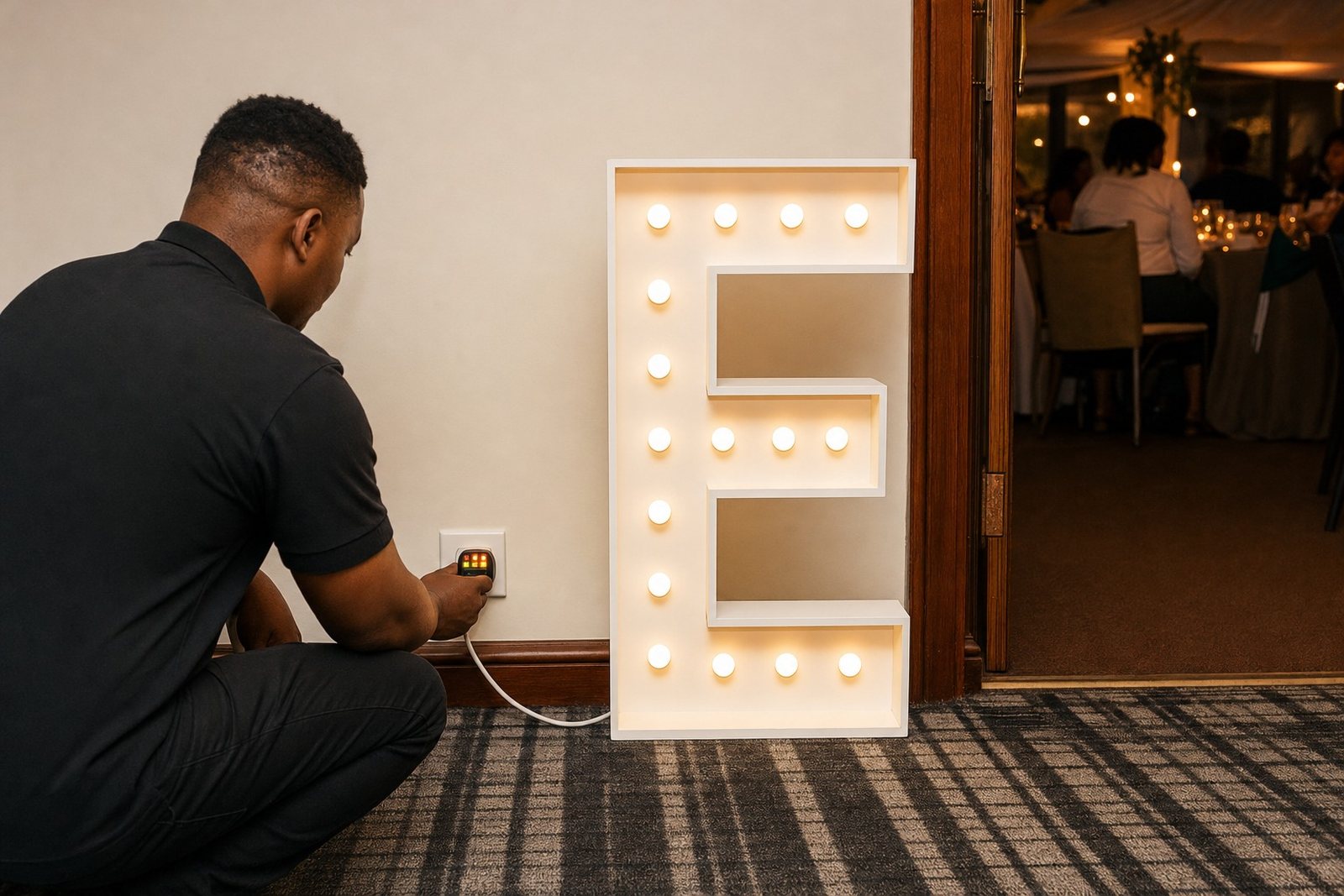
Before any LED lightbox, marquee letter set or illuminated sign is placed, the venue power points are checked against the planned layout. That includes wall sockets, floor boxes and the distances between the display area and the nearest safe supply. The aim is to avoid long cable runs across guest paths and to keep the display looking tidy from the start.
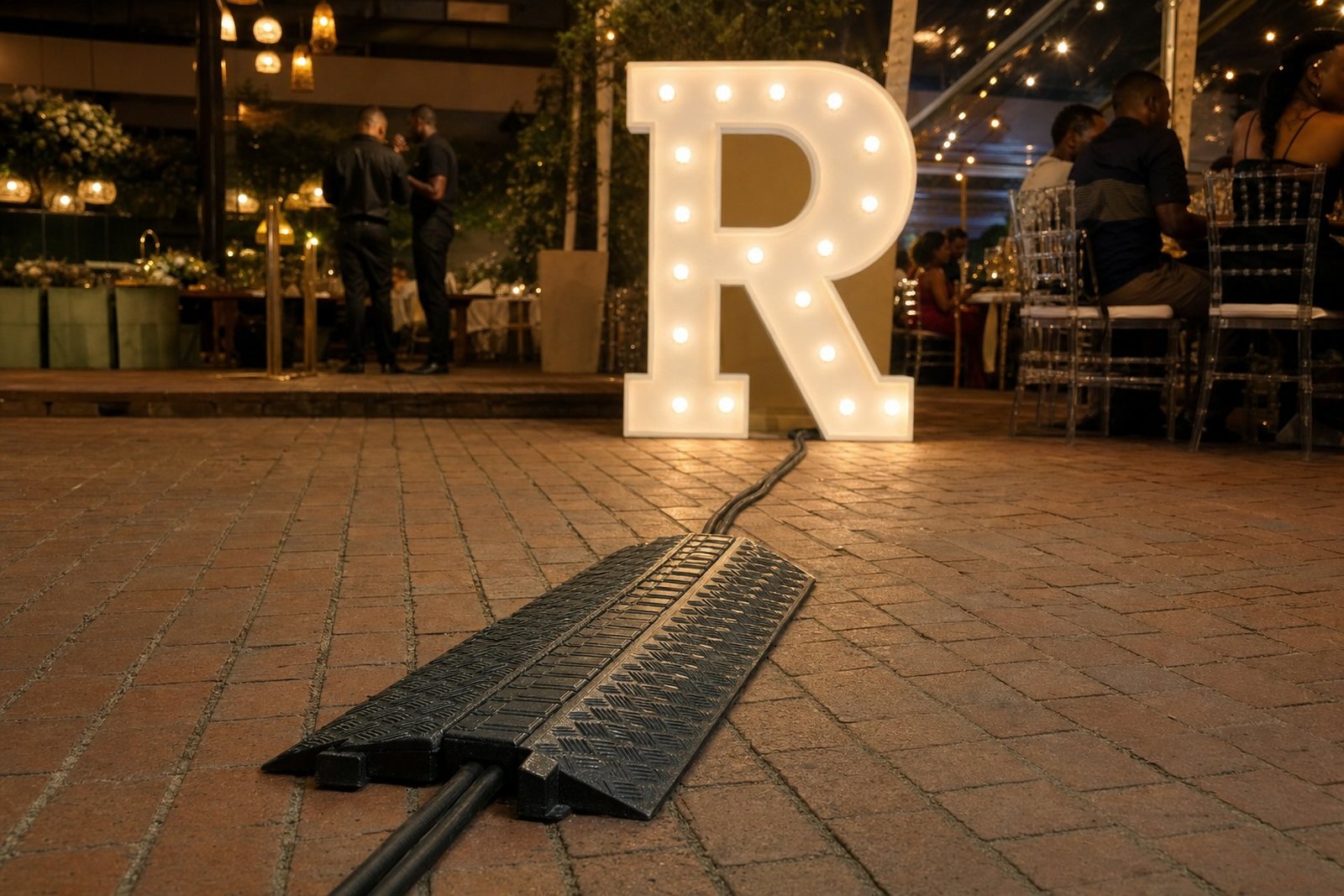
For indoor events, the check also looks at where the item will stand in relation to entrances, backdrops, dance floors and photo areas. Outdoor functions need a different approach, because weather, footing and cable protection all matter more. Our power check confirms where the display can stand, how it will be powered safely, and whether the setup will stay neat and workable in the venue.
- LED lightboxes for welcome boards, seating plans and brand names
- Illuminated letters for initials, words and stage features
- Neon-style signs for photo corners and statement walls
- Safe cable routing around tables, stands and walkways
- Placement checks for indoor and outdoor hire items
What the check covers on site
The visit or pre-event assessment looks at the number of points available, their position and whether the chosen display can run from nearby power without stretching the layout. It also checks the practical route from the socket to the item, with attention to corners, carpets, thresholds and foot traffic. If a display needs more than one illuminated section, each part is assessed for power access and placement.
Where the venue has a stage, wall feature or raised area, the setup plan takes the surface and load bearing into account. Some items stand on the floor, while others sit on plinths, frames or backdrop areas. The check helps decide which position gives the cleanest view and the least cable exposure. On tighter sites, a short cable route can make the whole installation neater and easier to manage.
- Socket position and reach to the display point
- Cable length needed for the chosen layout
- Floor protection and route planning
- Placement for safe guest movement
- Indoor and outdoor suitability for the item type
Set-up flow from delivery to switch-on
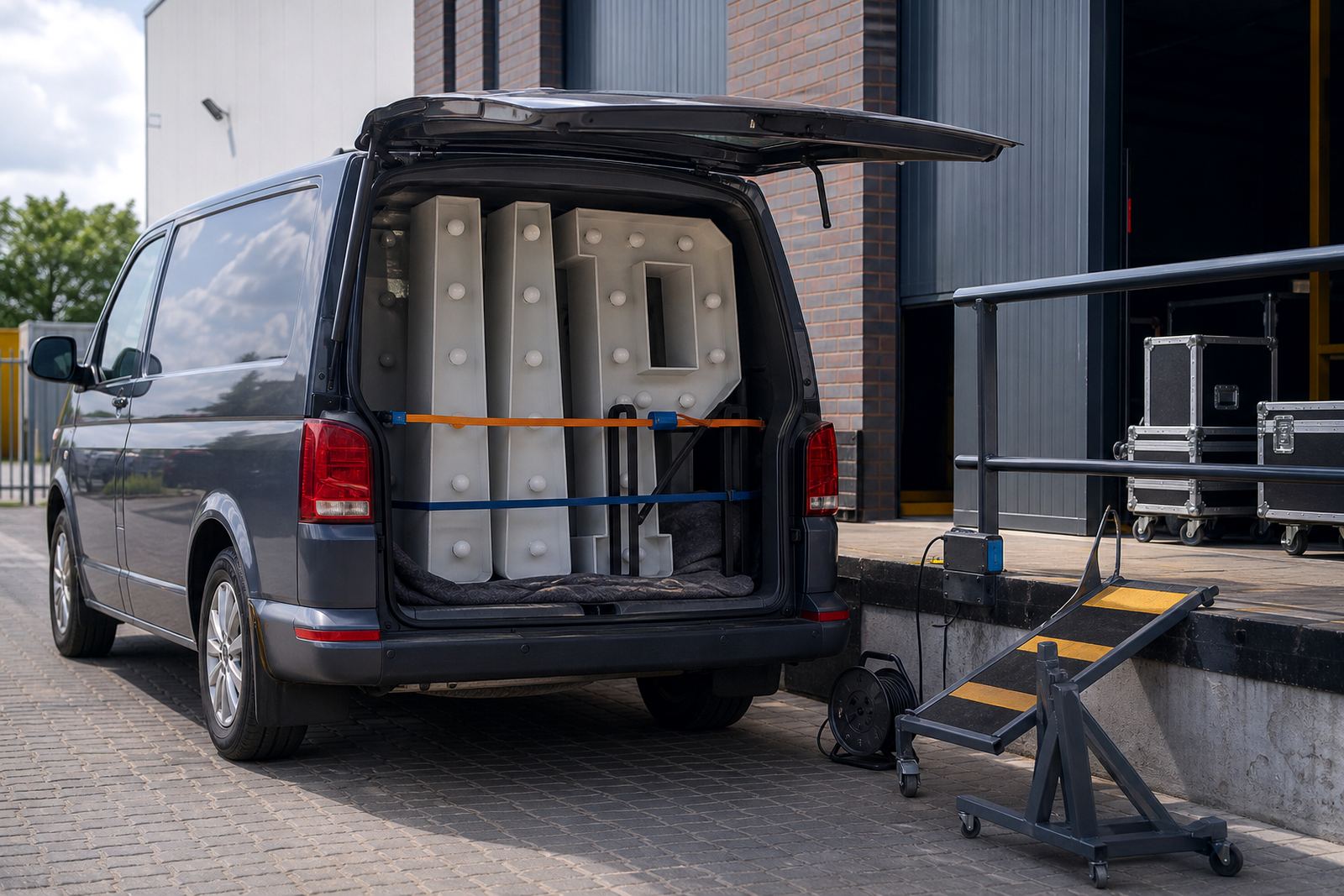
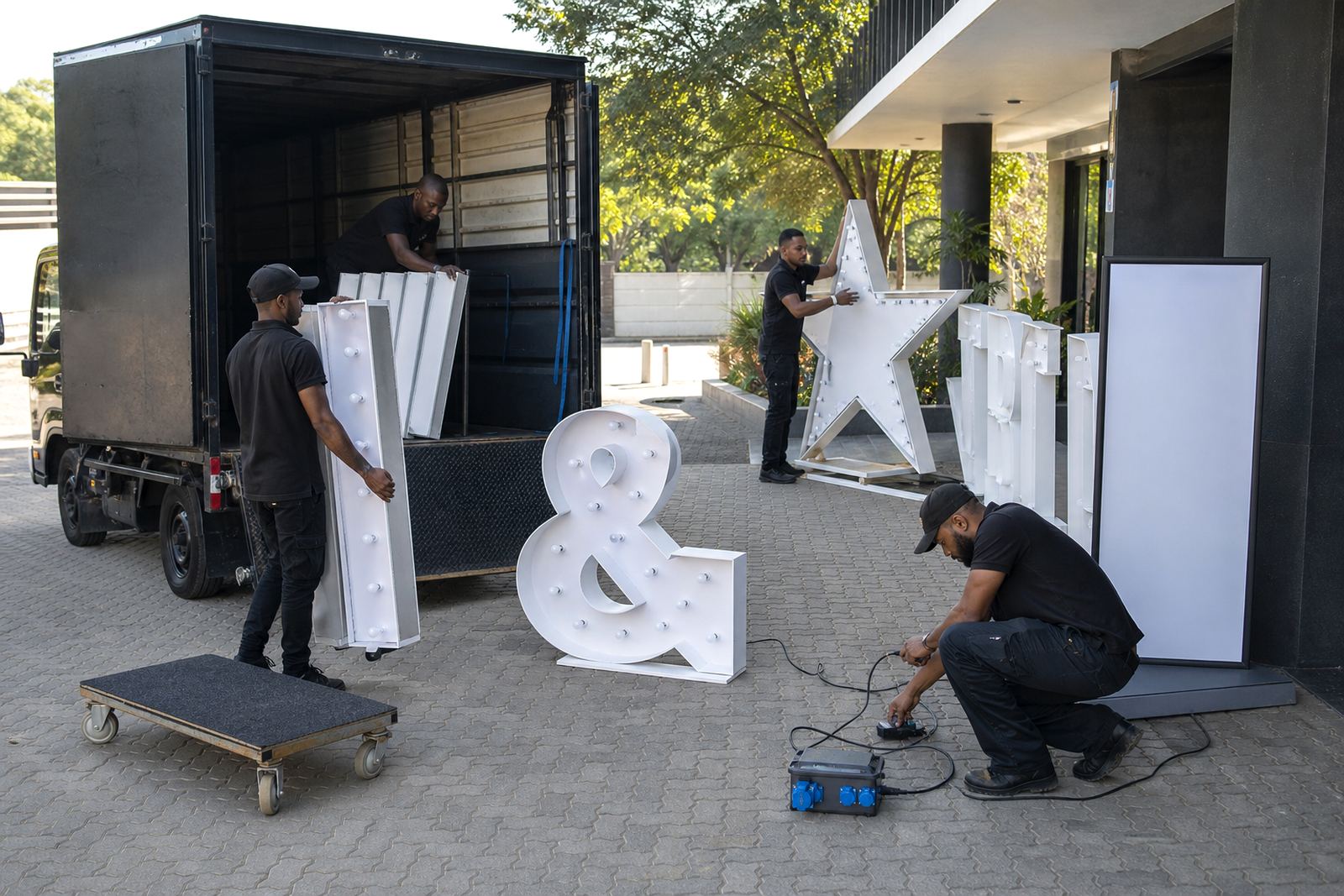
The service follows a clear set-up order. First the team confirms the exact item list, then delivery timing, then the venue access route. Once on site, the installation crew places the item, checks the power point match and routes the cable in the safest practical line. The final step is a check that the display sits level, faces the right direction and reads clearly in photographs.
For wedding and corporate work, that sequence matters because the display often has to fit around speeches, photo sessions or guest arrivals. A good layout is about more than light output, and we also consider sightlines and how the feature fits in the room. If a venue has multiple socket choices, the better one is selected for reach and presentation, not just the closest point.
- Delivery to the venue or collection point
- Placement against the agreed floor plan
- Power point matching and cable routing
- Positioning for visibility and neat finish
- Post-event collection after the function
Turnaround and pricing approach
Turnaround depends on the event date, venue access and the number of illuminated items needed. A power point check can be folded into the wider hire plan, especially where several signs, letters or lightboxes need to be installed together. Multi-item work usually needs more routing, more placement checks and a stricter layout plan than a single sign at the entrance.
Pricing is shaped by the number of items, the distance to the venue, the level of set-up needed and whether extra handling is needed for an outdoor area or a difficult access route. A short cable run at a Midrand function will usually be simpler than a larger out-of-town installation with multiple display points. Where the setup is more complex, the pricing follows the actual work involved rather than a flat guess.
- Single item checks for small venue layouts
- Multi-item installs for larger photo or stage areas
- Delivery and collection included in the plan
- Additional handling for longer cable routes
- Out-of-town logistics where the venue is outside Gauteng
Aftercare once the lights are in place
After installation, the setup is left ready for the event team or venue contact to use as planned. If the layout changes slightly on site, the display can be adjusted so the cable line stays tidy and the item keeps its position. The goal is to leave no loose sections across guest pathways and no awkward angle that spoils photographs.
Aftercare also covers collection at the end of the function, which matters for venues with strict access windows or late night clear-out rules. For functions in Johannesburg, Pretoria, Sandton, Centurion, Rosebank, Fourways or Durban, the collection plan is set around the venue’s own access rules. That keeps the hire moving without leaving the display stranded after the event has ended.
- Final positioning check before guests arrive
- Adjustment if the venue layout shifts
- Collection arranged around venue access rules
- Safe removal of cabling and display parts
- Return handling for all hired illuminated items
Key facts
| Service area | Midrand, Johannesburg, Pretoria, Sandton, Centurion and Durban |
|---|---|
| Item types | LED lightboxes, marquee letters and neon-style signs |
| Power check | Nearby socket position, cable reach and safe routing |
| Set-up | Indoor placement, outdoor placement and multi-item install |
| Collection | Post-event removal from venue |
| Logistics | Delivery, venue set-up and out-of-town hire support |