


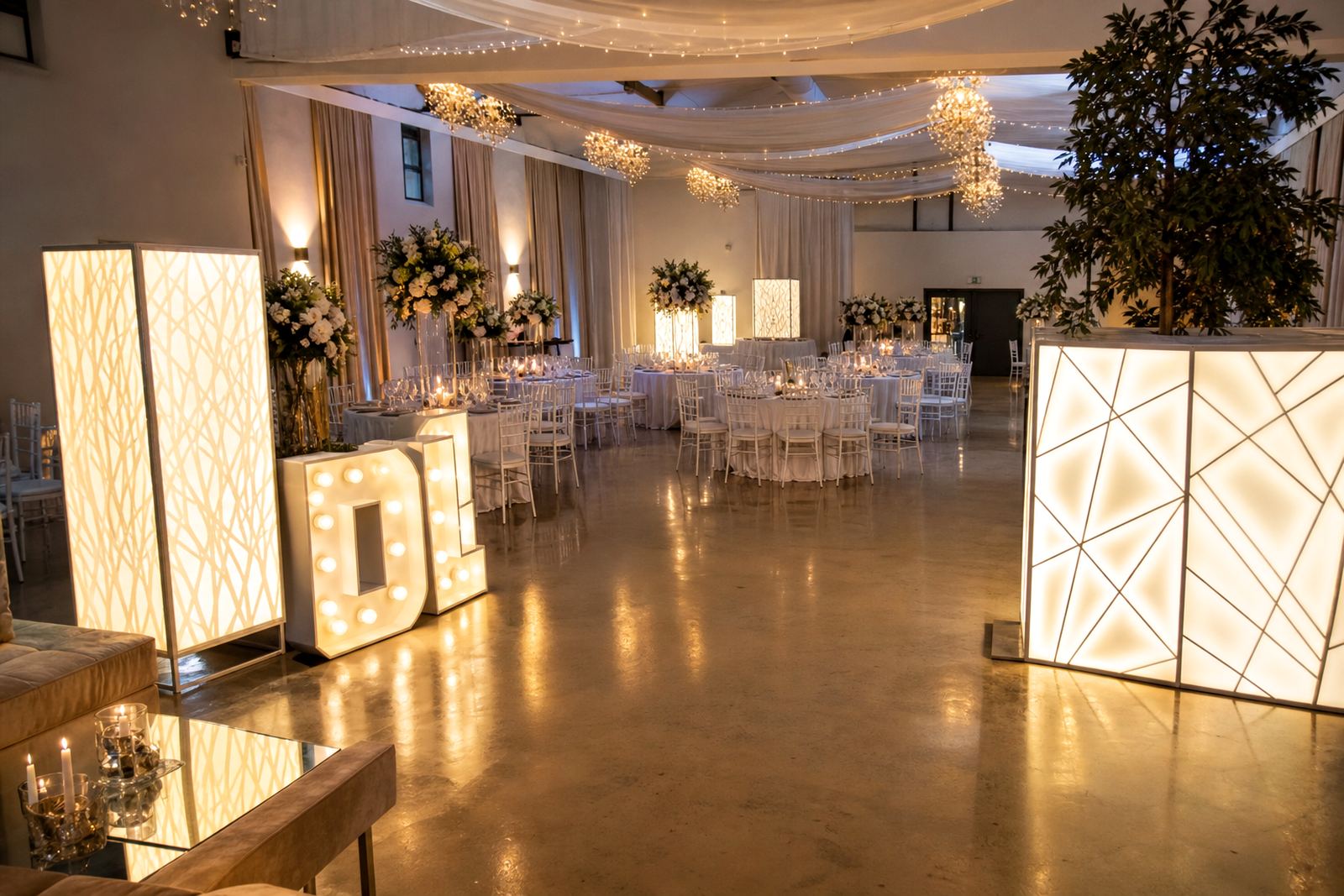
Picking the right glow for the room
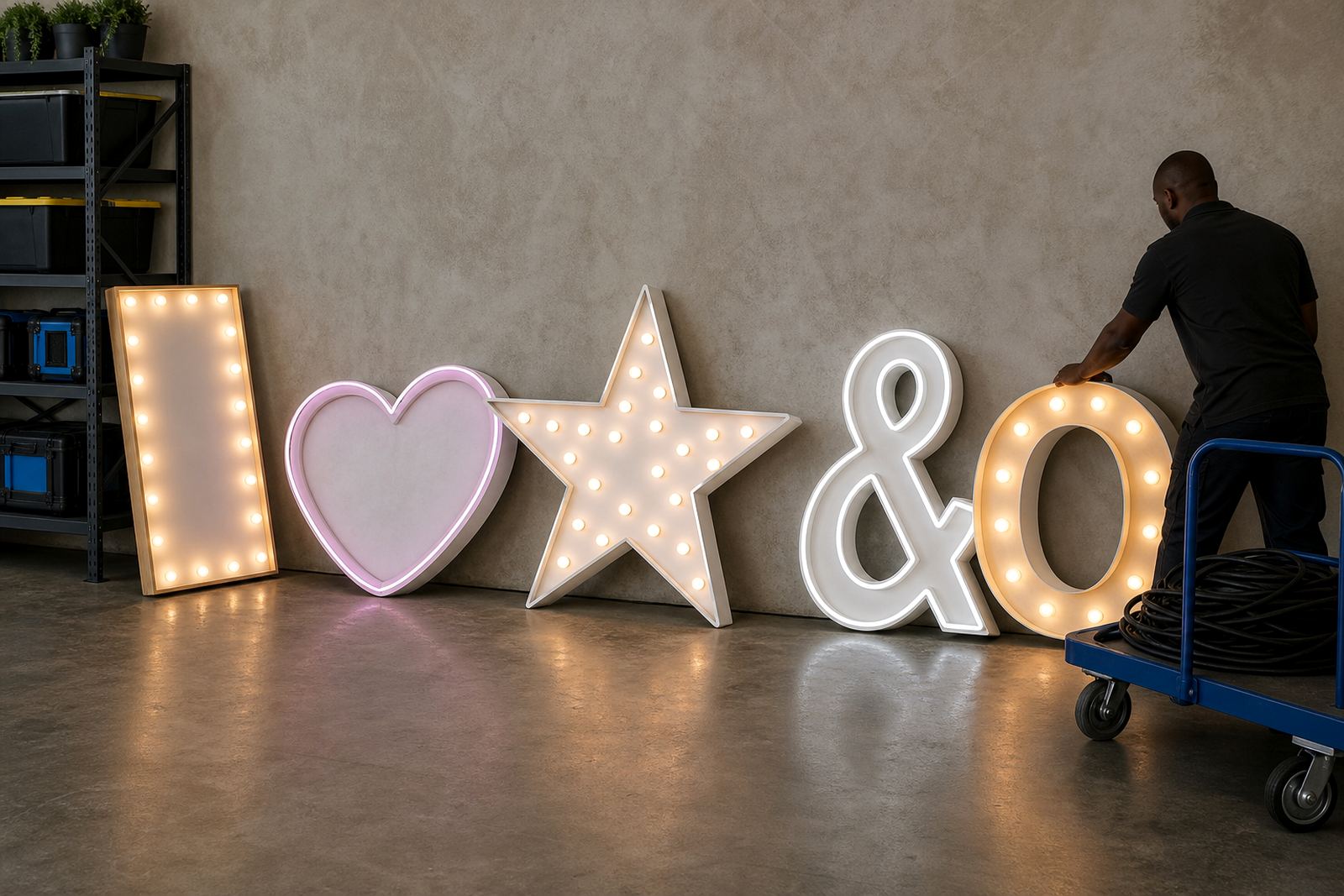
LED lightboxes, marquee letters and neon-style signs each work differently on a floor plan. A lightbox suits messages, table-side branding or a photo point, while large letters carry a name, initials or short word across a wall or stage edge. Neon-style signs are useful where the message must stay readable from a few metres away and still feel light in the room.
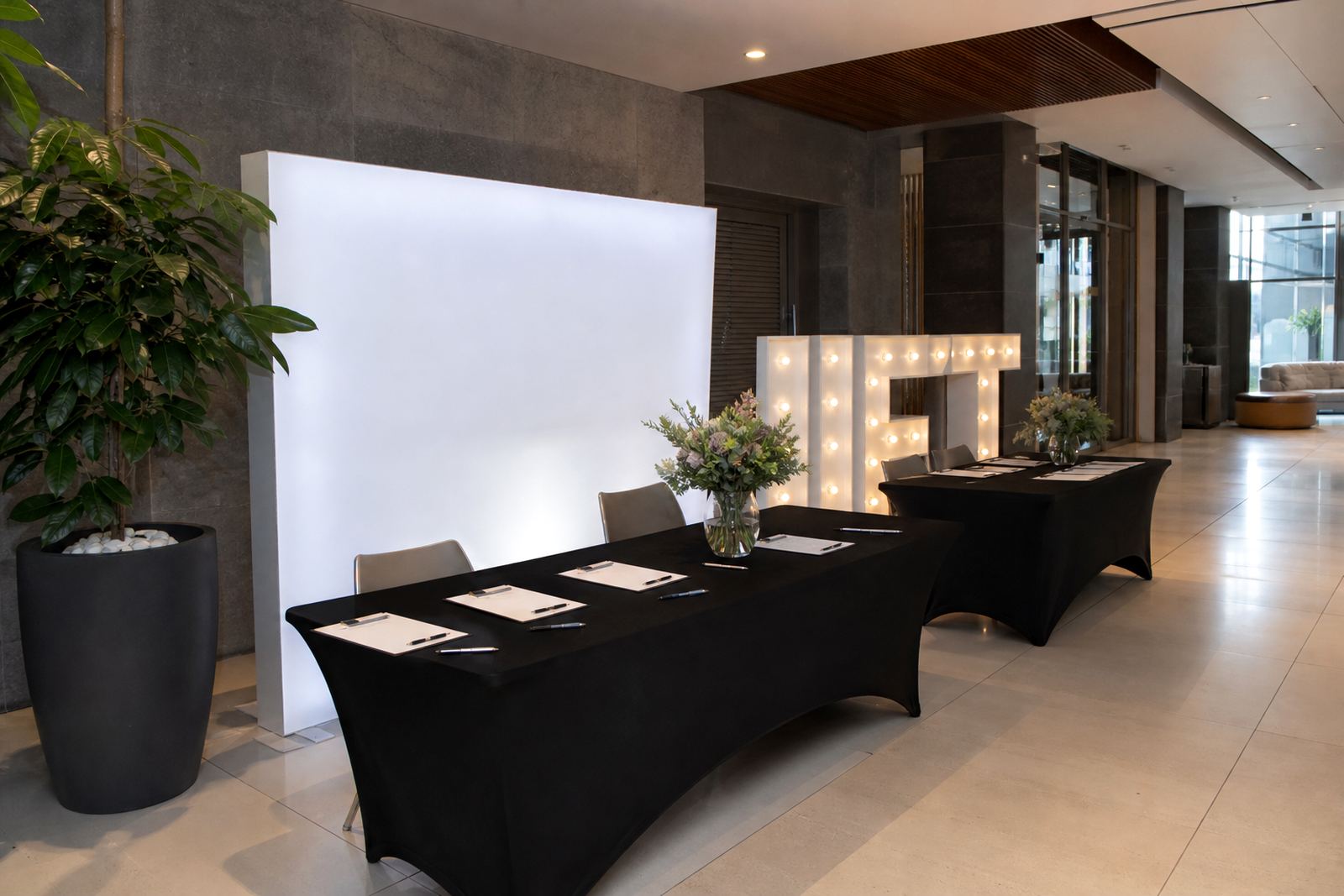
Start with the way guests move through the space. A welcome area needs clear sightlines. A dance floor edge needs height and presence without blocking traffic. A photo corner needs enough light for pictures but not so much glare that faces wash out. If the venue has a darker ceiling or heavy draping, brighter lettering can hold its shape better from across the hall.
How venue power points shape the layout
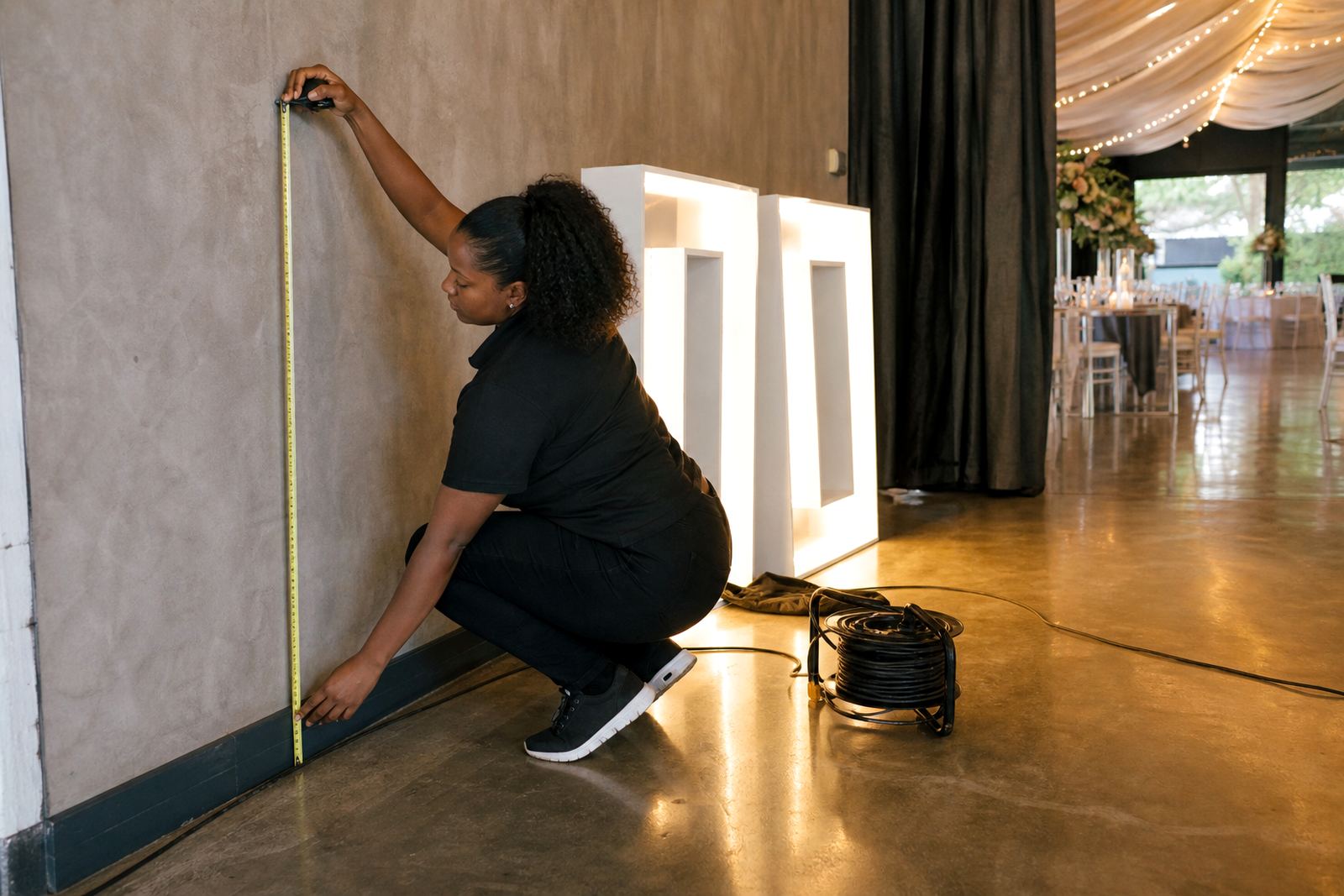
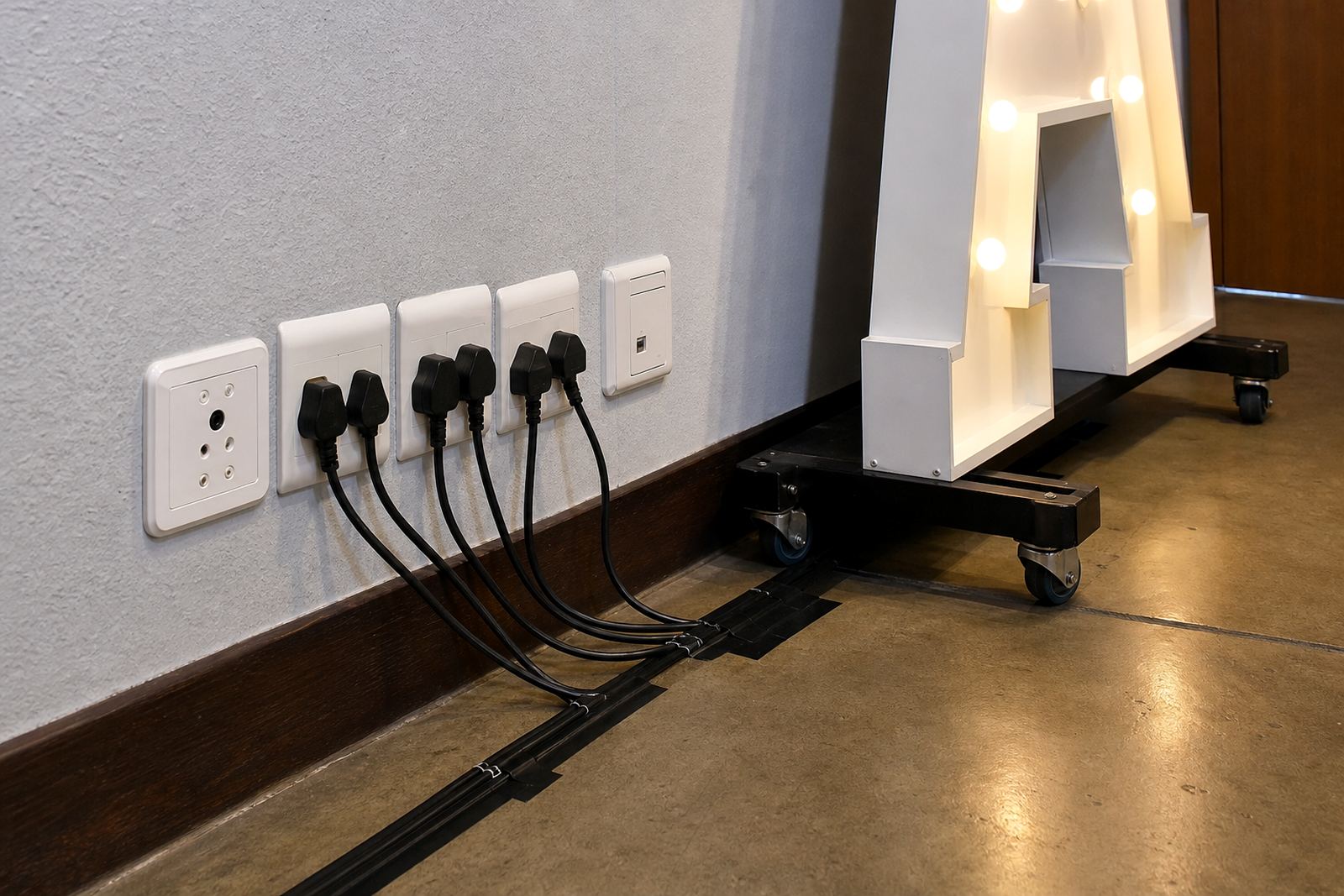
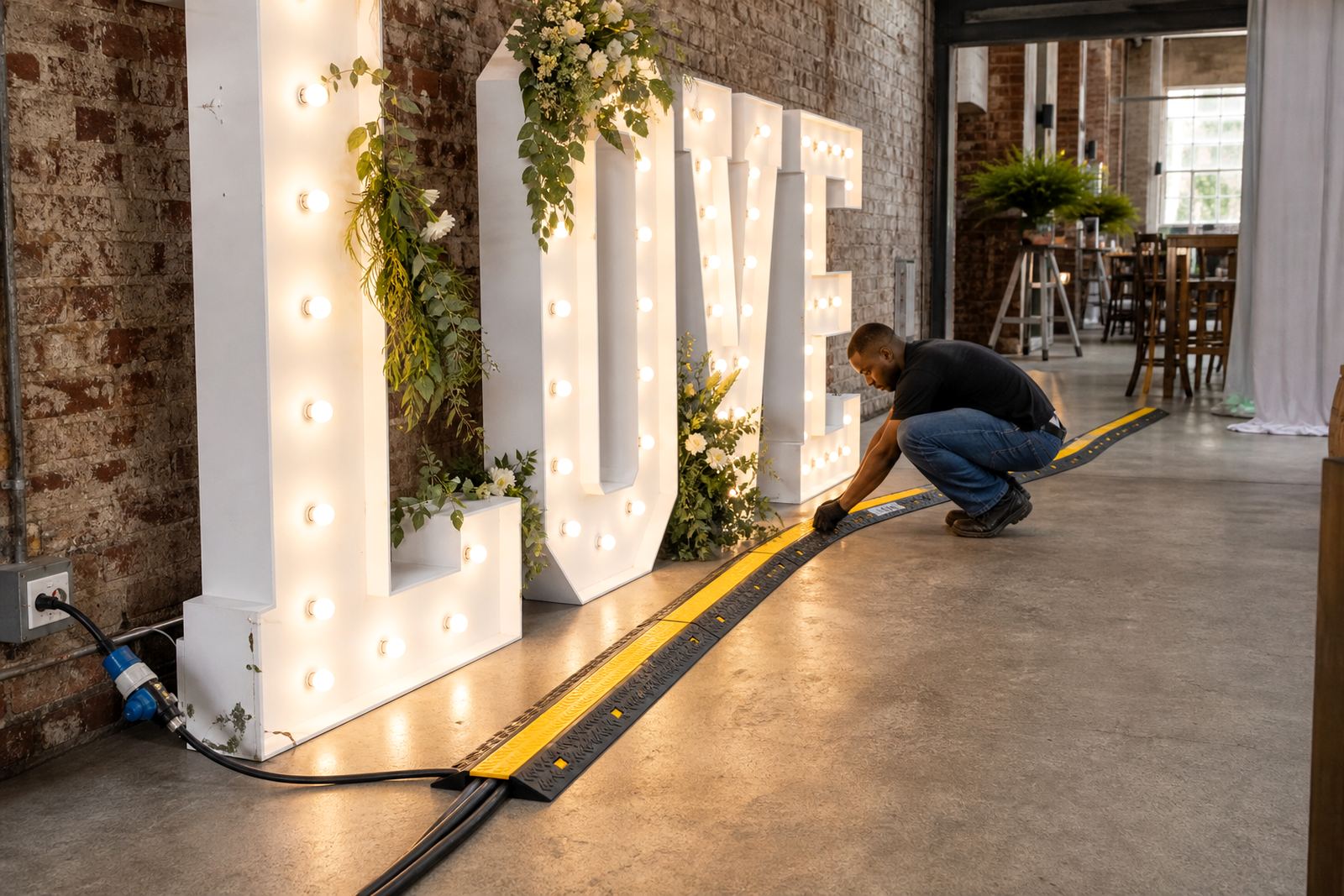
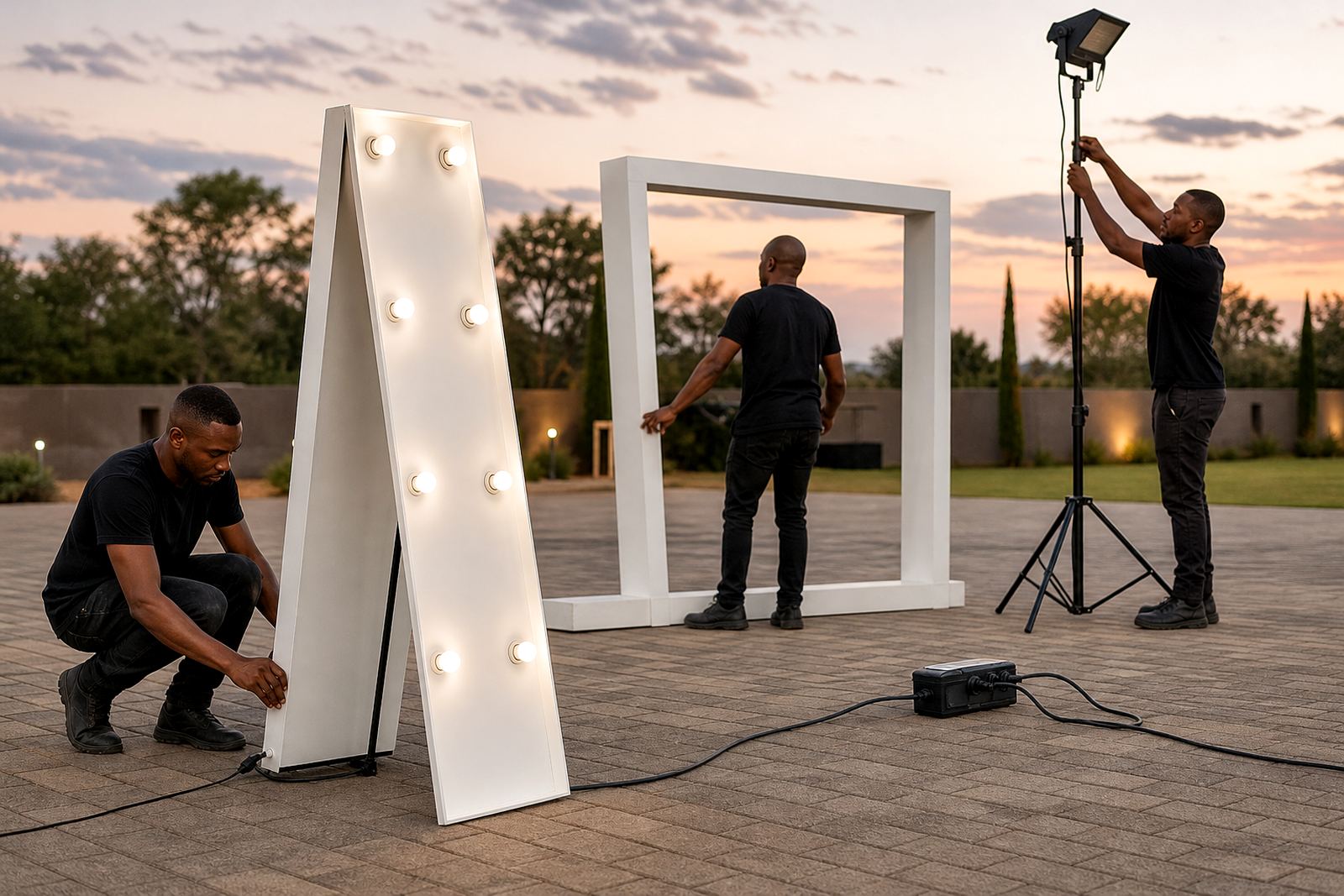
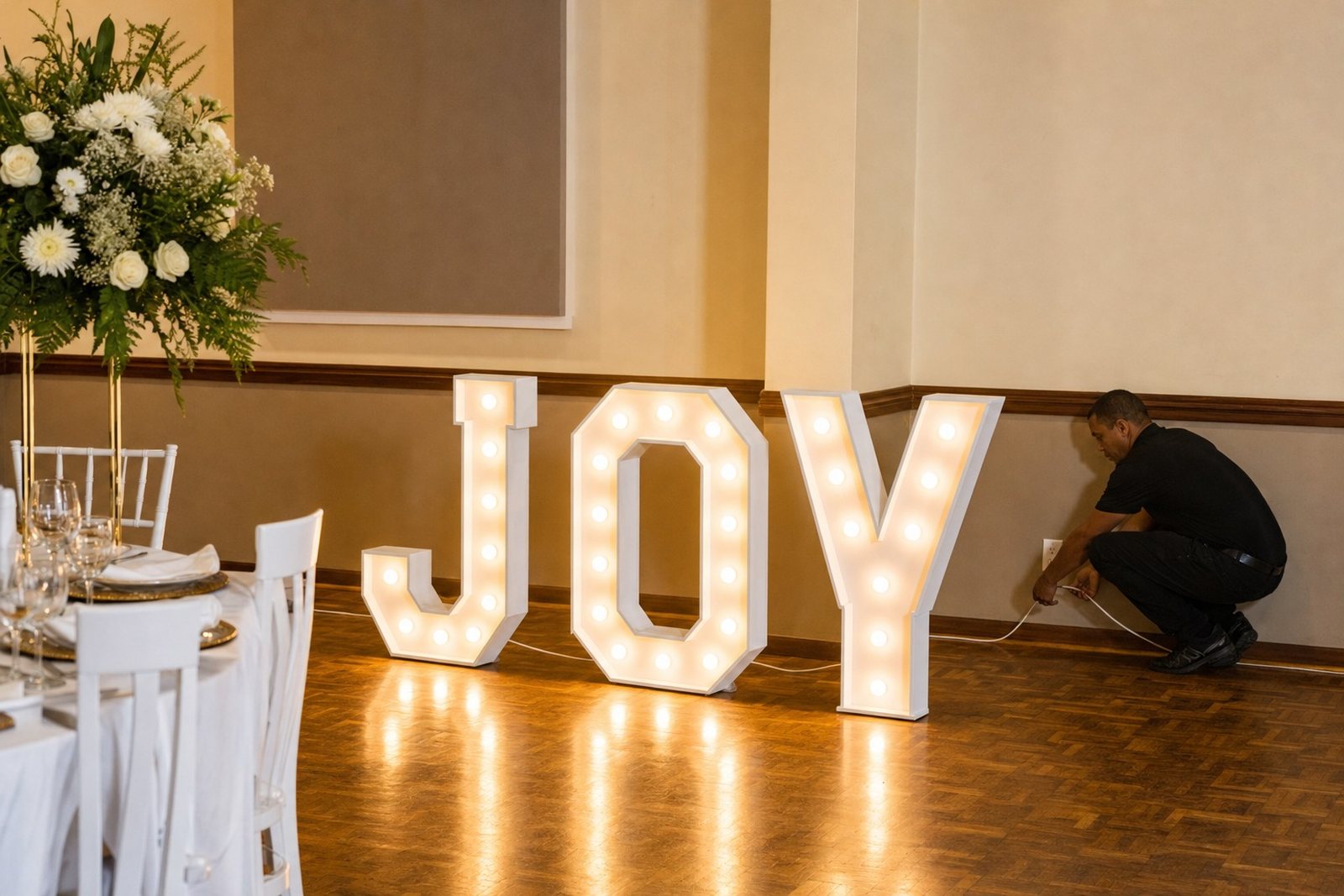
Most illuminated hire items need a sensible power plan before set-up begins. The location of venue sockets, the distance to the display point and the route for cables all affect where the item can sit. A good layout keeps leads away from walking lines, doorways and service paths, with tidy routing that does not press against furniture or trip edges.
Power points also affect how many items can be grouped together. A single feature wall may work from one side of the room, but a longer run of letters or a mixed display needs the load spread neatly across the space. For outdoor placements, shelter and cable protection matter just as much as visibility, especially where wind, damp ground or uneven paving are involved.
- Check where sockets are placed in relation to the display zone
- Leave space for safe cable routing and final adjustments
- Leave walkways open so staff and guests can move around safely
- Use the venue floor plan to avoid blocking exits or service doors
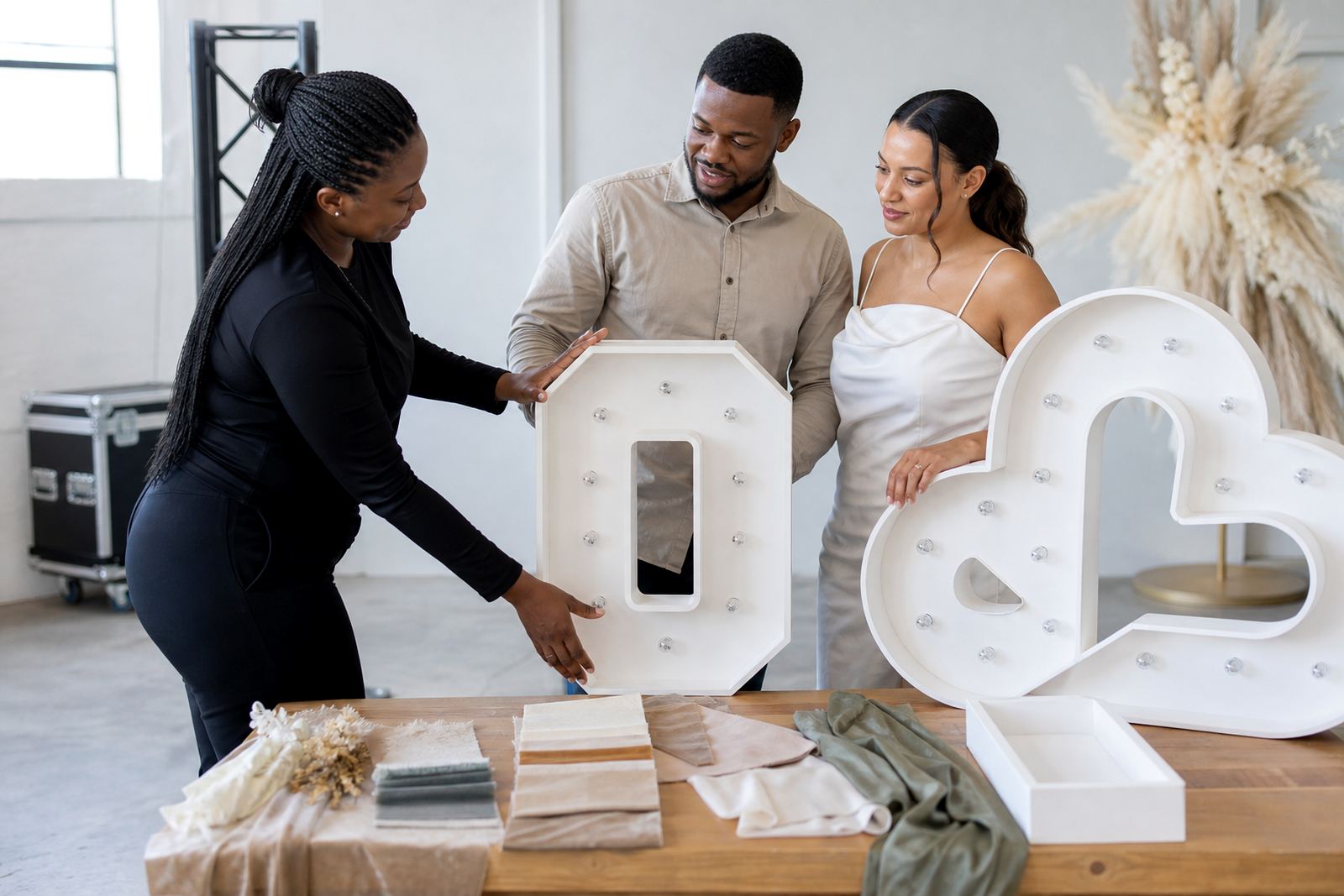
Choosing between a sign, letters or a lightbox
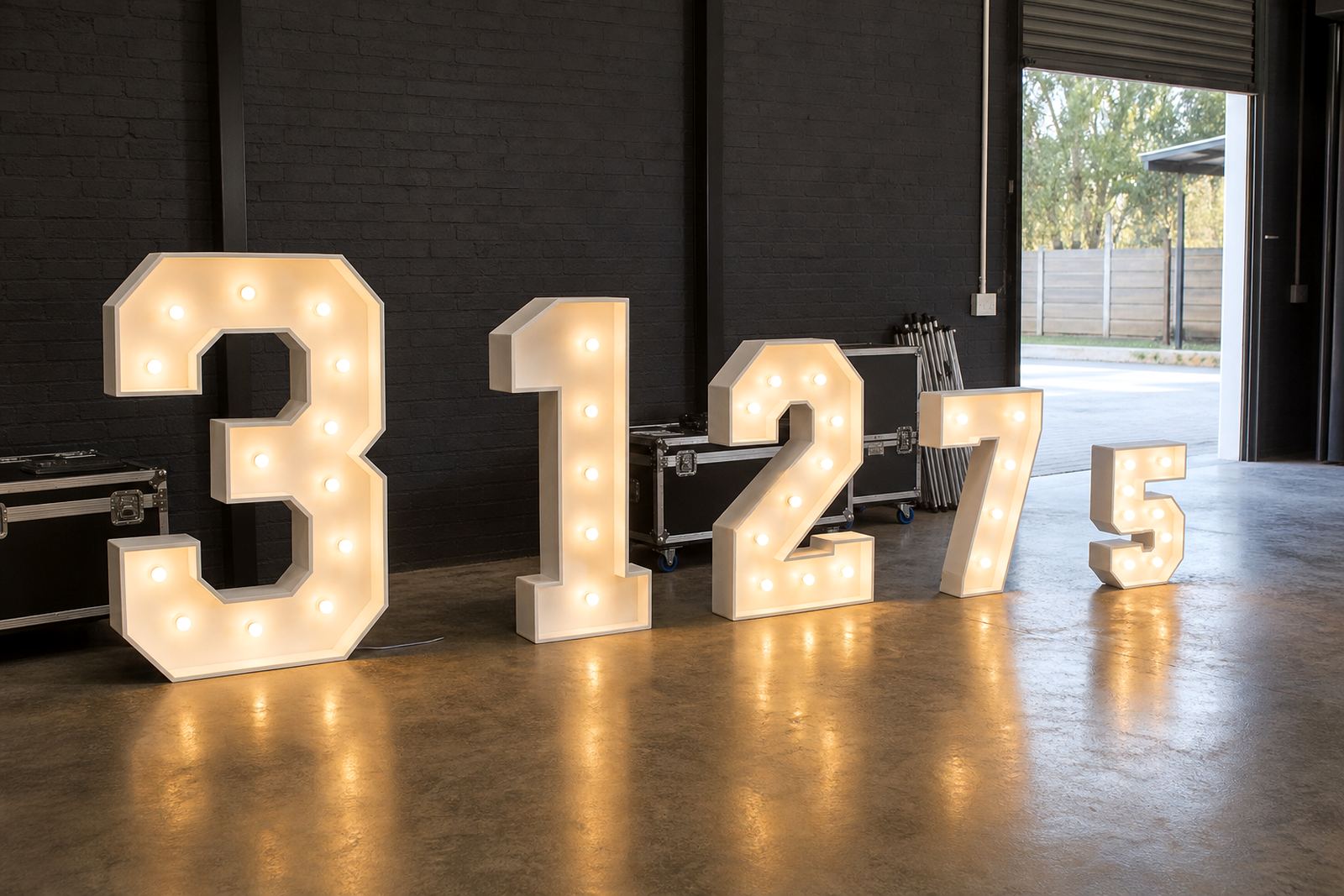
Pick the piece by what it has to say and how the venue is laid out. Marquee letters suit names, initials and short celebratory words. A lightbox is better when the text changes or when the message needs a framed finish. Illuminated signs work well for statements, hashtags or welcome messages where the shape of the lettering matters more than the size of each individual character.
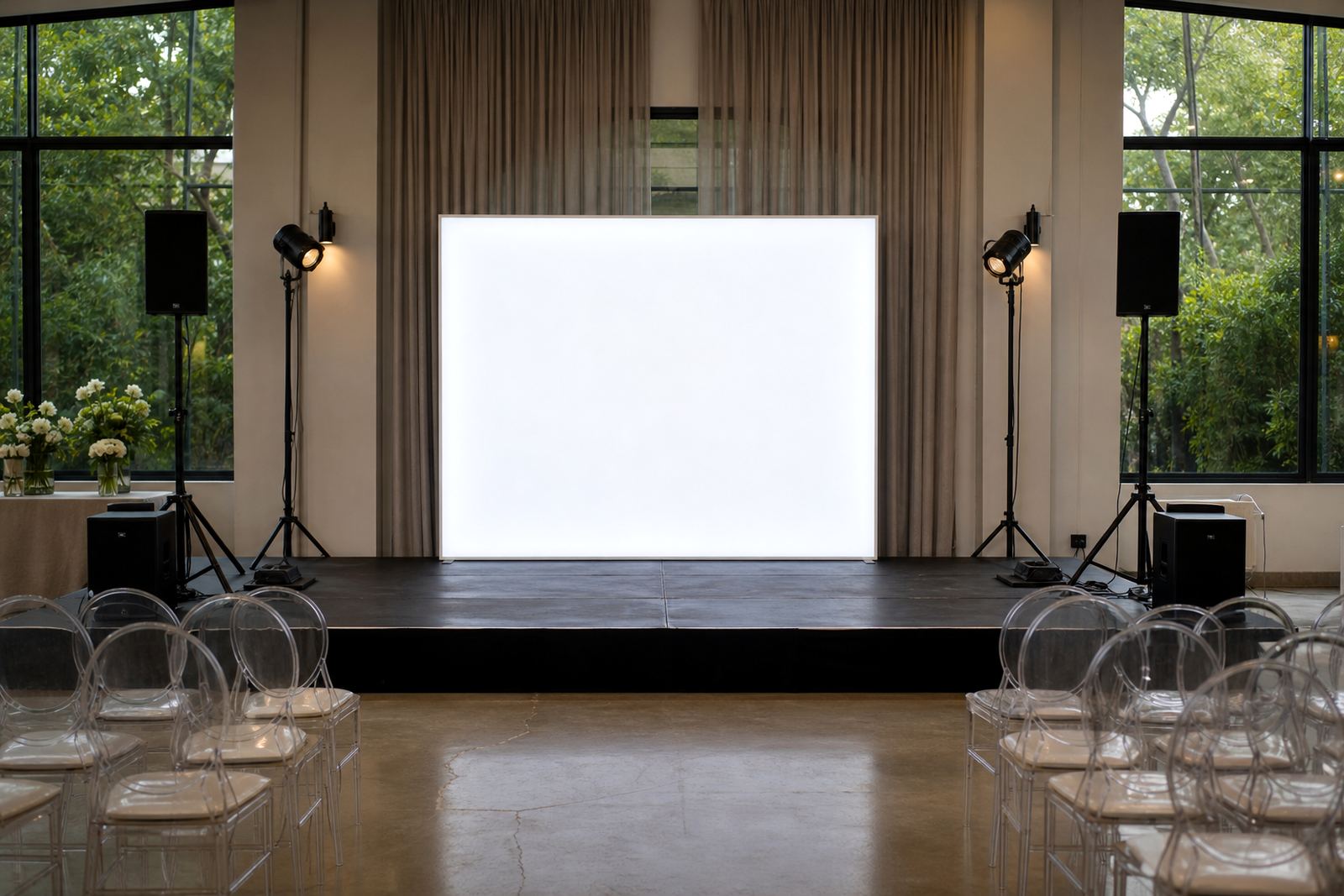
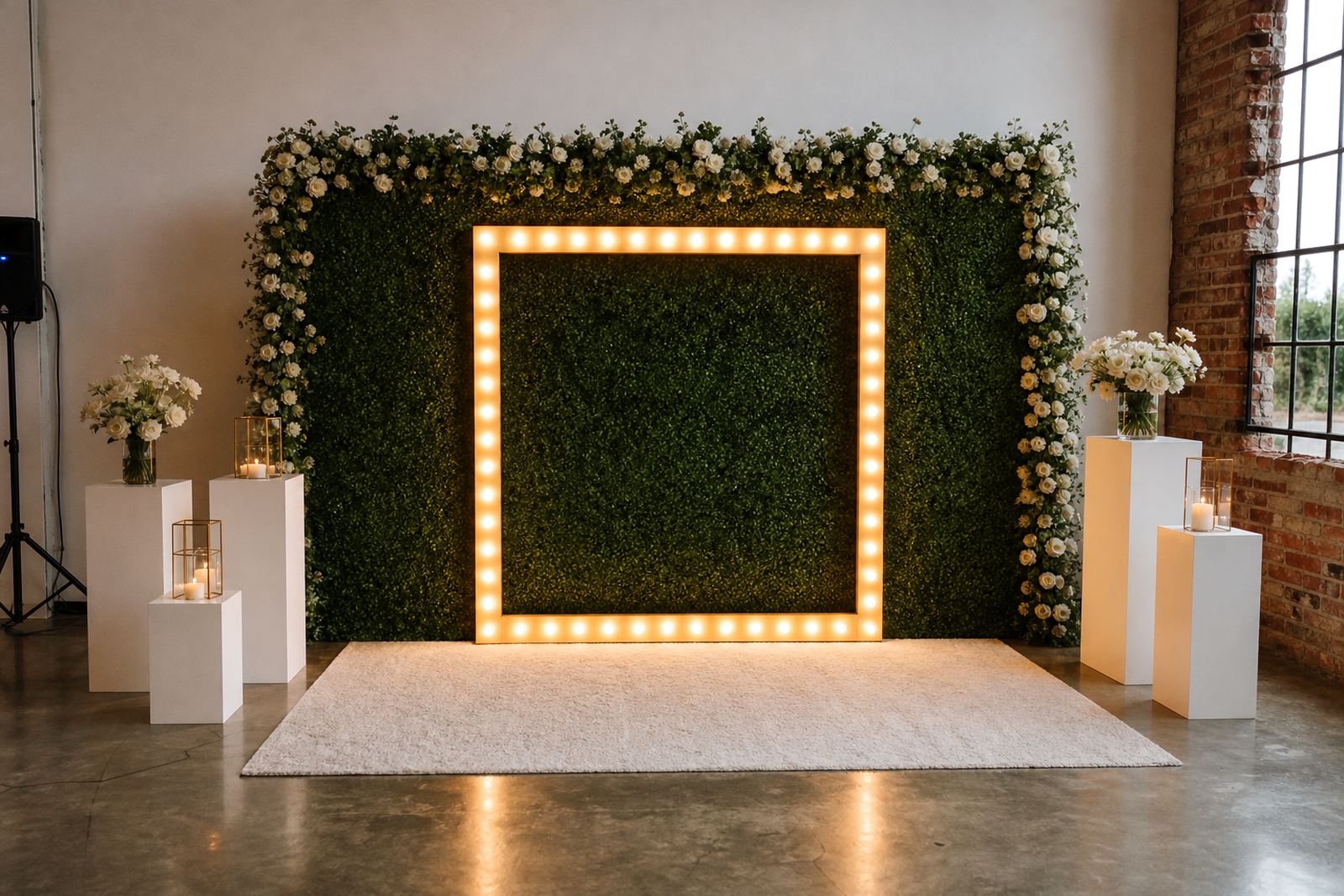
At weddings, the display often needs to sit beside floral work, draping or a stage backdrop. At corporate functions, the focus may be cleaner and more formal, with branding placed near an entrance or presentation area. For parties, the layout can be looser, with the lighting used to anchor a photo point or bar feature. Each option needs enough space around it so the glow reads clearly and the crowd can still move freely.
What makes a safe install on event day
Safe set-up is about more than switching the unit on. The base needs to stand level, the cables need to be secured, and any indoor or outdoor placement must suit the venue rules. Heavy foot traffic, polished floors and uneven paving all call for careful positioning. On tiled or shiny surfaces, equipment should sit stable and not shift when people pass close by.
For venues with strict access control or tight time windows, the install plan should match the room schedule. That includes delivery, placement, testing and later collection. When the event includes more than one item, the sequence matters. Larger pieces usually go in first, then smaller signs and accents are placed around them so the final layout still looks open and balanced.
- Use cable routes that stay out of walking lines
- Keep the unit level on the floor or base surface
- Leave enough clear space around the glow for photos
- Match the install order to the venue access plan
Reading the room before the hire is confirmed
Every space gives clues about what will work. A high ceiling can take taller letters. A compact function room may need a single statement piece rather than several items. Dark walls can make illuminated text stand out, while reflective finishes can cause extra glare and need a softer placement. The strength of the room lighting also matters, because a bright hall can reduce the impact of a small sign.
Outdoor areas in Gauteng and coastal spaces further afield bring different conditions. Humidity, wind and uneven ground all affect the placement and the protection around the item. For those jobs, the choice is not only about style, it is also about how the display will sit through the event and how it will be collected afterwards without trouble.
Planning a display that photographs well
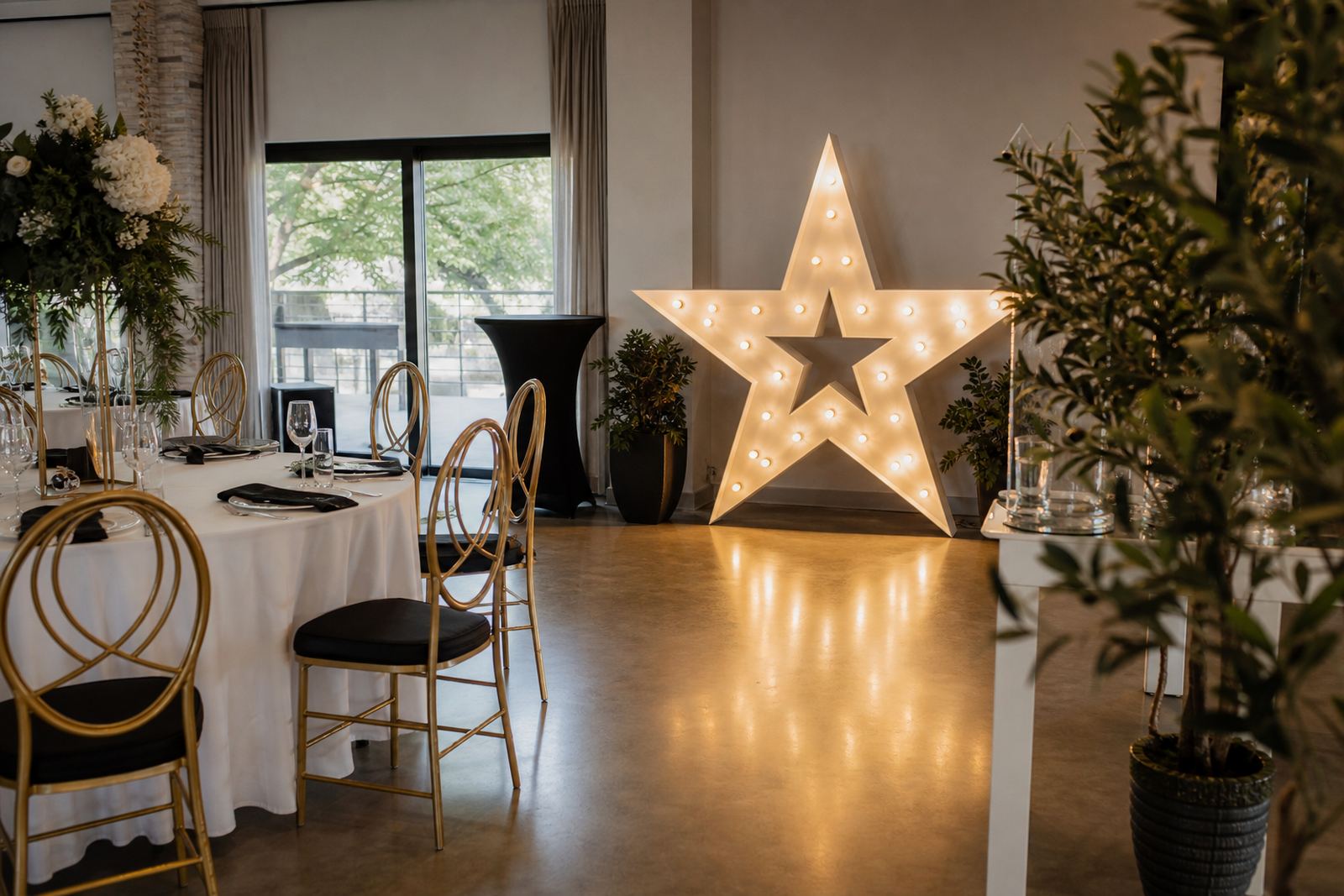
Many hire items are chosen because they show well in pictures as much as in person. Good photo value starts with scale, contrast and placement. The sign should be large enough to read from the camera position, and the background should not compete with it. If the room has busy decor, a cleaner layout helps the lettering stand out. If the space is plain, the glow can carry the whole area.
Midrand, Johannesburg, Pretoria, Sandton, Centurion and Durban all bring different venue styles, from formal conference rooms to private celebration spaces and outdoor function areas. The same item can feel very different depending on where it is placed, how much room surrounds it and which direction the guests face when they arrive.