
Room layout first, then the glow
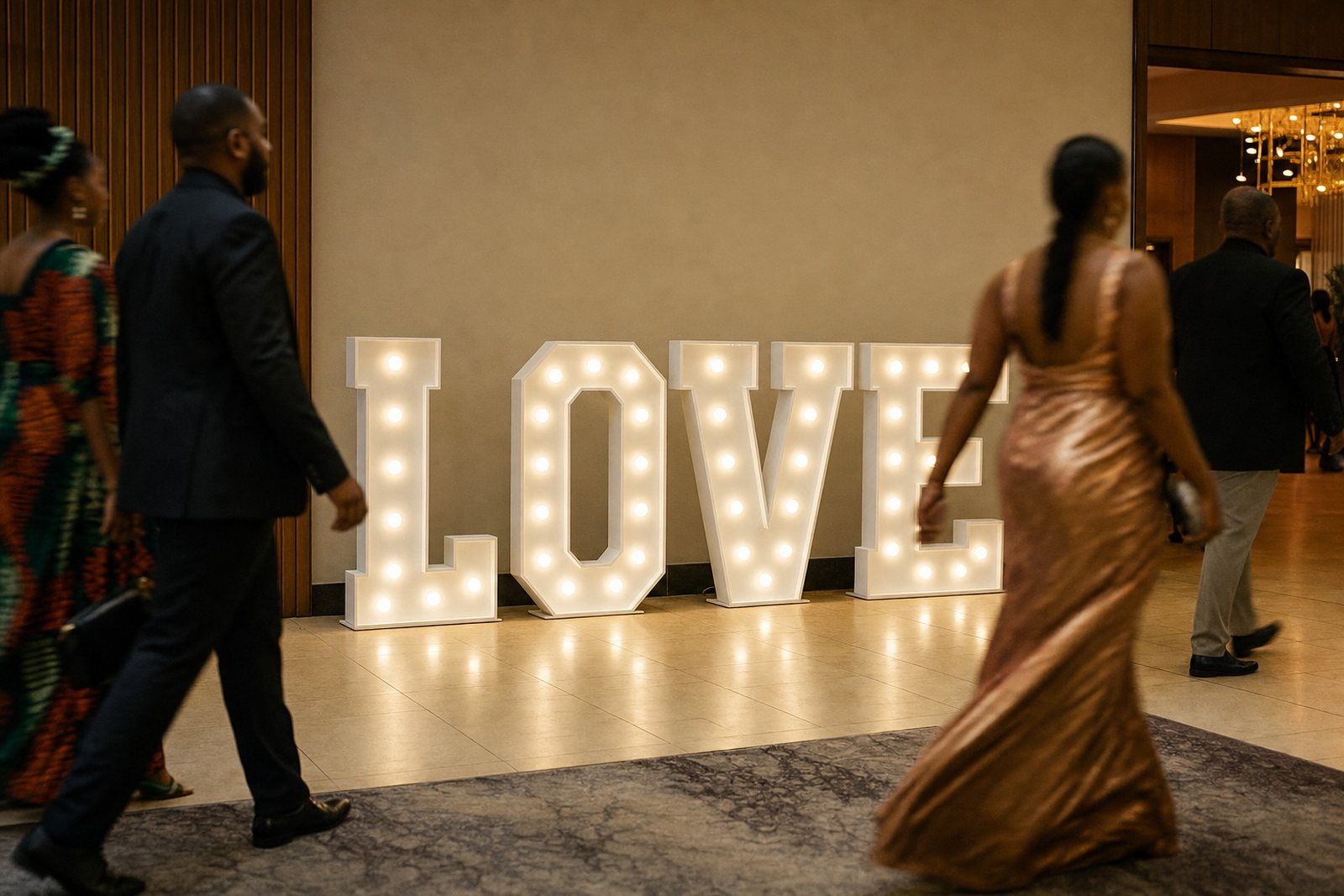
Indoor placement starts with the room itself. We look at how people enter, where they gather, and which wall, dance floor edge or stage line gives the display enough breathing room. A lightbox that looks good in the store room can feel crowded if it is squeezed beside a cake table or too close to a draped backdrop.
The aim is to position the item so it reads clearly in photographs and does not block service paths. On polished floors, carpet tiles or timber boards, the base and cable route are planned to sit flat and steady. If the venue has mirrored panels, floral walls or hanging décor nearby, we place the sign so it stays visible without competing with the rest of the setup.
- Positioning for entrances, stages, photo corners and head tables
- Spacing that suits guests, photographers and venue staff
- Placement checks around décor, furniture and flooring finish
What is included in an indoor placement booking
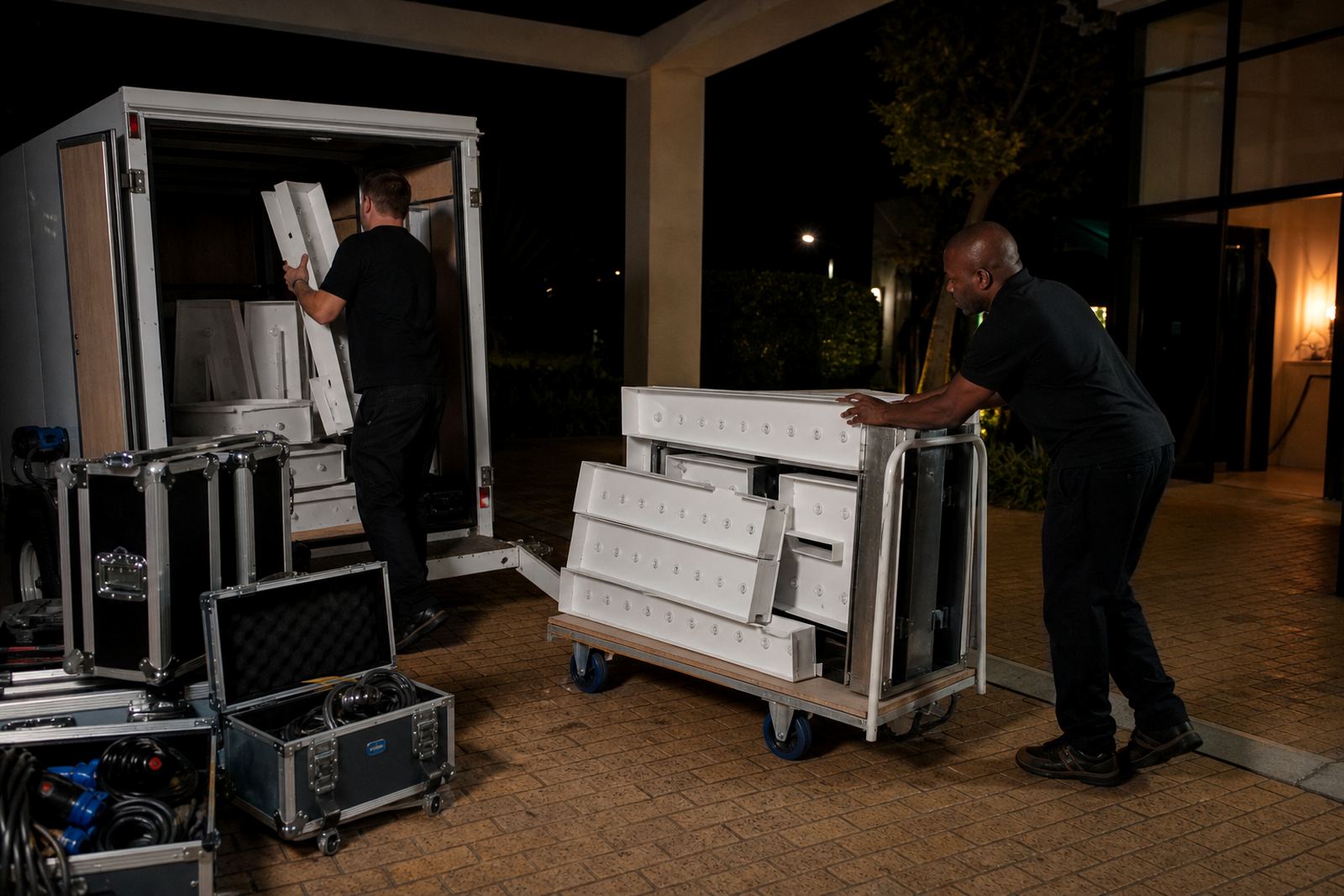
The service covers the delivery of the chosen item, set-up at the venue, testing, and later collection. We work with LED lightboxes, illuminated letters and neon-style signs in indoor spaces such as halls, conference rooms, marquees and private dining rooms. Where the venue has limited access points, we plan the route in advance so the item can be moved without scraping walls or marking floors.
Each booking is handled around the actual item size and the room layout. Smaller signs may be placed on display tables or against feature walls, while larger letters need more open floor space and a clearer viewing line. We also account for power point position, cable length and where guests will move during speeches, photos or dancing.
- Delivery and pick-up scheduled to fit the event programme
- Set-up using safe cable routing and stable positioning
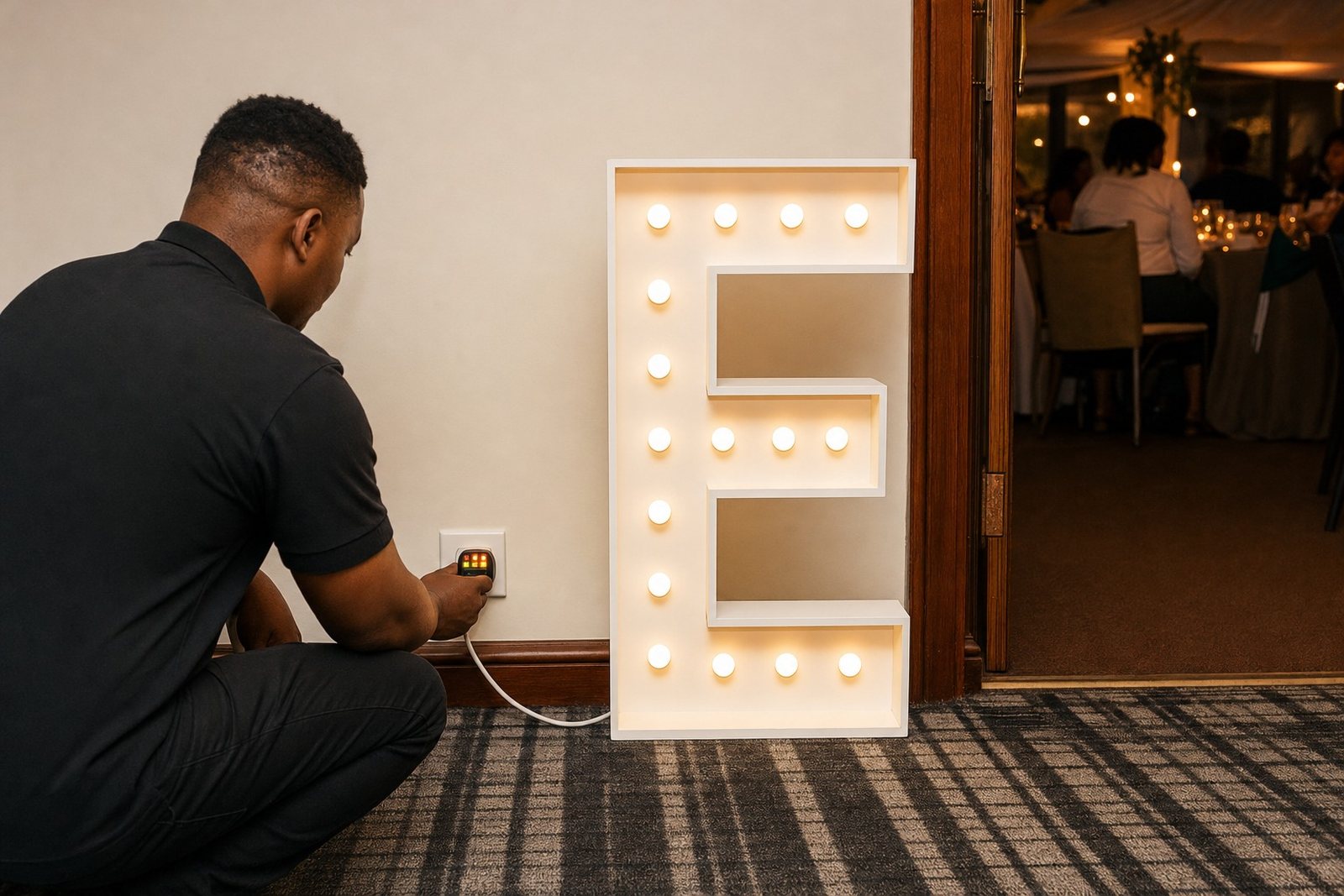
- Power point check before the display is switched on
How the set-up is handled on site
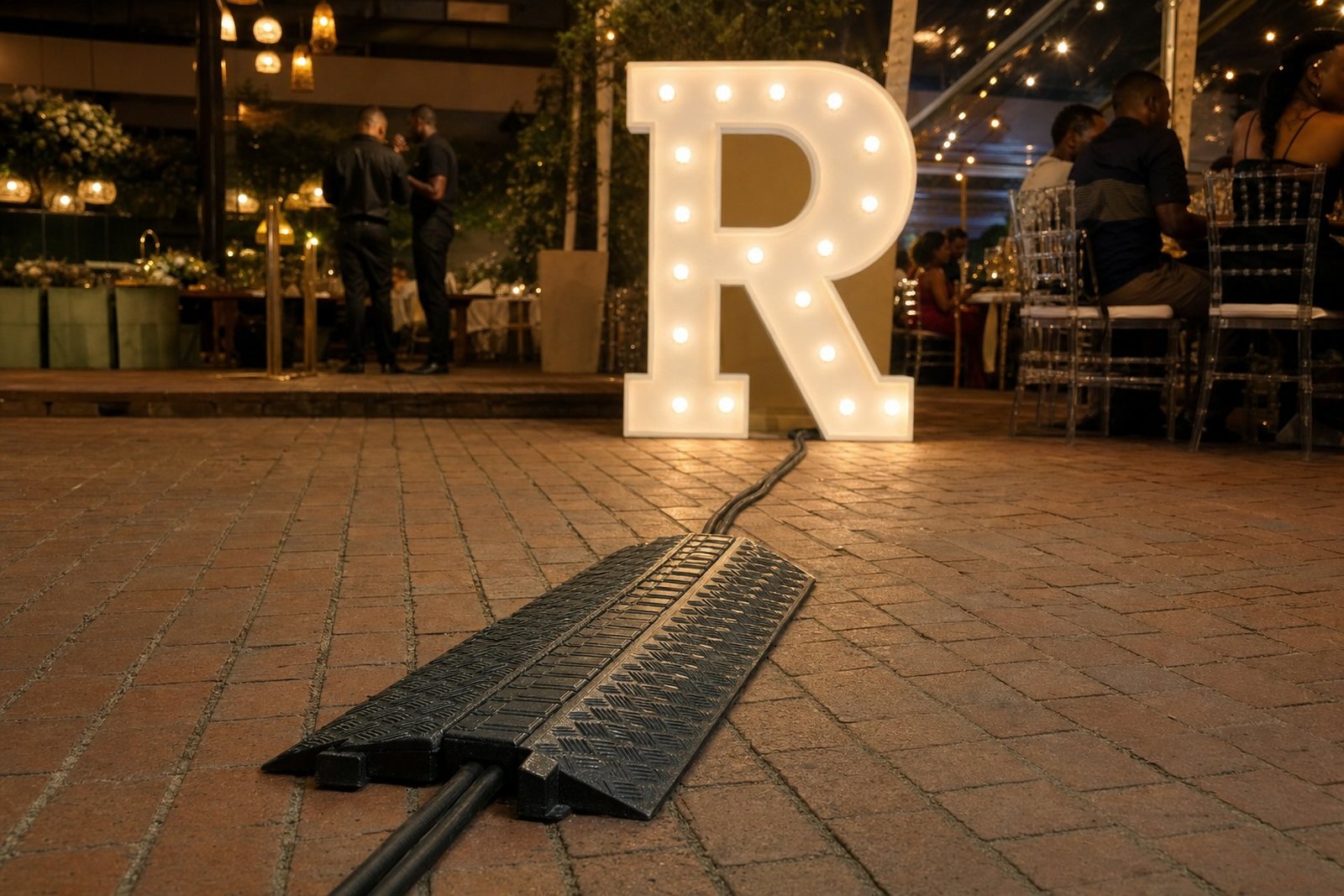
On arrival, the team checks access, flooring and the nearest power point before moving the equipment into place. If the venue has a strict décor policy or protected flooring, that is noted before anything is positioned. Cable runs are kept tidy and tucked where possible, with any visible section laid so it does not sit across a walkway or under a chair leg.
The lightbox or letters are then aligned to suit the room, not just the wall. In some rooms a slight angle works better for photographs, while in others a straight front-facing placement gives the clearest read from the entrance. Once the display is live, we check the light level, stability and viewing height before the setup is left in place.
- Venue access checked before equipment is moved in
- Display aligned to the room, not only the wall line
- Final visual check for height, cable path and lighting balance
Sizes, formats and indoor placement specs
Indoor placement works best when the item size matches the room size. A compact LED lightbox can sit neatly beside a gift table or dessert display, while larger illuminated letters need enough open floor space to avoid crowding the venue. We also work with signs that are wall-facing, freestanding or part of a photo area layout, depending on the booking.
Typical indoor considerations include power point distance, floor finish, clearance around the base and the best viewing height for guests and cameras. If the venue has a raised stage, low ceiling, narrow passage or patterned wall finish, those details shape the final position. That is where the practical part matters most, because a sign only works well when it is readable from the right angle and sits safely in the room.
Pricing approach for indoor placement
Pricing is shaped by the item chosen, the venue layout, the set-up complexity and the distance needed for delivery. Indoor placement for a single lightbox is usually simpler than a multi-item display with letters, a photo area and late collection after the event. Where the venue sits outside the usual route, travel and timing are worked into the booking as part of the full hire plan.
We keep the quote tied to the actual job rather than padding it with extras that do not affect the setup. If a venue needs longer cable runs, a second placement position or coordinated set-up with other hired décor, that affects the work involved and the cost attached. For event planners, that makes the numbers easier to line up with the floor plan and programme.
- Cost linked to item size, access and venue conditions
- Travel and collection worked into the hire arrangement
- Multi-item jobs priced around the full set-up load
After the event and what happens next
After the event, the team collects the item and checks it over once it has been removed from the room. If the venue has a late-night exit rule or loading bay restriction, that is handled within the agreed collection plan. Indoor placement bookings often need a clean handover from the venue, so collection is timed to avoid disrupting the final flow of the night.
If the display formed part of a larger wedding, party or corporate event layout, the same booking can include post-event collection of the full hire item. That keeps the venue clear and avoids leaving bulky equipment behind while the venue team starts closing up. It also means the item is packed and moved by the same crew that placed it, which helps with handling and condition checks.
- Collection planned around venue rules and closing times
- Equipment checked after removal from the room
- Suitable for weddings, launches, parties and conference functions
Key facts
| Display types | LED lightboxes, marquee letters, neon-style signs |
|---|---|
| Placement options | Freestanding, wall-facing, photo area and stage-side |
| Venue fit | Indoor halls, conference rooms, marquees and private functions |
| Power needs | Nearby venue power point with safe cable routing |
| Delivery areas | Midrand, Johannesburg, Pretoria, Sandton, Centurion and Durban |
| Service steps | Delivery, indoor set-up, testing and post-event collection |