
Start with the room shape and the guest flow
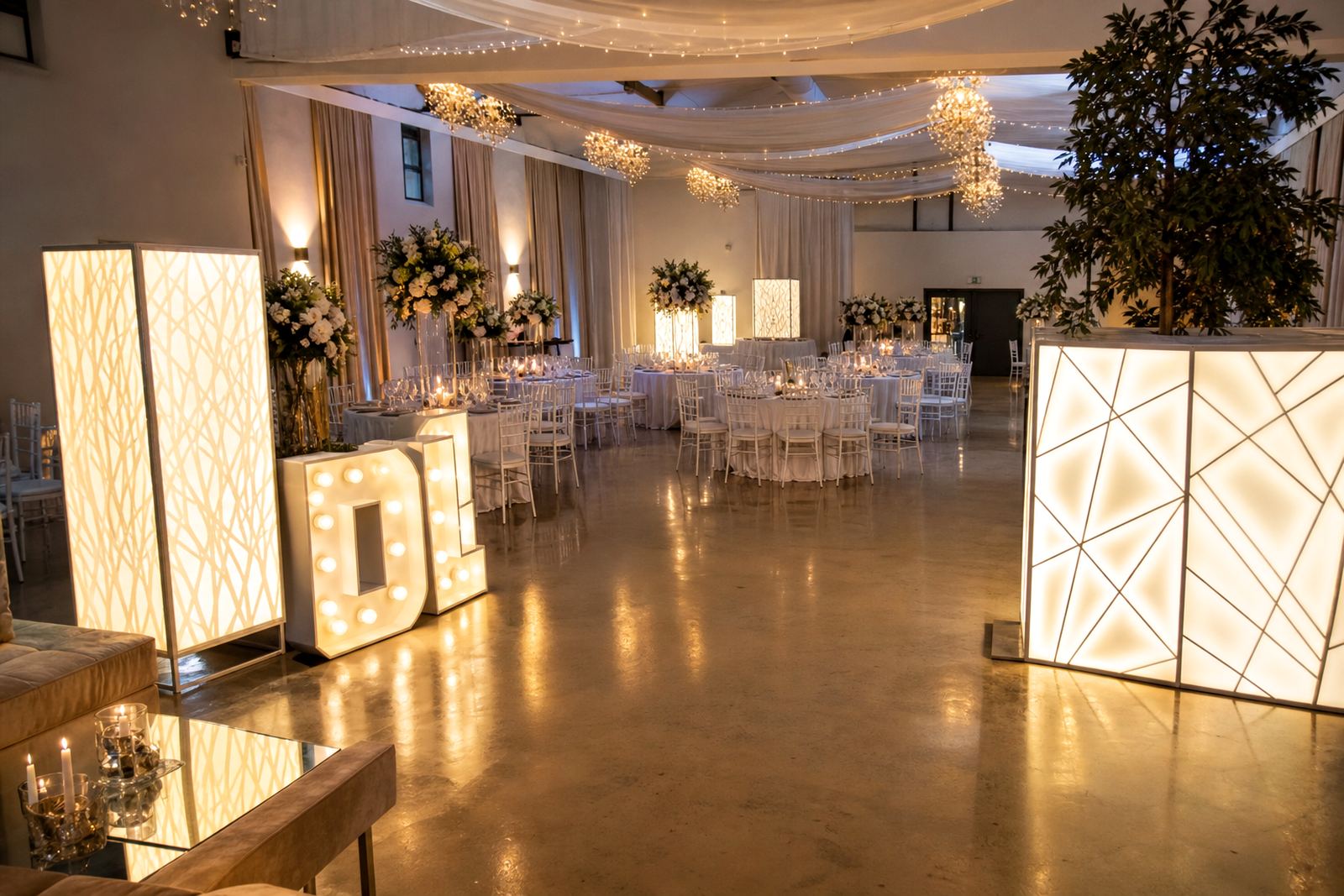
Before any equipment goes in, look at how people will move through the venue. A lightbox or illuminated word can look right in photos but still feel awkward if it blocks a passage, sits too close to a dance area, or hides behind a pillar. For weddings, launches and corporate functions, the best spot is usually one that can be seen from the main entrance, the seating area and the camera line without forcing guests to step around it.
Measure the usable wall length, the distance from tables or furniture, and the clear space around the display. If the event has a photo area, the sign should give the frame a clear centre point. If it is a stage feature, keep the height of the sign in balance with the backdrop so it does not get lost. That little bit of planning saves a lot of shifting once guests are already arriving.
Check the floor before the first frame goes down
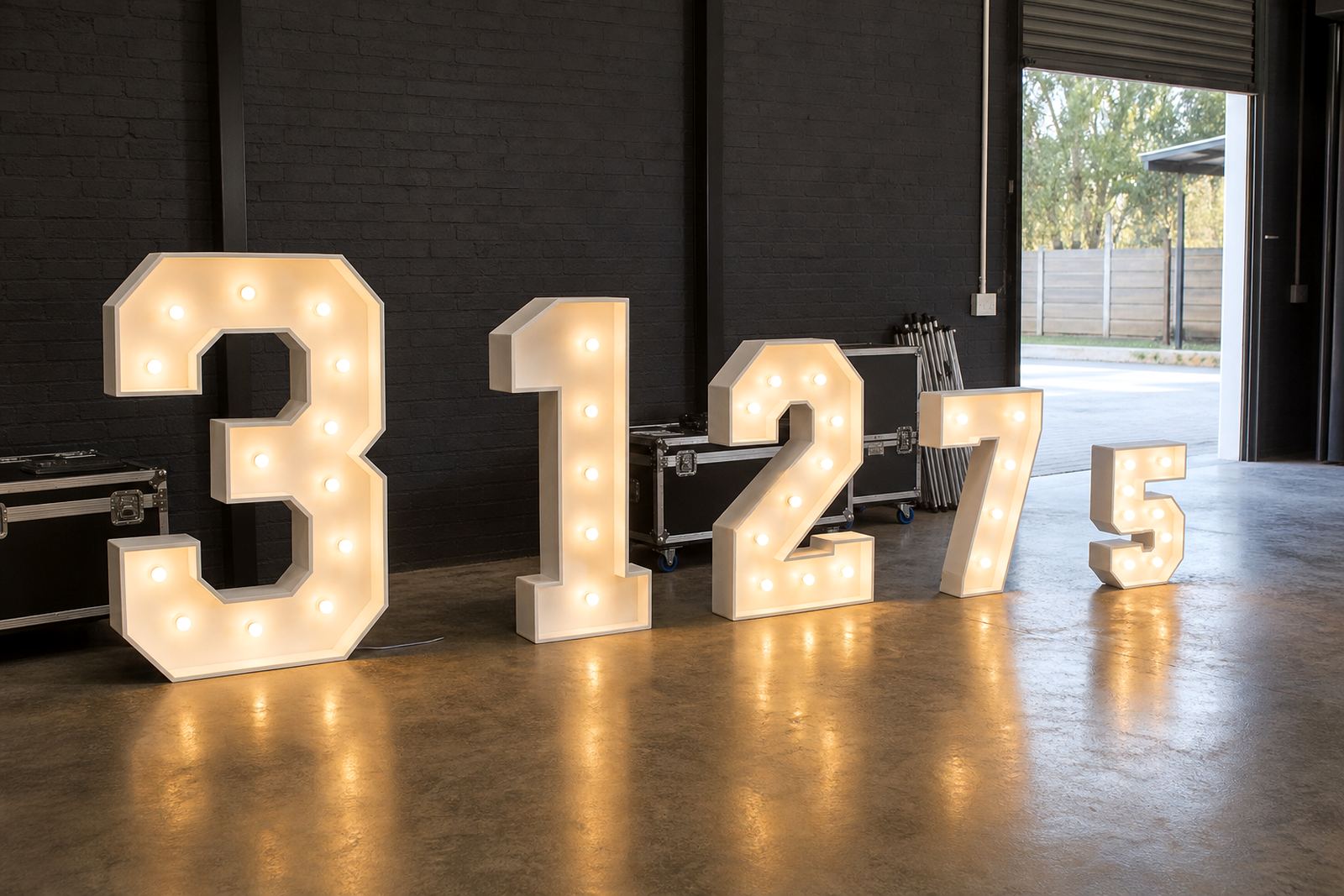
Indoor floors vary a great deal from one venue to the next. Polished tile, sealed concrete, timber, carpet and vinyl all behave differently under stands, bases and cable runs. A level floor makes installation easier, while a slightly uneven surface may need packing or careful repositioning so the sign stays straight. On glossy floors, reflections can look great in photographs but they also make marks and cable lines more visible.
For heavier marquee letters, the base must sit flat and stable. Soft flooring can compress under weight, so the feet need to be checked again after positioning. In banquet halls and hotel function rooms, protect the surface where needed and avoid dragging equipment across the floor. A small scuff can be hard to explain once the venue manager walks through.
- Look for floor slopes, loose carpet edges and damp patches.
- Keep power leads off walkways and away from chair legs.
- Use surface protection if the venue requires it.
- Recheck stability after the display is lit and in place.
Get the sight line right for photos and seating
Indoor signs need to be readable from the right distance. Letter height, spacing between items and the viewing angle all matter. A sign set too low can disappear behind floral arrangements or table décor. One set too high may feel detached from the rest of the room. The goal is clear visibility from the key points where guests stand, sit and take photographs.
Marquee letters work well when they have breathing room around them. Leave enough open space so the glow does not compete with nearby draping or balloon work. If the room uses candles, uplights or patterned backdrops, decide which feature should lead the eye. Too many bright elements in one line of sight can make the whole setup feel busy instead of coordinated.
Keep power points close and cabling tidy
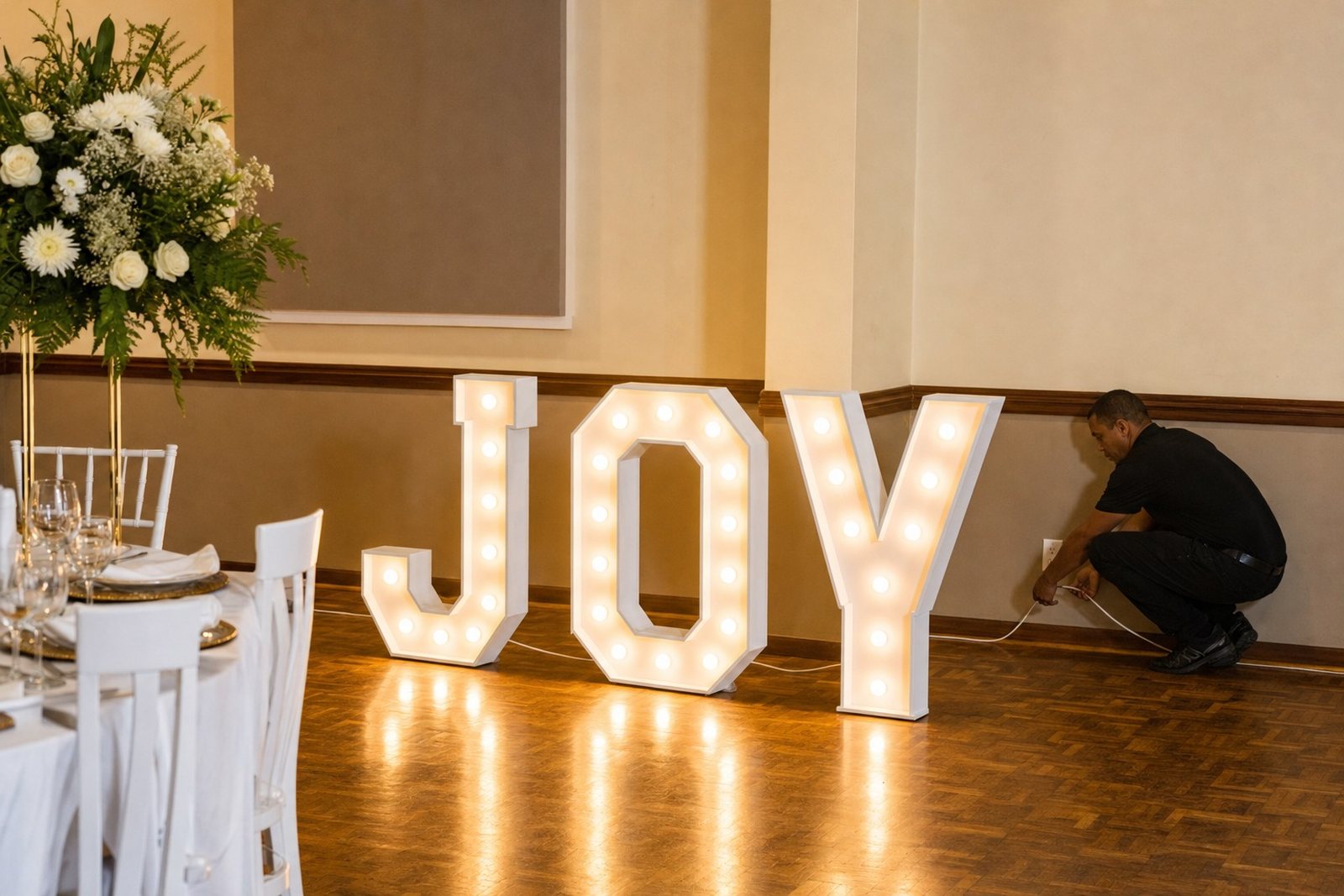
Indoor lighting displays usually depend on venue power points, so the socket location should be checked early in the setup. A point that is too far from the display can create messy cable runs across the room. Safe routing matters just as much as appearance, especially in venues where guests will be walking, dancing and moving chairs around. Cabling should sit close to walls or under controlled covers where the venue allows it.
Test the power source before the full installation is finished. That helps avoid having to move the display after the décor is already in place. If several items need power, plan the load across the available points and keep the wiring organised. For a photo area or a stage backdrop, neat cabling makes the final setup look intentional rather than patched together.
- Identify the nearest power point before equipment is unloaded.
- Check where cable covers may be needed.
- Keep plugs, adapters and joins out of guest traffic.
- Allow space for the driver or technician to work without blocking décor teams.
Blend the sign with flowers, draping and table décor
A good indoor layout does not fight the rest of the room. It works with the flowers, linen, backdrop and lighting already planned for the event. For weddings, a warm white lightbox often sits well with soft décor and neutral fabrics. For corporate launches, illuminated lettering can pair neatly with cleaner lines and sharper graphics. The key is balance, not crowding every feature into one corner.
When the sign sits near a floral wall or a draped panel, leave enough space so each element can be seen on its own. If the décor team is still working, the display should be installed in a way that gives them room to finish around it. This is where a set-up lead and the venue team need the same picture of the room, not two different ones.
Use a clear step-by-step setup order
An indoor installation runs better when the sequence is planned before the vehicle is unloaded. The crew should know where the item is going, who is handling each piece, and which parts need to be assembled first. That matters on busy event days when the venue floor is shared with florists, AV teams and caterers. A clear order keeps the display safe and stops the room from becoming crowded.
A practical setup flow usually looks like this:
- Walk the room and confirm the display position.
- Check the floor, power point and access route.
- Bring in the main frame, letters or lightbox panels.
- Route cabling, then test the lighting.
- Adjust spacing and make sure sight lines are open.
- Hand over the finished setup after one final check.
Once the display is lit, step back and view it from the entrance and from the main seating area. If the angles look off, small changes then are easier than fixing them later in the event flow.
Finish with a room check before guests arrive
The last pass through the room is where details show themselves. Check that the sign is level, the bases are steady and the cables are hidden or routed safely. Confirm that the display does not interfere with walkways, table access or photography space. If the setup is outdoors adjacent to an indoor room, make sure the transition between the two areas still feels clean and controlled.
For Midrand, Johannesburg, Pretoria, Sandton, Centurion and Durban functions, the same indoor principles hold true: stable footing, sensible cable routing and a layout that respects the room. When those basics are sorted, the lightbox or illuminated letters can do their job without making the venue feel cramped. That is the difference between a sign that is merely present and one that looks at home in the space.