
Start With Sightlines, Not Decoration
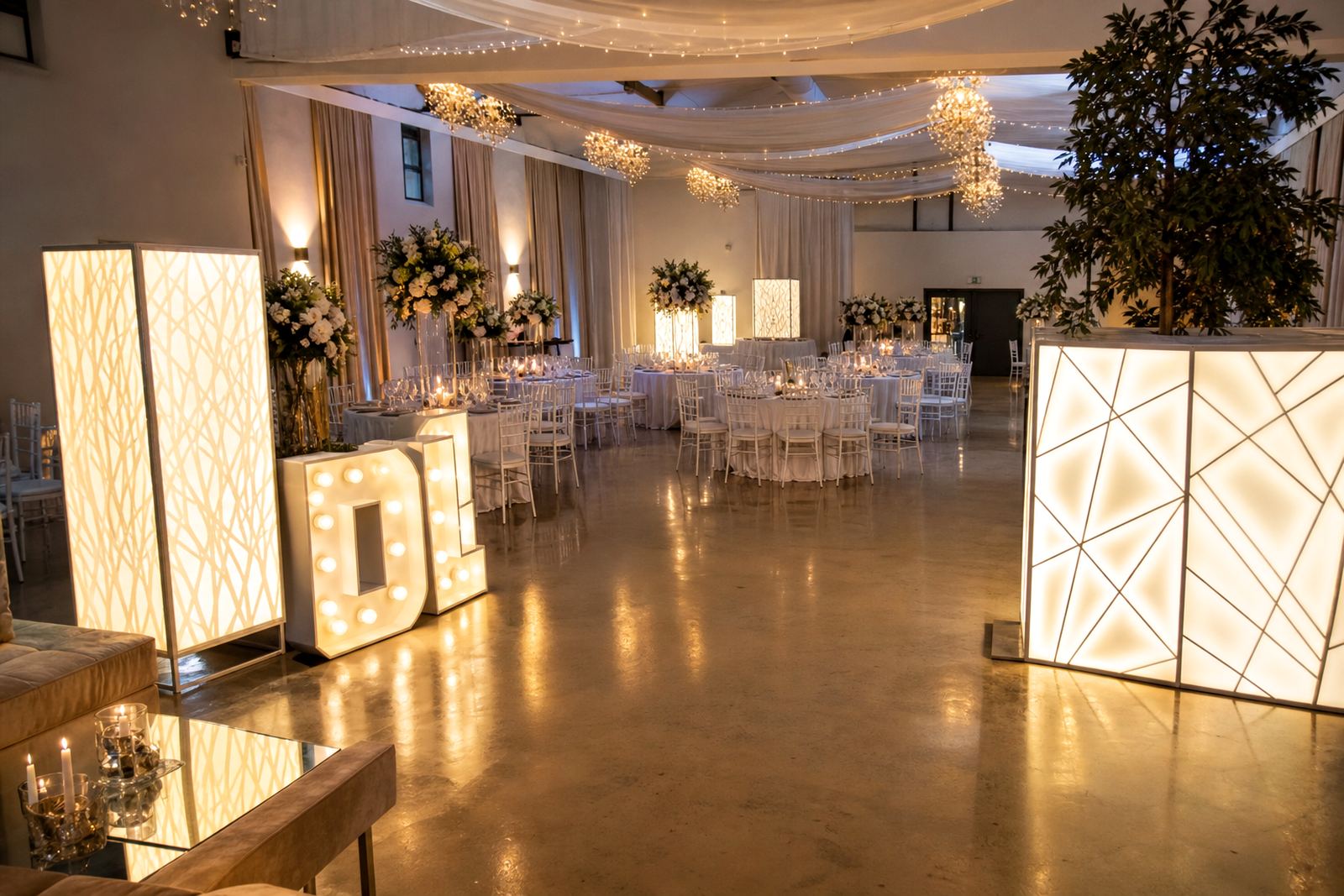
In a larger room, the first job is making sure guests can read the message before they reach the centre of the space. LED lightboxes and illuminated letters work best when they sit where sightlines stay open, such as near the entrance, along the main walkway or behind the main table. If the venue has high ceilings or a long floor plan, a small sign can disappear fast, so size and placement matter as much as the wording.
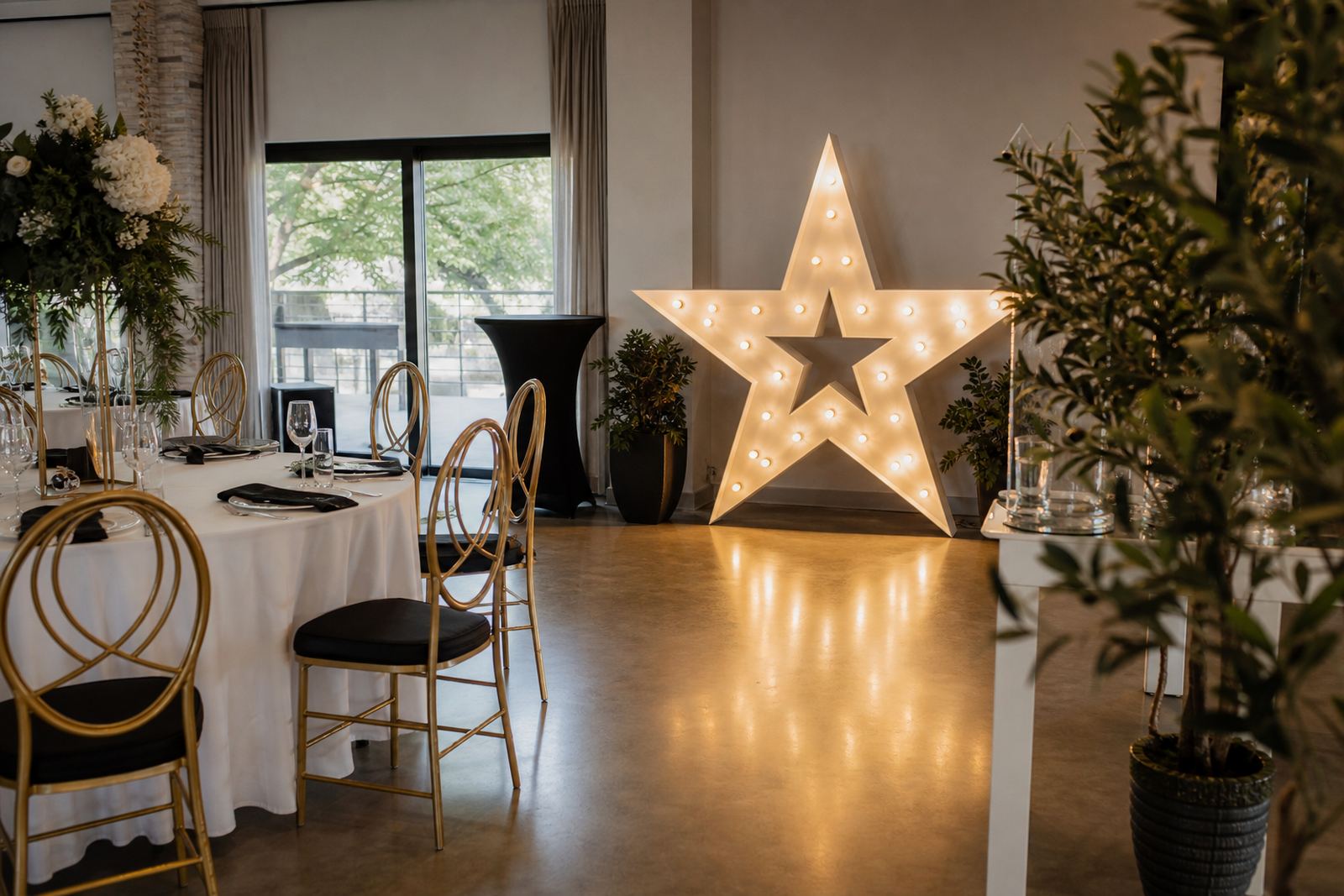
For weddings and launches, think about where photographs will be taken. A bright feature behind a couple, speaker or display table helps anchor the room and gives the camera a clean point of focus. In bigger spaces, one sign often needs support from a second unit or a paired layout, otherwise the room can feel spread out and the message gets lost.
Match The Sign Size To The Room
Large spaces ask for larger physical presence. Marquee letters suit a dance floor or stage edge where people move around them, while LED lightboxes work well for welcome messages, brand names and directional notes. A venue with a long entrance passage may need a sign that reads cleanly from one end to the other, while a hall with wide open floor space can carry a larger feature piece without looking crowded.
- Use taller letters where guests view the sign from across the room.
- Keep wording short when the sign must read from a distance.
- Place lightboxes where walls, curtains or plants do not cut the view.
- Pair one main sign with smaller supporting pieces for balance.
- Check that the floor area can take both the sign and safe cable routing.
Work The Room Layout Around The Power Point
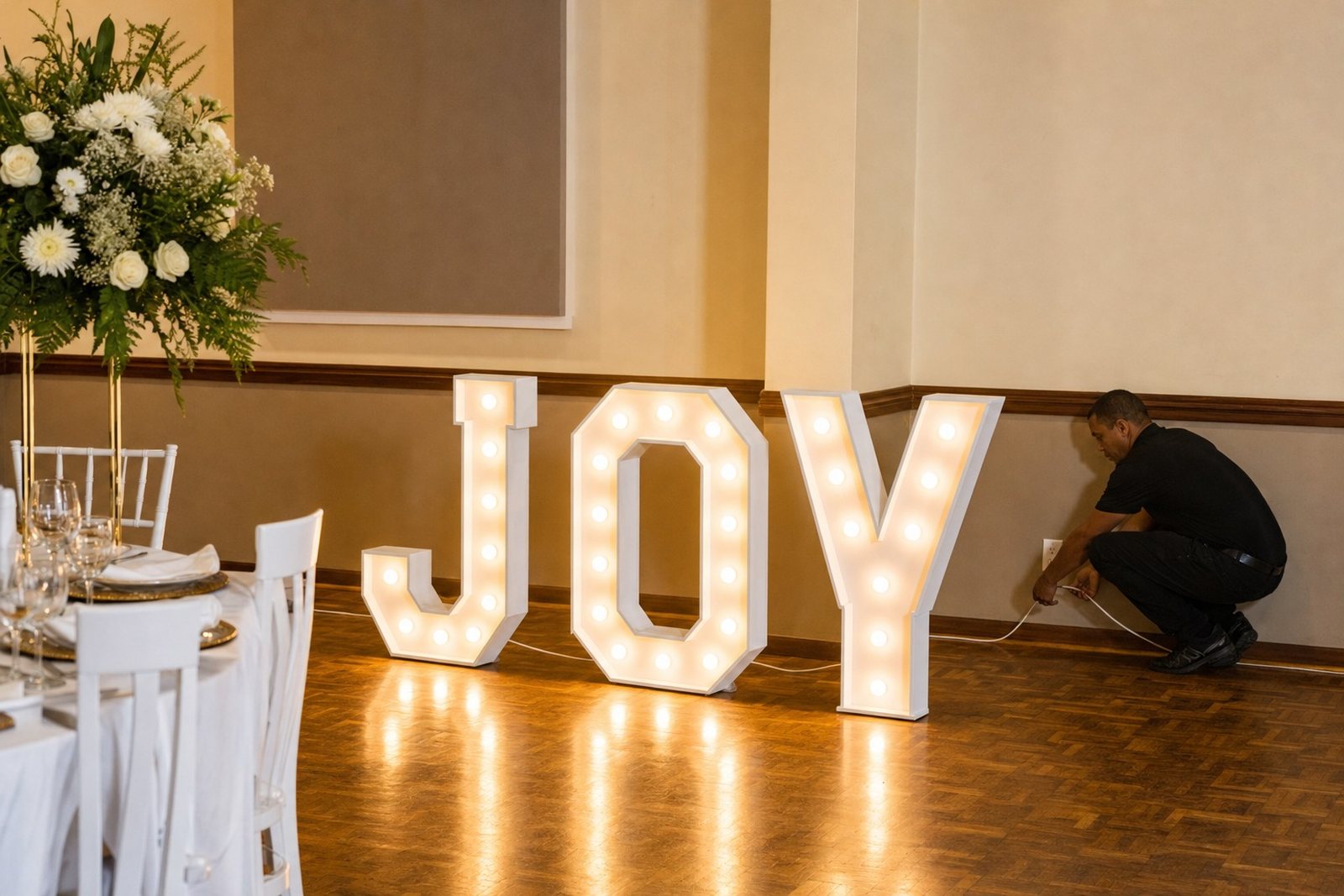
Most indoor events rely on venue power points, so placement should start with the nearest safe supply. A lightbox or illuminated sign needs stable power and cable runs that do not cross guest paths. A cleaner route makes it easier to keep the setup tidy and safe. If the venue has limited wall sockets or awkward floor access, the setup may need a different layout rather than a rushed cable path.
Safe cable routing matters more in large rooms because guests move in more directions. Cables should sit tight to edges, under approved covers where needed and away from food stations, steps and dance areas. For outdoor placement, the ground surface and weather cover need checking before any unit goes in place, especially when the event is near an open lawn or paved courtyard.
Choose A Layout That Stays Visible In Photos
Photo area layouts are more than decoration. In a large venue they help guide people toward a single point where the lighting and message are strongest. A sign placed too far to the side can end up as background clutter, while one centred on the natural gathering point gives the room a proper anchor. Weddings often need a softer layout, while corporate events may need a cleaner branded look with sharper lines.
When a room has multiple features, use the brightest piece for the main focus and keep the rest lower in visual weight. That keeps the eye where it should be and prevents the space from feeling busy. If the event includes speeches, dance floor movement or a stage, make sure the sign does not block seating or camera lines.
A Practical Setup Sequence For Bigger Venues
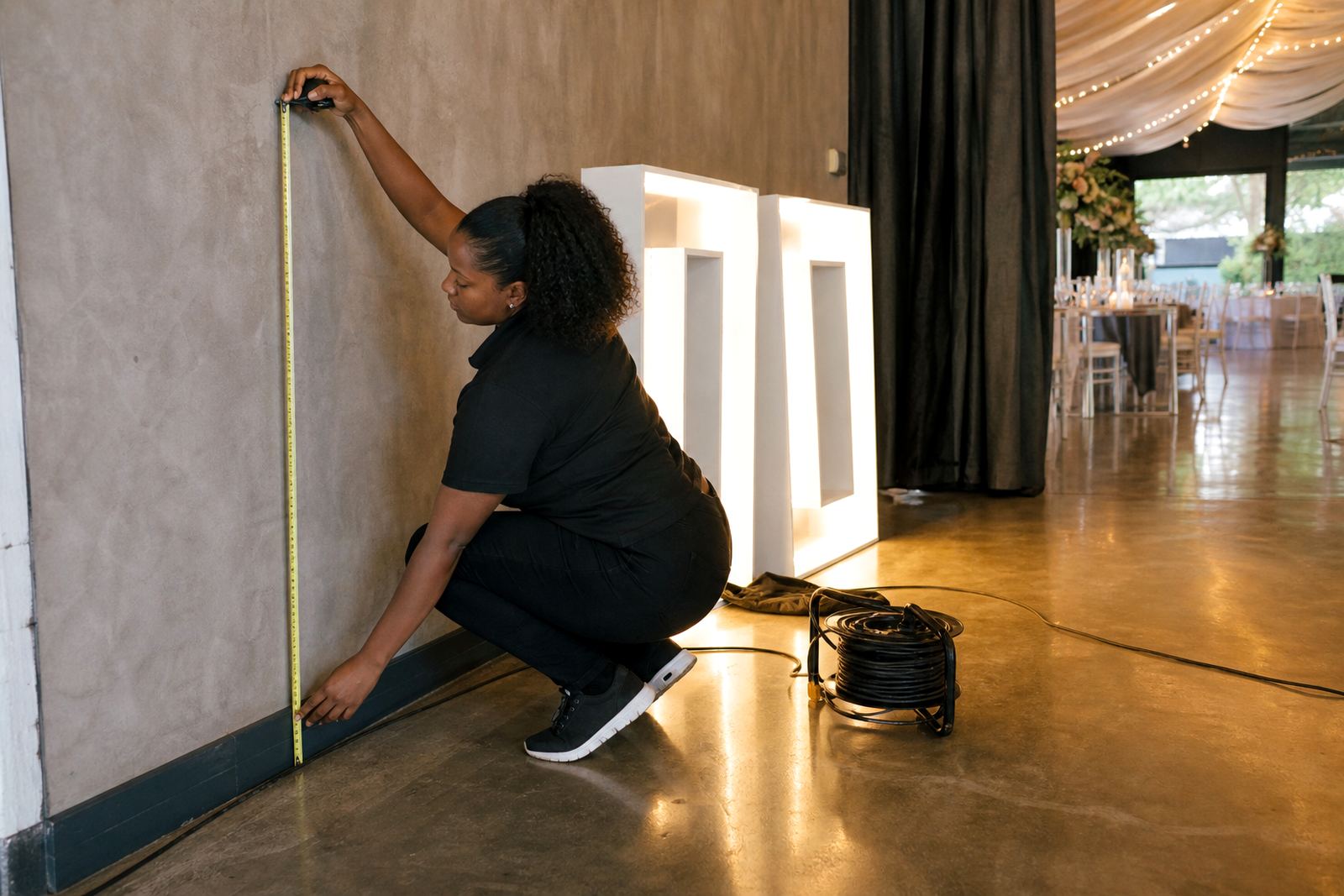
Large venues run more smoothly when the installation follows a fixed order. Delivery, checking the power point, placing the units, routing cables and then adjusting the final position all need to happen before guests arrive. That sequence saves time on the floor and reduces the chance of moving heavy pieces twice.
- Confirm the main feature location against the room plan.
- Check the nearest power point and the cable path to it.
- Set the sign where it can be seen from the entrance and centre floor.
- Test the lighting before décor is completed around it.
- Leave space for photographers, staff movement and guest access.
- Plan collection so the venue can be cleared without blocking other break-down work.
Gauteng Transfers And Out-Of-Town Jobs
Big events do not always stay in one city. A setup for Johannesburg, Pretoria, Sandton, Centurion or Midrand may be straightforward, while an out-of-town installation needs tighter logistics around loading, access times and collection. When the venue sits farther away, the equipment list should be checked piece by piece before leaving the base, because missing one item can complicate the whole floor plan.
Longer runs also call for more attention to timing around venue access and late night collection. If the event ends after dark, the collection route, loading point and equipment handling all need to be clear before the first trip in. The same applies to multi-item installs, where one sign, one lightbox and a separate directional piece all have to work together in the same room.
What To Send Through The Enquiry Form
For a larger venue, the most useful details are the room size, event type, floor surface and the message or wording you want displayed. Add the venue suburb, the power point position and whether the sign will stand indoors or outside. If the layout includes a stage, entrance arch, photo wall or dance floor, note that too, because the placement may need to shift around those features.
It also helps to mention if the venue has stairs, narrow access, loading bay rules or limited parking near the entrance. Those details affect delivery, safe handling and set-up order. When the event needs both visual impact and neat movement through the room, the setup is easier to plan with the full picture in front of us.