
Give the dance floor its own clear edge
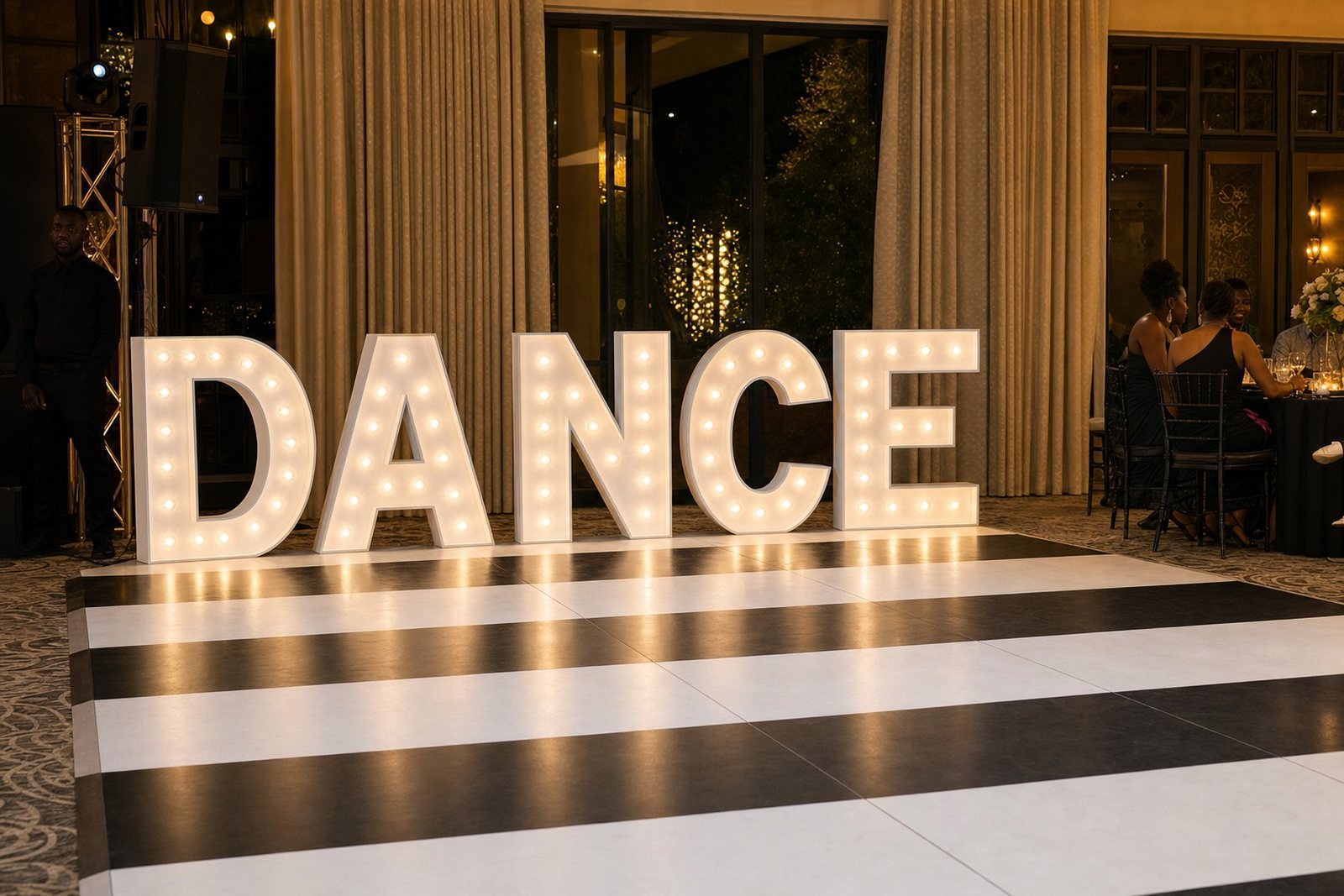
A dance floor works best when the boundary is obvious. LED lightboxes, marquee letters and neon-style signs should sit just outside the active dancing space, not right on top of it. That leaves a clean walk path and keeps feet, handbags and camera bags away from the bases.
At Midrand receptions and corporate evenings alike, the first question is usually not how bright the sign should be, but where it can stand without being bumped. A good placement leaves enough clearance for guests to pass on both sides, while still letting the sign frame the floor in photos.
- Keep signs clear of the main spin area and entry points.
- Leave space for photographers to step back for wide shots.
- Avoid corners where waiters and guests bunch up.
Read the room before the letters go in
Every venue handles movement differently. A hotel ballroom in Sandton, a marquee in Centurion, and a garden wedding in Pretoria do not create the same flow around the dance floor. Before set-up, the team looks at the floor shape, the table line, the nearest power point and the route people will use to move between the bar, seating and floor.
That check matters because a sign that looks perfect on paper can feel cramped once the DJ starts, the lights dim and guests begin to gather. If the area is narrow, the layout may need a smaller lightbox or a different angle so the front of the sign is still visible without cutting into the dance space.
- Square floors need different spacing from long rectangular ones.
- Buffet movement can pull traffic straight across the front of a sign.
- Low ceilings may call for shorter illuminated letters rather than tall stacks.
Where photographers need room to work
Photographers and content creators often use the edge of the dance floor for their widest and cleanest shots. If a lightbox sits too close, the frame can feel crowded and guests may hesitate to move in front of it. A better layout gives the camera a clear line while still placing the sign close enough to read in pictures.
This is especially important at weddings where the couple usually wants the dance floor to look full, but not messy. A sign placed with the camera angle in mind gives the image more structure, and it avoids awkward reflections from glossy surfaces or shiny flooring.
- Turn illuminated signs slightly to reduce glare on camera.
- Leave a gap for a tripod, flash stand or handheld movement.
- Place the strongest visual element where the lens naturally lands first.
Power points and cabling that stay out of the way
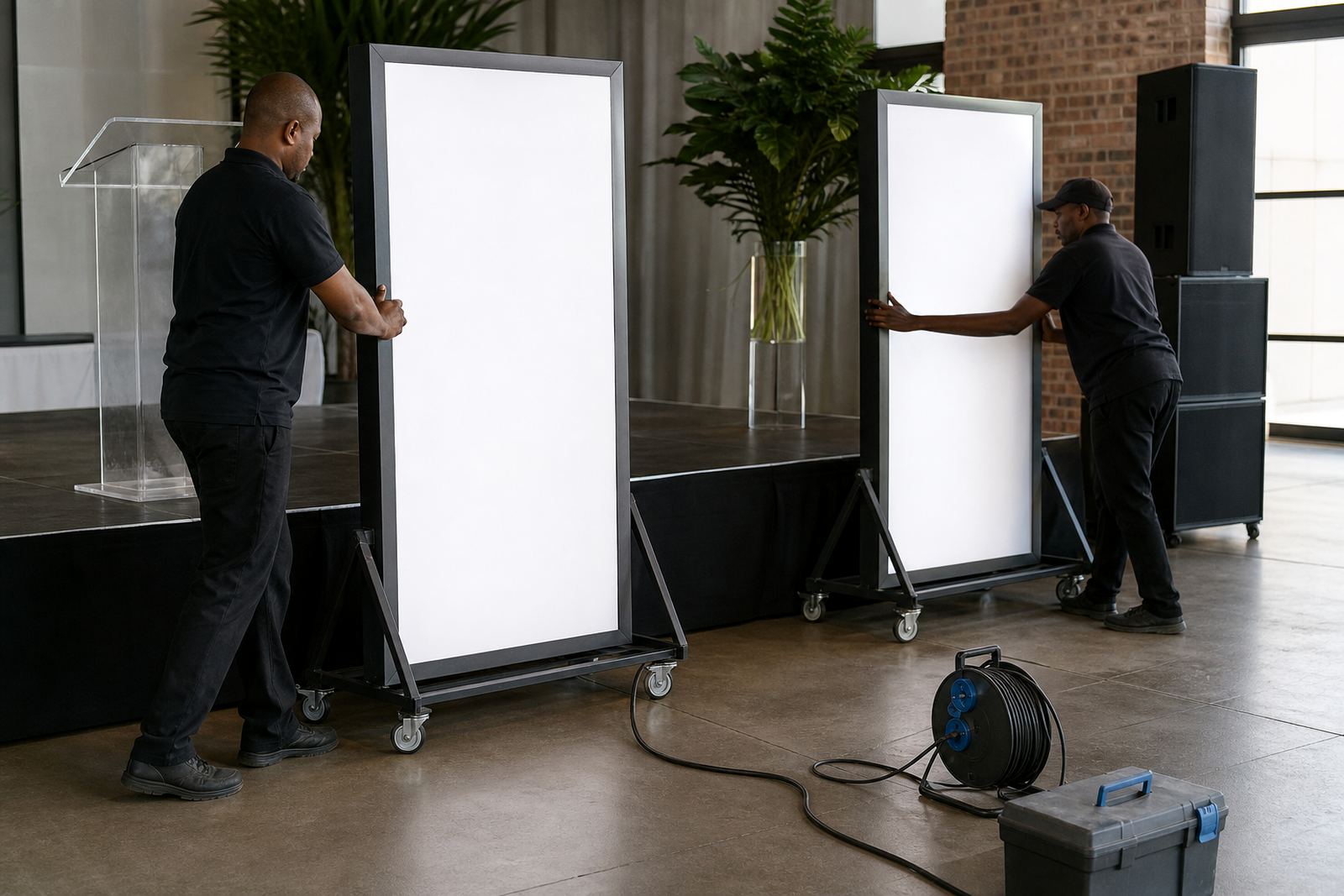
Most illuminated pieces need a proper power point nearby, and that point should be checked before the install begins. Safe cable routing matters just as much as the sign itself. Cables should follow the edge of the room, run under approved covers where needed, and never cut across a walkway or dance path.
In venues with polished floors or tighter indoor layouts, loose cable runs become a real hazard once the room fills up. A careful setup keeps plugs accessible for testing, but out of sight from guests. Where a venue has a fixed wall point on one side only, the placement may shift slightly so the cable can travel cleanly without crossing the floor in a risky way.
- Use the nearest suitable power point, not the most convenient visual spot.
- Keep joins and adaptors away from foot traffic.
- Test the sign after placement so nothing has to be moved mid-event.
A Johannesburg wedding floor with breathing space
At a wedding in Johannesburg, a couple wanted illuminated letters near the dance floor for the first dance and later photos. The room had a busy seating plan, a DJ table and a narrow route to the drinks station. Instead of placing the letters directly behind the couple, the set-up used a side angle near the floor edge, with enough room for guests to gather without blocking the centre.
That choice made the sign visible in photos, but kept the area open for movement. Once the dancing started, the letters stayed in view from most camera angles and nobody had to squeeze around a tight gap. It is a small adjustment, yet it often makes the floor feel calmer and more usable throughout the night.
- Side placement can work better than a head-on position.
- Traffic routes matter as much as the décor itself.
- Good spacing helps the floor stay open after speeches and before dancing.
When outdoor spaces need extra care
Outdoor placement brings a different set of practical details. A garden floor in Durban or a courtyard setup in Pretoria may look simple during daylight, but the sign still needs level ground, a stable base and proper cable planning. Wind, damp ground and uneven paving can affect both the look and the safety of the install.
For late-night collections, the layout should also make removal easy without dragging equipment across lawns or through crowded exits. That saves time on site and protects the venue surface, which matters when the floor sits close to planted borders, pool edges or event furniture.
- Check for level footing before placing any illuminated piece.
- Route cables clear of damp areas and busy exit points.
- Use outdoor-safe positioning where the venue allows it.
The parts that make the whole floor read properly
Dance floor placement is not only about where the sign stands. It is about how the room reads from the entrance, from the camera and from the middle of the crowd. LED lightboxes and illuminated letters work best when they support the floor instead of competing with it. That means enough clearance, a clear power route and a position that still looks good once people gather around.
For weddings, parties and corporate events in Midrand, Johannesburg, Pretoria, Sandton, Centurion and Durban, the same principle holds. Give the floor space to move, give the sign space to be seen, and the whole setup feels better from the first photo to the last collection.