
When one sign is too small for the room
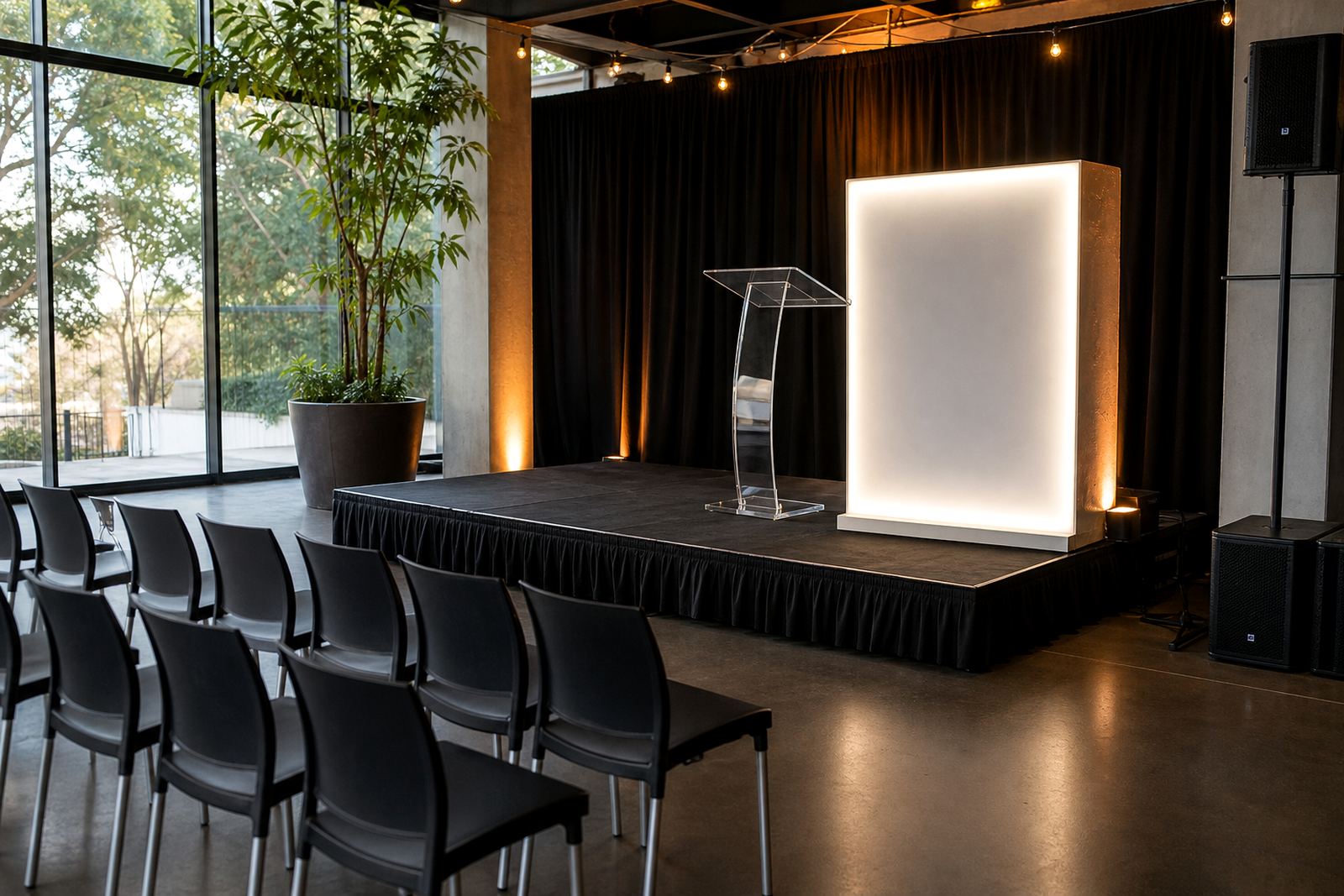
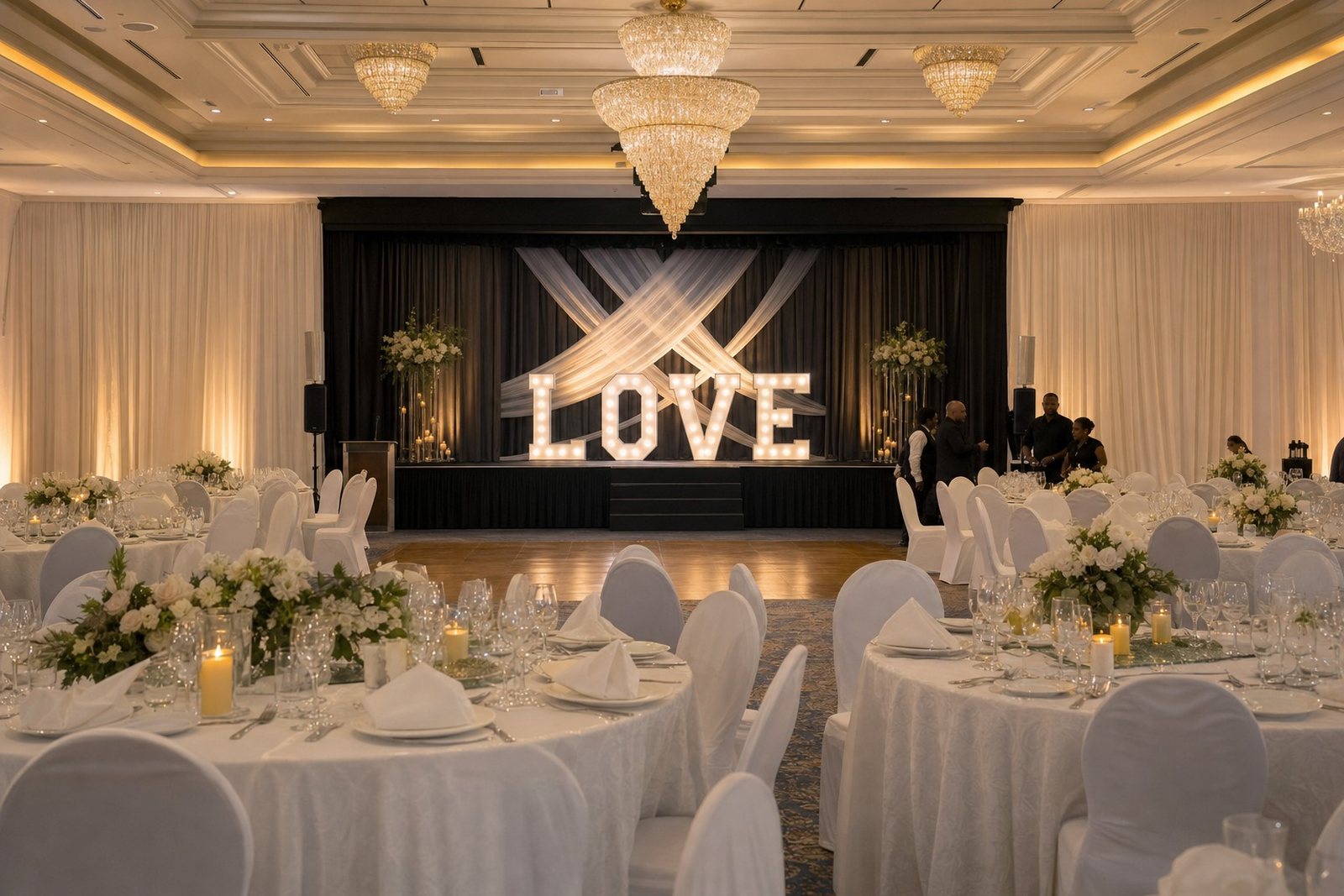
A ballroom, expo hall or large stretch tent can swallow a single lightbox if it is placed too far from the main view lines. In those spaces, the letters and panels need enough scale to hold their own against high ceilings, long table runs and wide dance floors. A smaller sign may work near an entrance, but deeper inside the venue it can disappear into the background.
We look at the distance from the main guest flow, the height of the room, and where photographs are likely to happen. That shapes whether one large piece is enough or whether two or three illuminated focal points make better sense for the floor plan.
- One main feature suits a compact stage or photo wall
- Two or more points help in long rooms with split seating
- Placement counts as much as the message.
- Clear sight lines make the lit message read better from across the room
Bigger wording, cleaner reading
Large venues usually need bolder lettering or larger lightboxes so the message stays legible from a distance. Thin script can look elegant up close, but in a broad room it can lose definition. Stronger block letters, a wider panel, or a mix of both often works better when the brief is for a wedding monogram, a launch title, or a corporate message.
For events in Midrand, Sandton and Pretoria, we often see venues with generous floor space and mixed lighting from chandeliers, uplighters and stage washes. In that setting the illuminated feature needs enough presence to remain clear without overpowering the rest of the decor. The room should feel organised, not crowded.
- Bold lettering reads more clearly across long distances
- Wider panels suit welcome messages and event names
- Mixed lighting needs careful contrast so the sign stands out
- Letter height should match the size of the room, not just the photo frame
Multiple focal points keep the room balanced
A large venue often benefits from more than one illuminated element. A single sign at the entrance can greet guests, while another near the dance floor or stage gives the space a second anchor. This helps the eye move through the room and keeps the event from feeling bare in the middle.
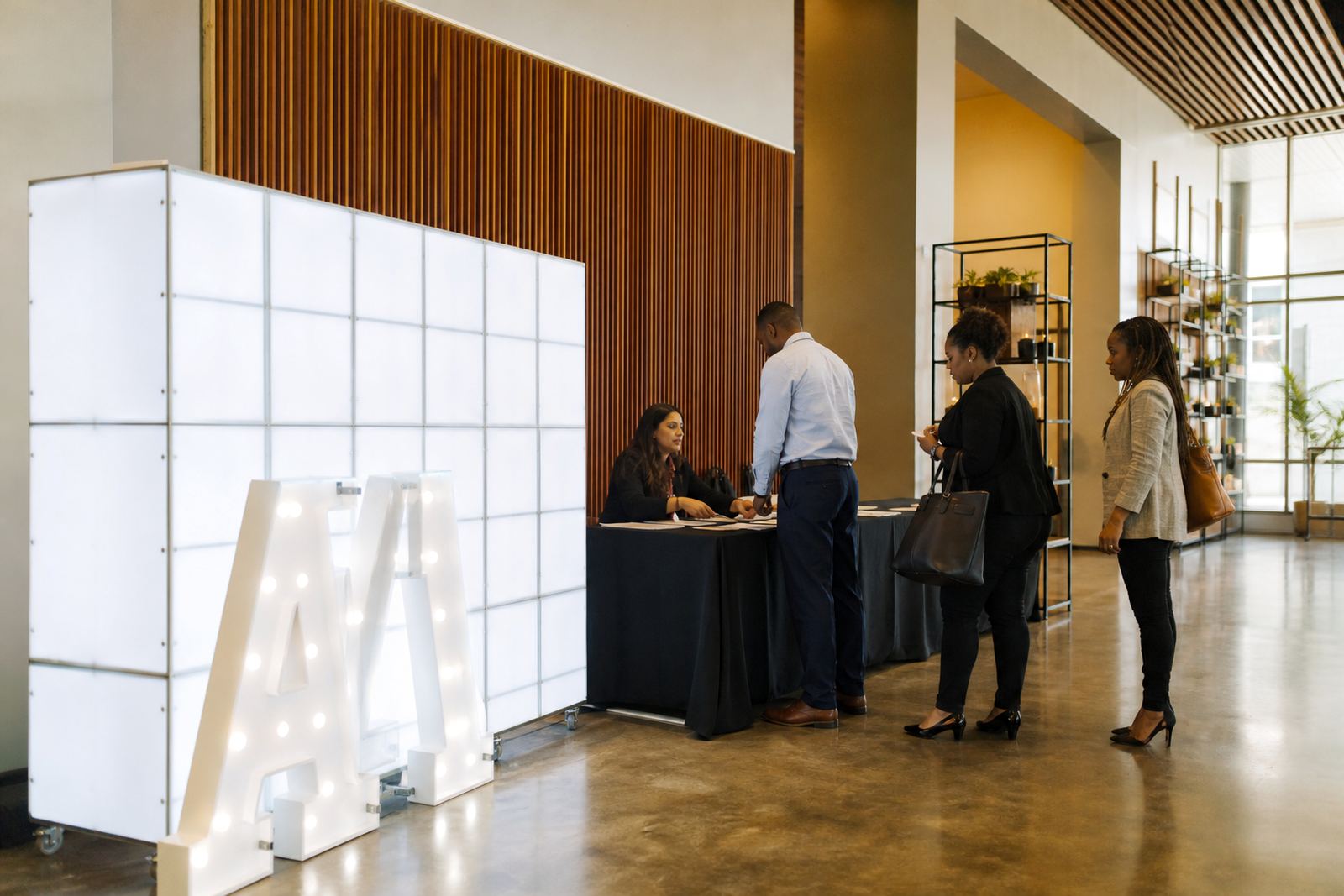
For corporate functions, a branded lightbox at registration and a second feature near the presentation area can support the flow of the evening. For weddings, a name display near the photo wall and a separate glowing word or initials near the cake table can tie the layout together. It also gives guests different places to stop for pictures, which is useful when the room is busy.
- Entrance pieces set the tone as guests arrive
- Stage or dance floor features help fill larger spaces
- Photo areas work better with a dedicated lit backdrop
- Separate focal points can reduce dead space in big rooms
Power points, cables and safer placement
Large venue installs need proper planning around power points and cable routes. The goal is to place the lightboxes where they look neat and stay secure, without cords crossing walkways or sitting loose near tables and service areas. Safe routing matters even more when guests are moving around in low light or when the venue has polished floors that show every line.
We check where the nearest suitable power point is, how the cable can run without becoming a trip point, and whether the sign should stand against a wall, on a stage edge or in a freestanding position. If the venue has strict house rules for access roads or loading bays, that also shapes the setup plan. A neat run of cable and a solid placement make a big difference in a room that is already full of furniture, décor and people.
- Power access should be close enough for tidy routing
- Cables must stay clear of walkways and service paths
- Freestanding pieces need stable footing on the floor
- Venue rules can affect where setup starts and finishes
A Gauteng ballroom, handled in layers
A recent large-room setup in Gauteng called for a wedding name display near the entrance, a second illuminated word beside the dance floor and a small neon-style sign in the photo corner. The room had a long layout with separate guest zones, so one sign would have left the far end looking empty. Using layered lighting made the space feel connected, and the photos picked up the glowing details from more than one angle.
That kind of layout suits venues in Johannesburg, Centurion and Rosebank where the room may be elegant but still needs a strong visual cue across a broad floor area. The same thinking helps in corporate settings too, where guests need to find registration, branding and presentation points without wandering through the room.
- Layered lighting suits long rooms with separate zones
- One feature near the door and another inside works well
- Photo corners benefit from their own lit point
- Multiple glow points help guests orient themselves quickly
Set-up, collection and out-of-town logistics
Large venue jobs need an orderly process from loading to collection. The equipment has to be packed to suit the room, moved through the venue without scuffing walls or floors, and placed in the right order so the event team can keep the rest of the decor moving. For out-of-town work, the timing of delivery and collection has to sit neatly with the venue schedule and any access windows set by the site.
Our Midrand base supports deliveries across Gauteng and beyond, including Durban when the event calls for it. That helps when a client wants a large illuminated feature for a wedding, party or launch and the floor plan is too big for a single small piece. In those cases the final result depends on good logistics as much as the lights themselves, and small details like the back route to the hall or where the truck can unload matter more than people expect.
- Loading and unloading need space around the venue access point
- Collection must fit the event schedule and venue rules
- Out-of-town work needs clear packing and transport planning
- Large installations depend on logistics as much as display size