
Read the room before the sign goes up
Stage sign positioning starts with the room, not the lettering. A sign that looks fine in a showroom can feel crowded once it is placed beside a lectern, floral pieces, drapes and a speaker’s table.
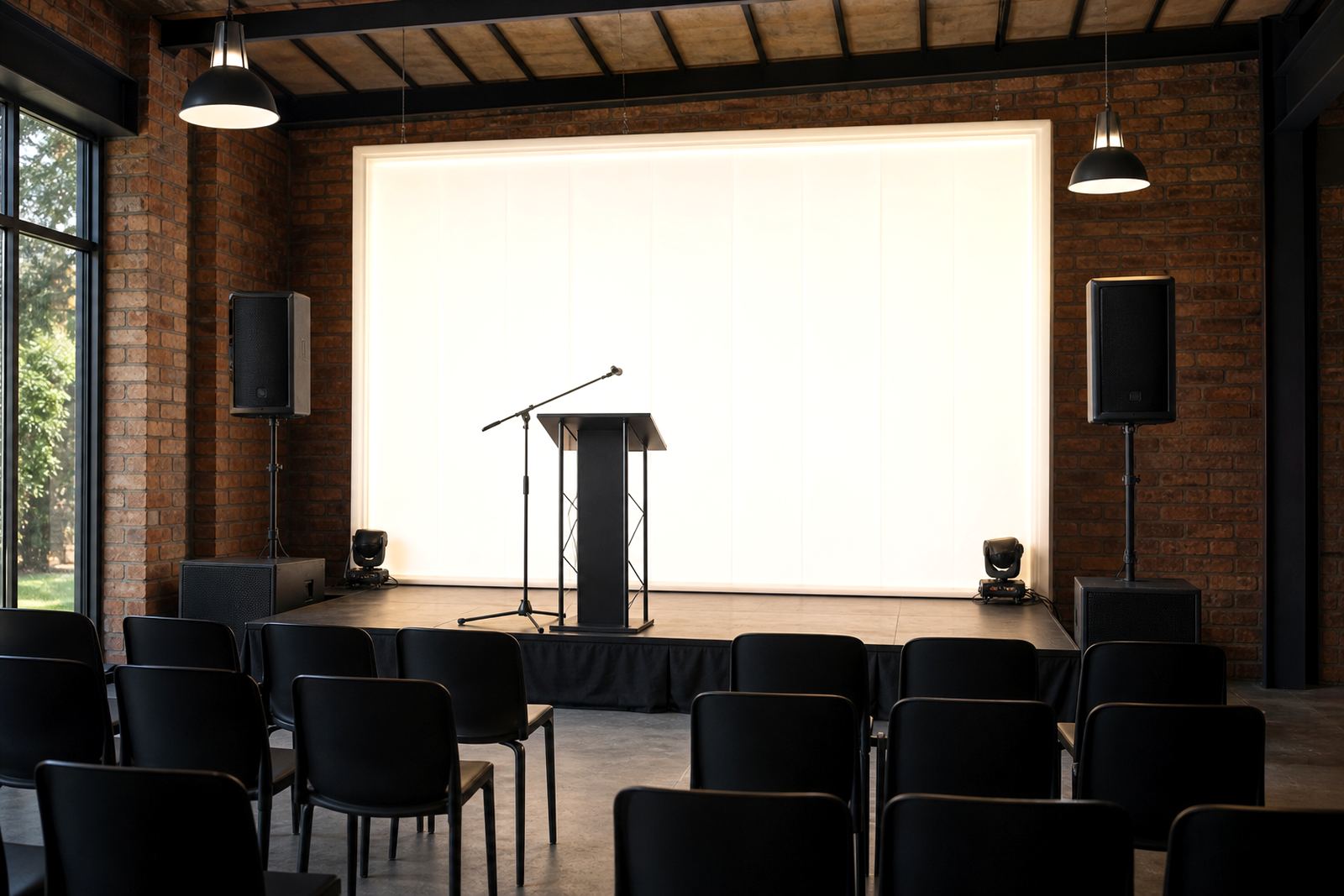
In a hotel ballroom in Midrand, the first job is to check where guests enter, where the main camera angle sits and how the stage steps into the room. If the sign sits too low, it disappears behind heads. If it sits too high, the bottom edge can look detached from the stage and the whole backdrop loses balance.
For wedding speeches and corporate launches, the sign needs to hold its own from the back of the room and still look neat in close-up photographs. That means thinking about height, width and the empty space around it before any set-up starts.
Keep the message visible without crowding the backdrop
Lettering and lightboxes should support the stage, not fight every other element on it. A clean gap around the sign helps the eye land on the message quickly, which matters during speeches and photo moments.
- Leave enough space between the sign and floral arrangements.
- Keep the sign clear of speaker stands and audio gear.
- Check that the first row of guests can still see the stage front.
- Match the sign size to the room, not just the stage width.
For a Durban coastal venue, humidity and salt air can affect how surfaces are handled during transport and set-up, so the positioning plan should also protect the finish from crowding and accidental knocks. A sign placed with breathing room is easier to photograph and simpler to keep clean during the event.
Power points, cabling and the clean line behind the stage
Illuminated signs need a proper power point check before the final position is fixed. A venue might have sockets close to the stage, but the nearest point is not always the safest point once guests, décor and staff movement are taken into account.
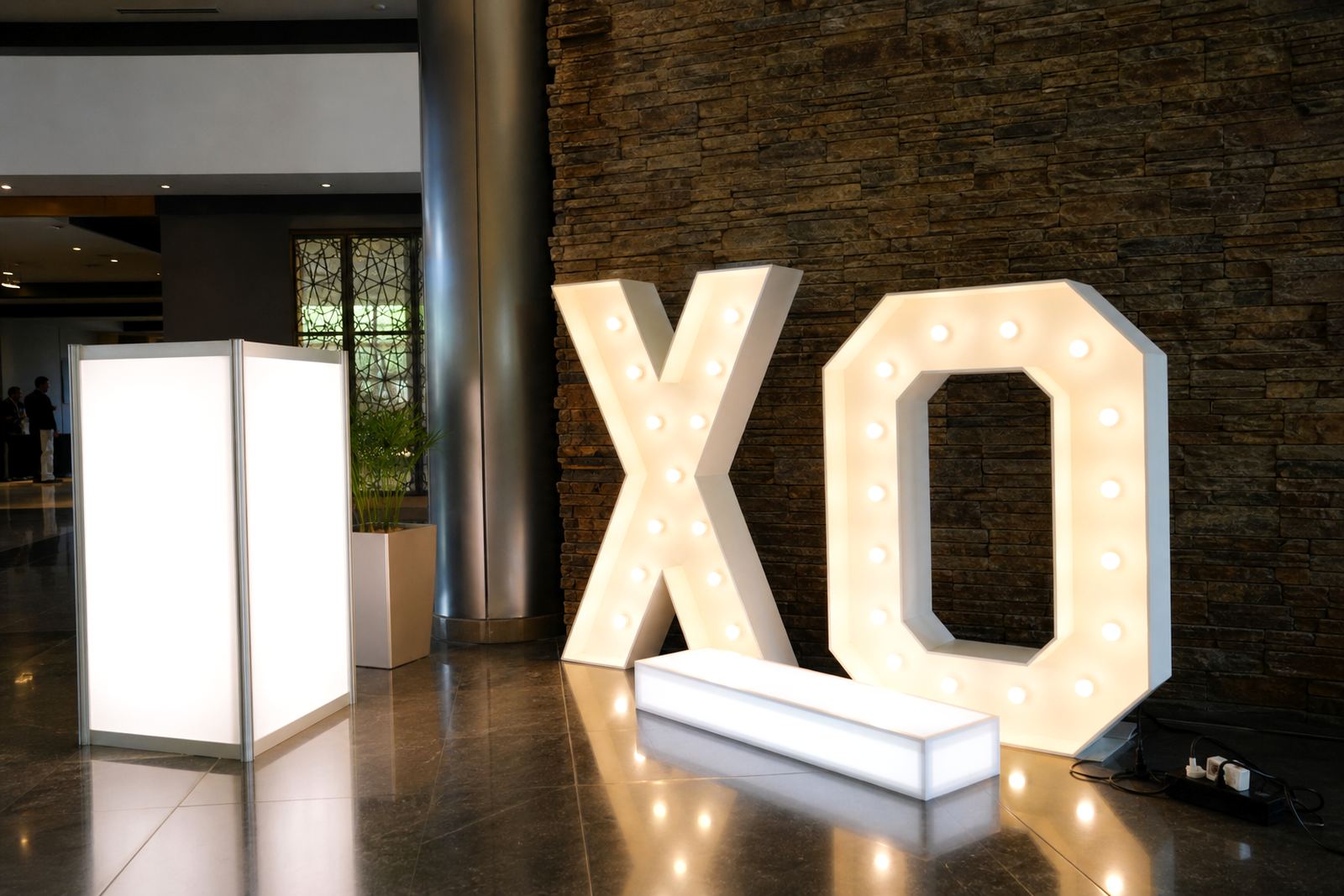
Safe cable routing matters just as much as the sign itself. Cables should run along the back edge, be kept flat where possible and stay away from walkways, dance floors and curtain tracks. If the cable path is not planned properly, the sign can be in the right spot but the set-up still looks untidy.
- Place the sign near a usable power source.
- Keep cables hidden from main camera angles.
- Avoid crossing the front of the stage.
- Test the full lit position before guests enter.
When a venue has limited sockets or a packed stage layout, the sign may need a slight shift left or right to keep the cable run neat. That small change can make the whole backdrop look more settled.
Stage signs for speeches and photos need different angles
The position that works for a speech is not always the same position that works for a group photo. A speaker needs clear sightlines to the room, while a photographer needs the sign readable without glare, shadows or a blocked face line.
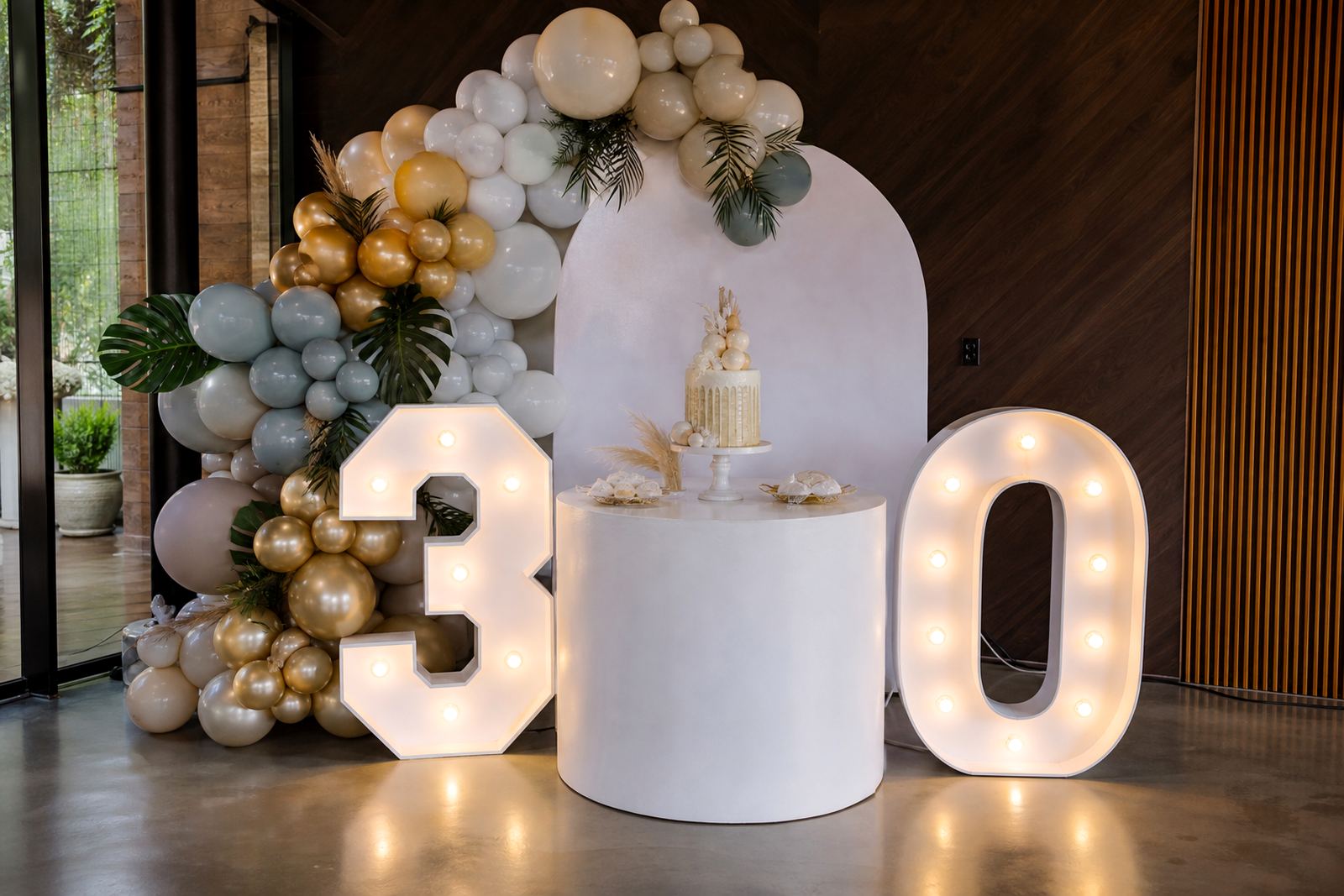
For corporate events in Sandton or Centurion, a slightly offset sign can help the presenter stand naturally without blocking the main message. At weddings, the couple often needs a clear space in front of the sign for pictures, so the sign should sit high enough to frame the moment but low enough to stay part of the stage design.
Horizontal lightboxes suit wider backdrops, while illuminated letters can work well across a lower stage line. The key is not the product alone, it is how the sign sits with the rest of the room.
Stage sign fit for a mixed-use Midrand venue
A Midrand event often brings together a stage, a dance floor and a tightly planned seating area. In that kind of room, the sign cannot be placed by guesswork. It has to be measured against the room width, the stage height and the angle from the main table or camera position.
For one corporate celebration setup, the sign needed to sit just above eye level for the seated guests while leaving room for a floral cluster below. The final placement left enough air around the letters, kept the power cable out of sight and allowed the photo area to work without people stepping into the speaker zone.
That sort of placement is usually calmer on the eye than a backdrop filled from edge to edge. Guests can read the message, the stage still feels open, and the photographs do not need extra cropping to look tidy.
What the installation team checks before locking the position
Good positioning is rarely about one measurement. It comes from matching the sign to the venue, the programme and the traffic around the stage.
- A clear view of the sign for guests seated at the rear of the room.
- Clear space for speeches and photo moments.
- Safe access to the nearest power point.
- Room for neat cable routing behind the stage.
- Space for delivery, set-up and post-event collection.
For outdoor placements, the sign must also sit securely on a level surface and stay protected from wind or uneven ground. Indoor placements need a different check, especially where polished floors or narrow staging leave less room for support equipment. The aim is a backdrop that reads well and stays orderly through the event.