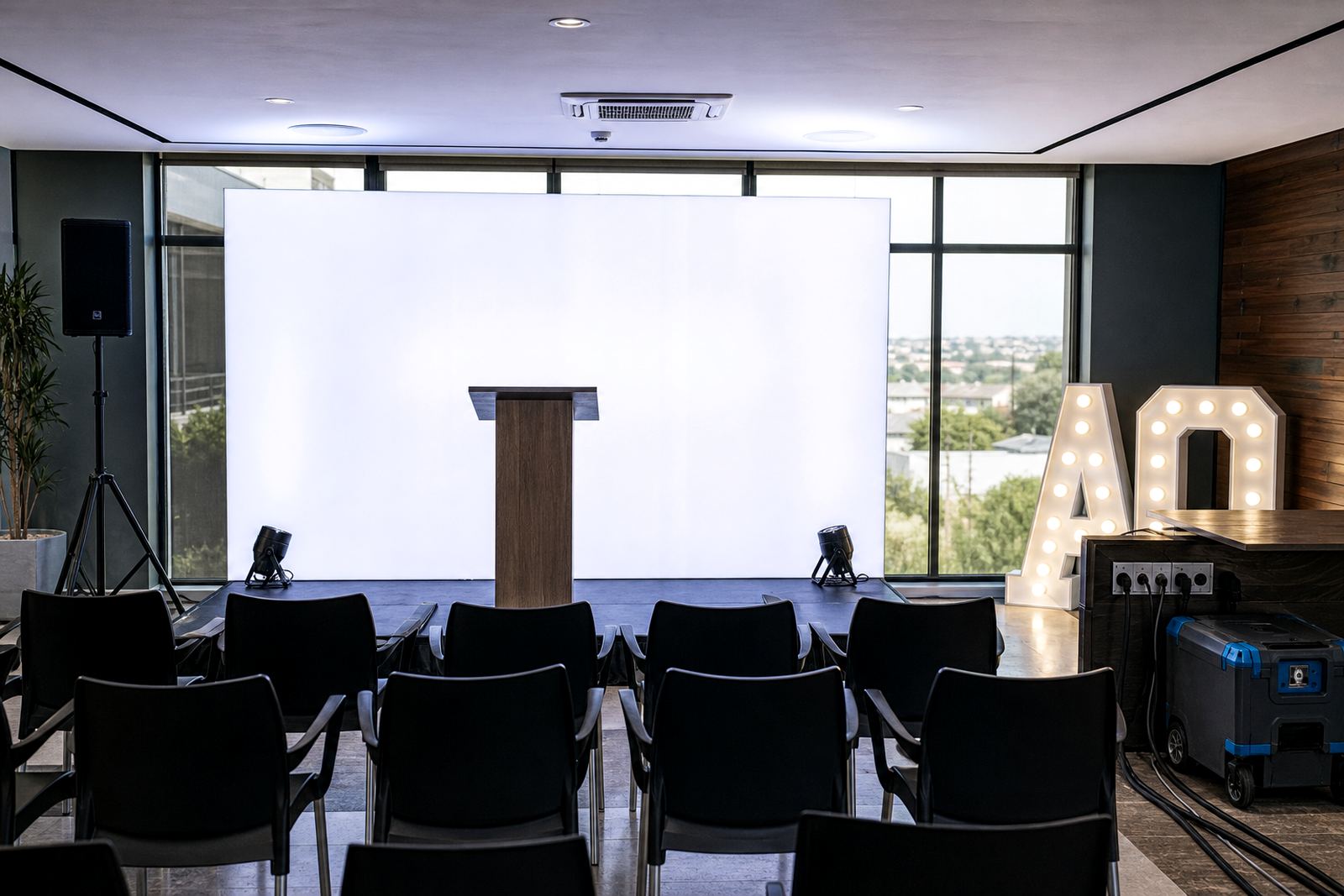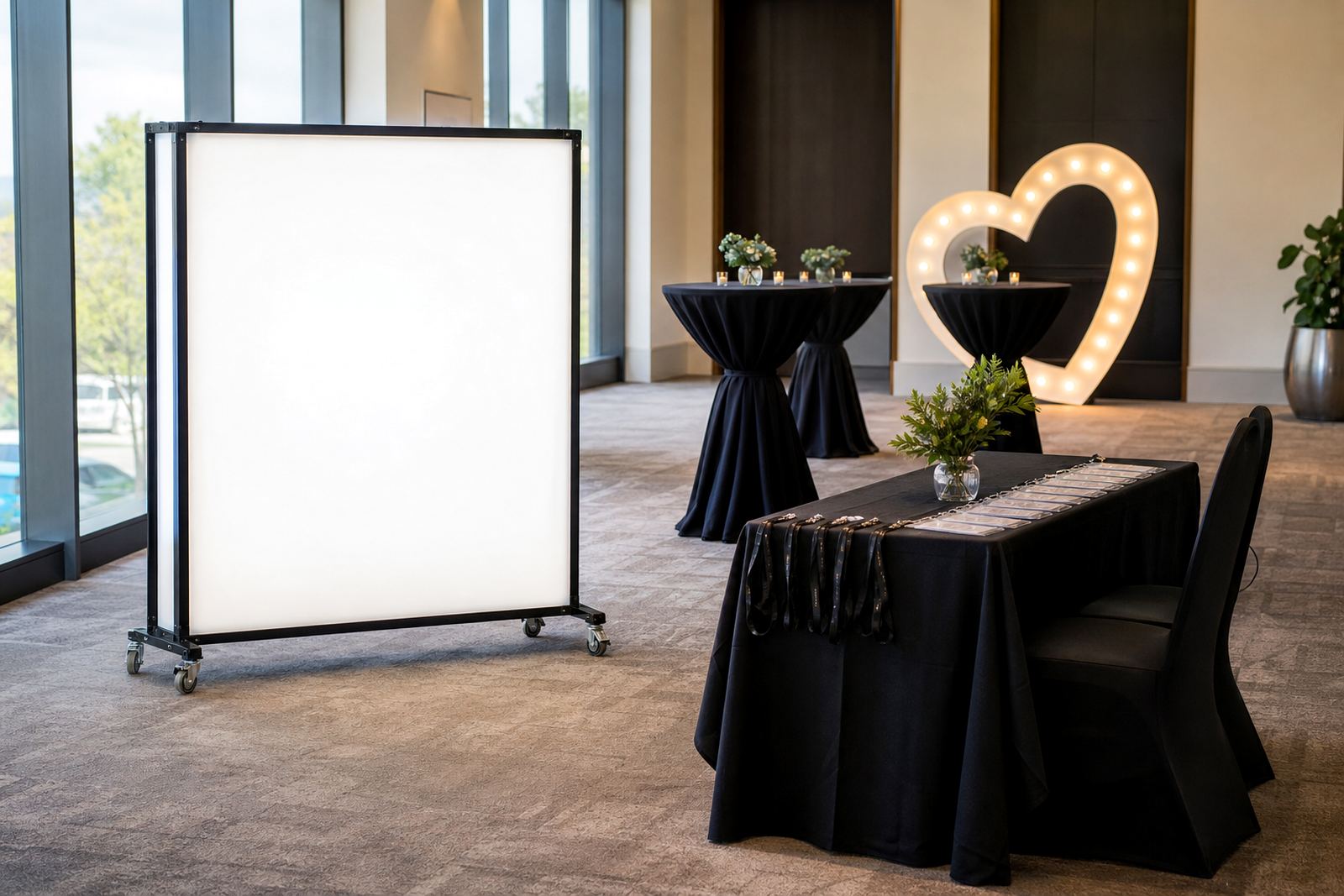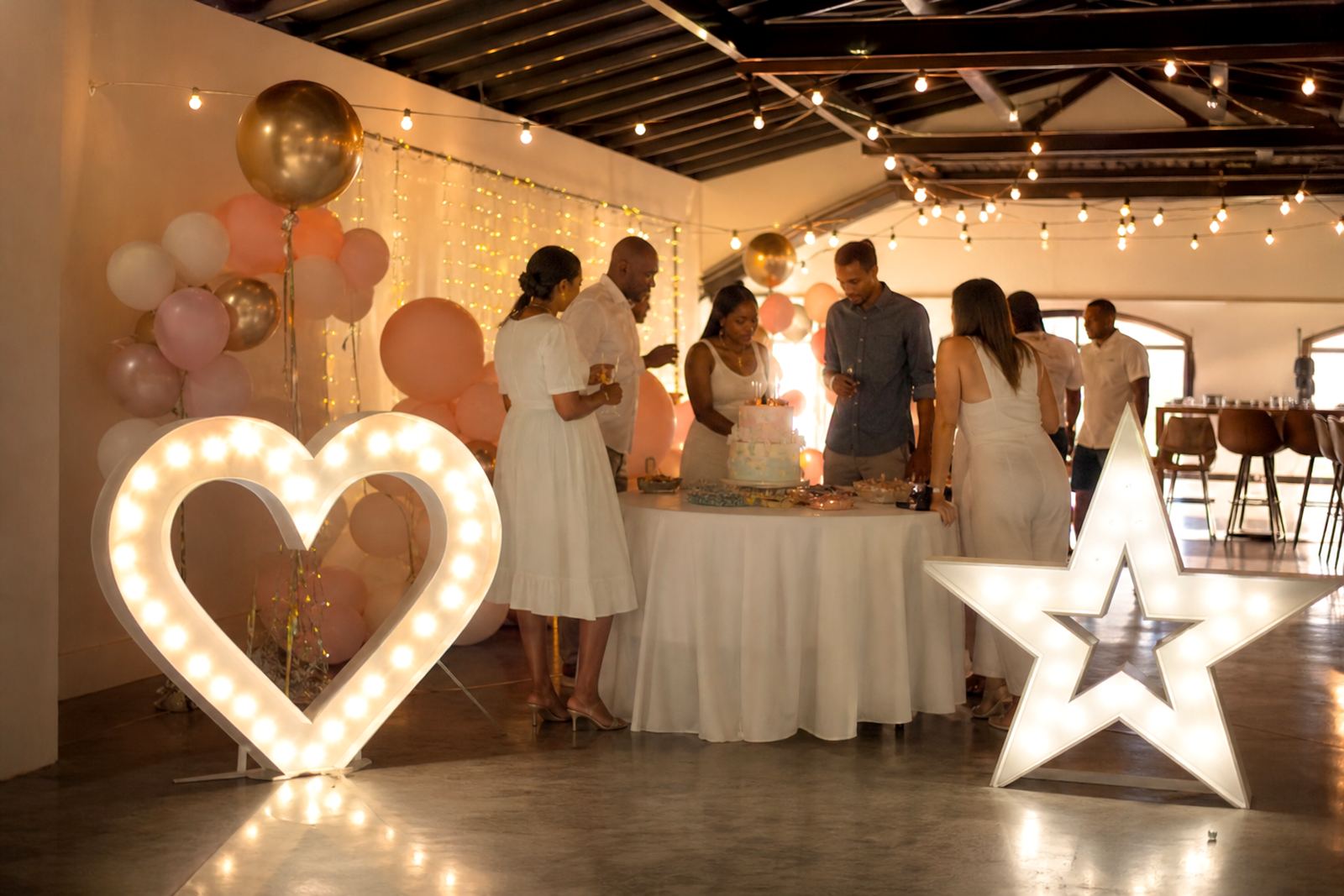

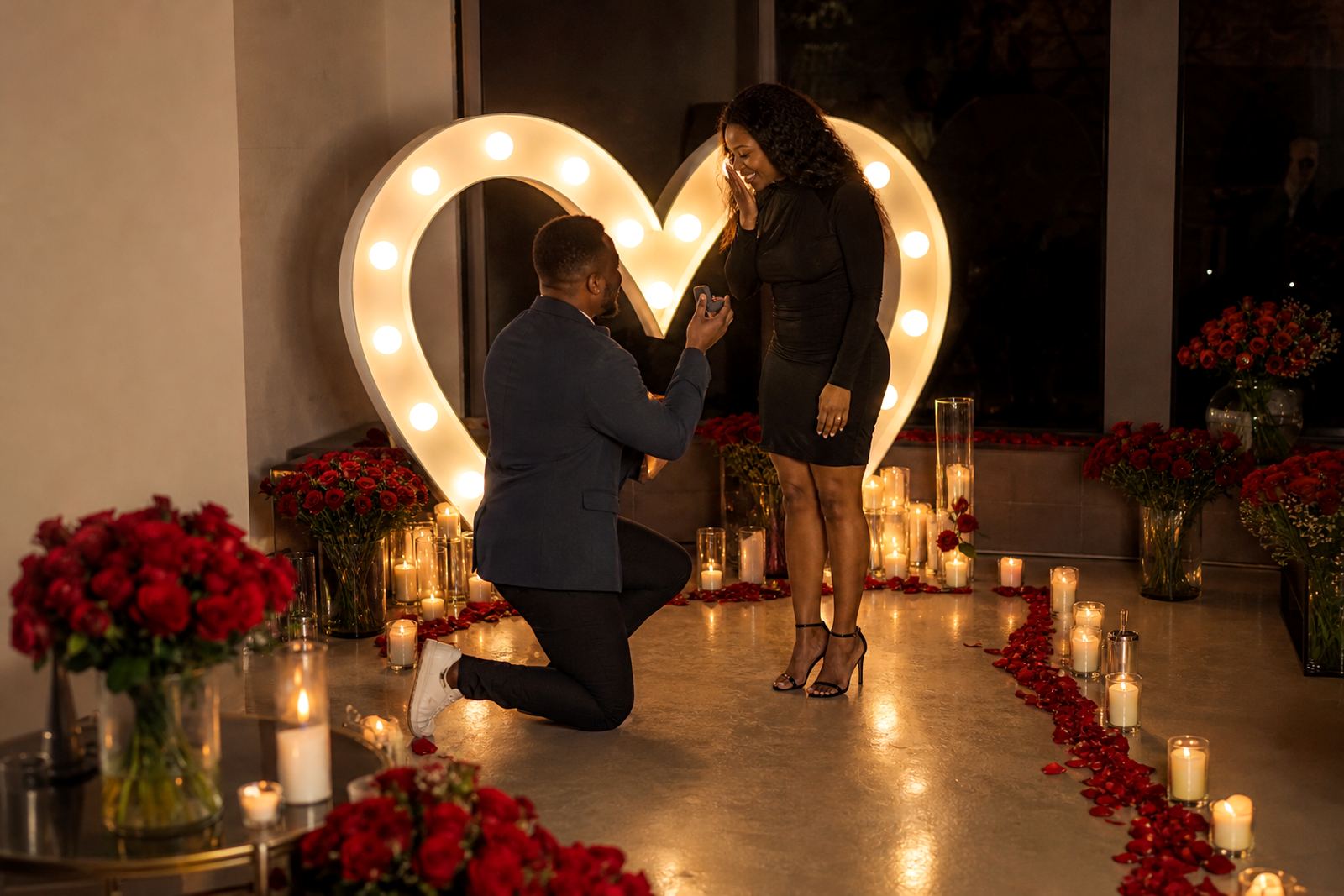
When the moment needs a clear yes in the room
Proposal setups usually need a different touch to a party or launch. The lighting must frame the spot without taking over the room, and the equipment should sit neatly around flowers, chairs, candles or a private dinner table. A proposal can be indoors at a restaurant, at a home in Midrand, or in a hotel suite in Sandton, and each setting asks for a different layout.
The usual brief is short on fuss and exact on detail. A lightbox may carry a message, marquee letters can mark a name or question, and a neon-style sign gives a soft glow that photographs well. Placement matters just as much as the wording, because the sign must read clearly from the angle where the question happens.
We look at the room size, the floor finish, where the guests will stand and where the power point sits. That helps with safe cable routing and avoids leads crossing a walkway or sitting under table legs. In tighter spaces, the setup has to stay low and tidy so the décor still feels personal and not crowded.
Equipment that suits a proposal setting
Layout starts with the viewing line. The sign should face the person being asked, but it also needs to sit where guests and camera angles can catch it without blocking the proposal itself. A small shift of half a metre can change how the light falls on flowers, tableware and faces.
Planning usually covers three things: where the main feature sits, where the cables run, and where the team can work without interrupting the room. For proposal setups in Gauteng, venues often have tight access times or shared spaces, so the install has to be ordered and clean. If the proposal is in Durban or another coastal area, humidity and evening air can matter for outdoor work, especially when the display sits near the sea or in a garden venue.
- Place the main sign at eye level where possible
- Keep floor cables along edges or behind furniture
- Leave clear space for the person proposing and the photographer
- Match the brightness to the room lighting, not brighter than needed
- Use a base or support that suits the floor finish
Common mistakes on proposal installs
Many proposal jobs go wrong when the sign is chosen before the space is checked. A large display can overpower a small room, while a tiny message can disappear in a venue with high ceilings or strong ambient lighting. Another common problem is poor cable planning, which leaves leads visible in photos or across a walkway.
Colour is worth thinking through as well. A bright white sign can look sharp in a dark room, but may feel too stark in a soft candlelit setting. Warm lighting usually sits better with roses, linen and low table décor. For outdoor proposals, it helps to avoid placing delicate pieces where they will be bumped by chairs, servers or guests moving in for photos.
Even a brief set-up often calls for the greatest care. A proposal might need delivery, set-up, a power point check and later collection, all without drawing attention to the work itself. That is where a clean handover matters, because the person proposing should not be thinking about cables or loose stands during the moment.
Budget ranges for proposal lighting in Rand
Proposal budgets vary with the size of the display, the number of items, the distance to the venue and whether the setup is indoors or outdoors. A small single-item proposal with delivery in Midrand or Johannesburg usually costs less than a multi-item layout with letters, a lightbox and collection after the event. Out-of-town work can add transport and extra handling.
As a broad guide, small proposal lighting jobs may start in the low thousands of Rand, while larger layouts with multiple illuminated pieces and more involved set-up can move into the mid-thousands or higher. Late-night collection, long-distance logistics and outdoor placement can also shape the final figure. The best budgets are the ones that match the room instead of forcing too much into it.
For couples planning in Sandton, Pretoria, Centurion or Durban, the equipment list should be kept close to the space available. A tidy proposal setup does not need a long list of items. It needs the right pieces, good placement and safe cabling that stays out of the frame.
Working with the room, the route and the timing
Every proposal setup has a route attached to it. The team needs space to unload, a clear path to the room, and enough time to place each item without rushing the finish. A Midrand base helps with movement across Gauteng, but the practical detail still depends on the venue itself, not the map alone.
For corporate proposals or private celebrations, the setup may need to stay hidden until the final reveal. That means the display, the lighting direction and the cable path all need to be planned in advance. The same applies to photo area layouts, where the sign must work in the frame and still feel natural when the moment is over.
The useful booking details are simple: venue area, indoor or outdoor space, the message to be shown, and whether the proposal needs delivery, set-up, post-event collection or out-of-town logistics. The more the room is described, the easier it is to match the lighting to the moment.