
1. Send the event details that shape the hire
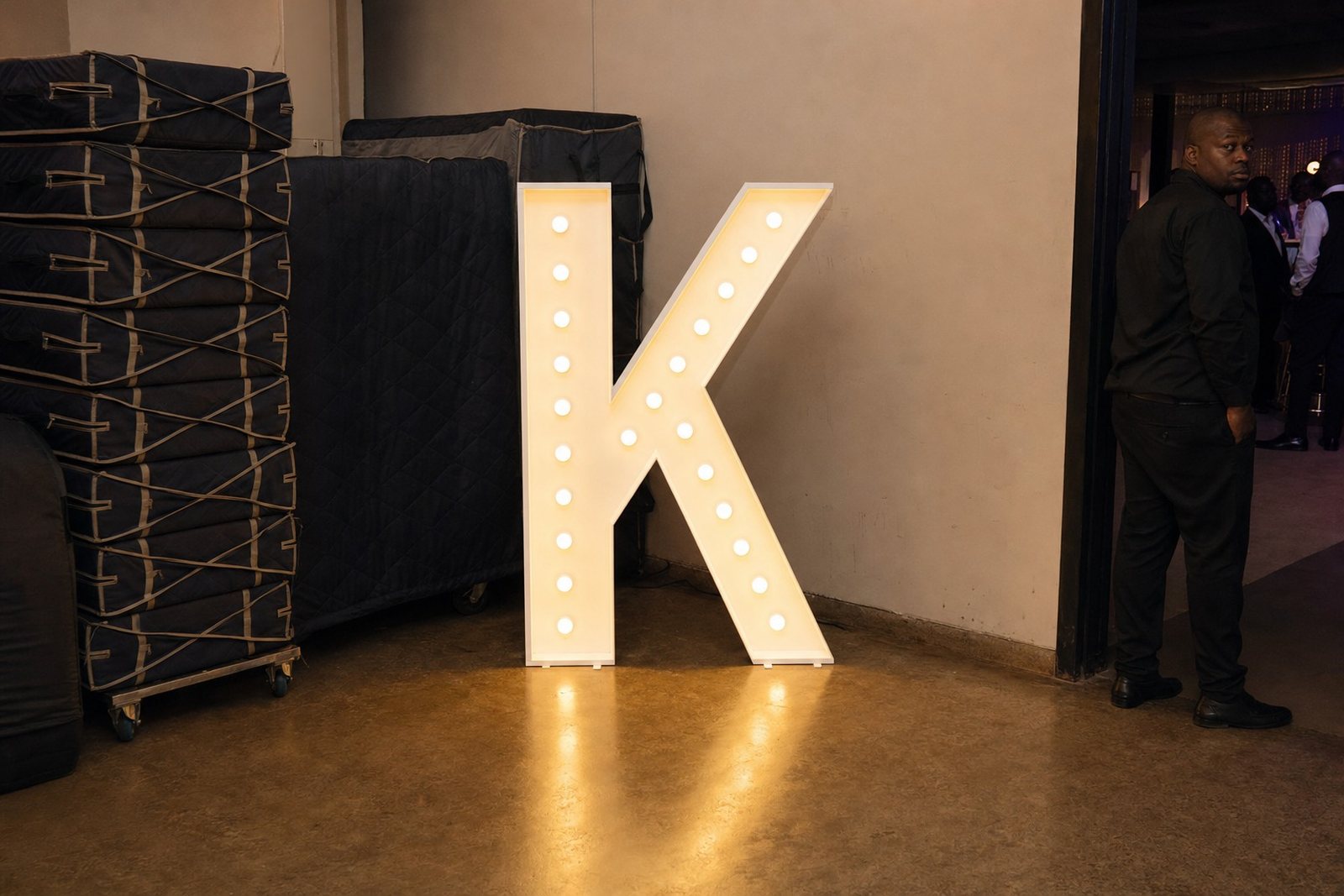
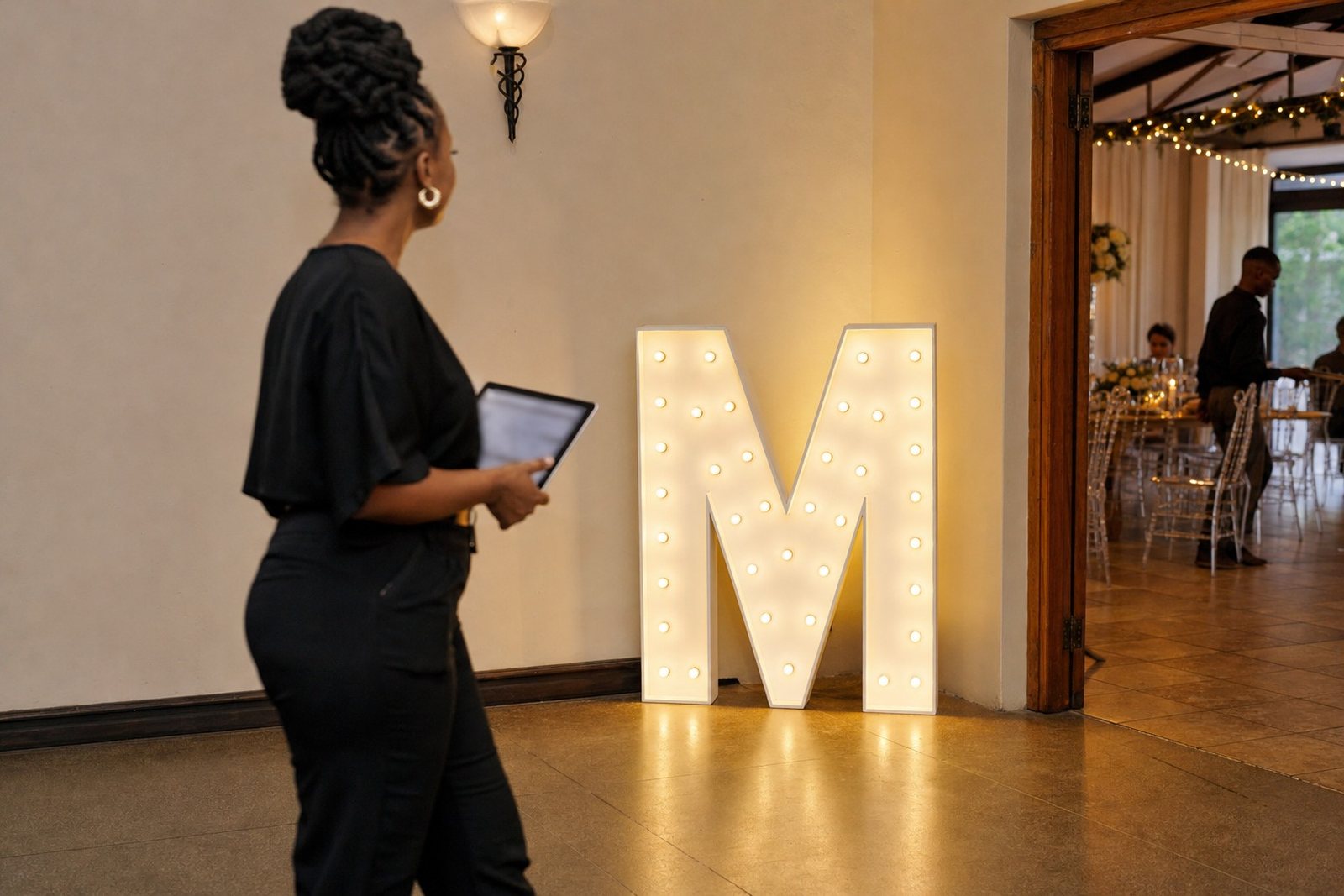
The booking begins with the basics: event date, venue, suburb, the items you want, and the look you are trying to create. A wedding entrance, corporate launch or birthday photo area all need a slightly different set-up, so the details help match the right lightboxes, marquee letters or illuminated signs to the space.
If the event is in Midrand, Johannesburg, Pretoria, Sandton, Centurion or farther out, the area matters for delivery planning and access. Indoor halls, garden spaces and hotel venues may each have different entry points, loading rules and cable routes, so it helps to note those up front.
- Event type and date
- Venue name and suburb
- Items required for hire
- Indoor or outdoor placement
- Any access notes for loading or lift use
2. Booking review and item matching
Once the enquiry is received, the hire list is checked against the stock on hand and the layout that suits the venue. A single illuminated word for a stage backdrop needs a different footprint to a row of marquee letters at a dance floor, and a pair of lightboxes at a welcome area needs careful spacing.
The booking is also matched to practical points such as floor surface, weather exposure for outdoor placements and whether the venue has nearby power points. If the job needs a photo area layout, the items are arranged so the lettering reads clearly and the set-up does not crowd walkways.
- Item size and quantity are matched to the venue space
- Power access is checked for safe placement
- Outdoor sites are planned with weather and surface conditions in mind
- Multi-item installs are mapped so the layout stays balanced
3. Confirmation details before the hire is locked in
After the item list and venue details are matched, the booking is confirmed with the hire dates, delivery window, set-up plan and collection arrangement. The notes also cover any special handling needed for stairs, tight passages or long cable runs. That keeps the job practical on the day and avoids rushed decisions at the venue.
For corporate events, the event schedule may also need to fit around speeches, product reveals or media arrival. For weddings and private functions, set-up usually has to fit around décor teams, florists and venue staff working in the same space.
- Hire dates are matched to the event schedule
- Delivery and collection points are noted
- Venue access and parking details are recorded
- Any timing around speeches or room access is added
4. Delivery planning across Gauteng and beyond
Delivery is arranged around the venue location and the amount of equipment going out. Midrand jobs may be handled differently from out-of-town work, especially where more than one item needs transport or where collection must happen late at night after the event ends. For Durban work, route planning and loading time get built into the schedule before the truck leaves the base.
The delivery plan also considers whether the items are going into a ballroom, a garden setting or a corporate foyer. Some venues need a direct load-in, while others need a slower move through guest areas or service passages.
- Johannesburg, Pretoria, Sandton and Centurion are planned as local delivery routes
- Rosebank and Fourways often need tighter venue access notes
- Out-of-town logistics are set according to distance and load size
- Late night collection is arranged where venue rules allow it
5. Set-up, power points and safe cable routing
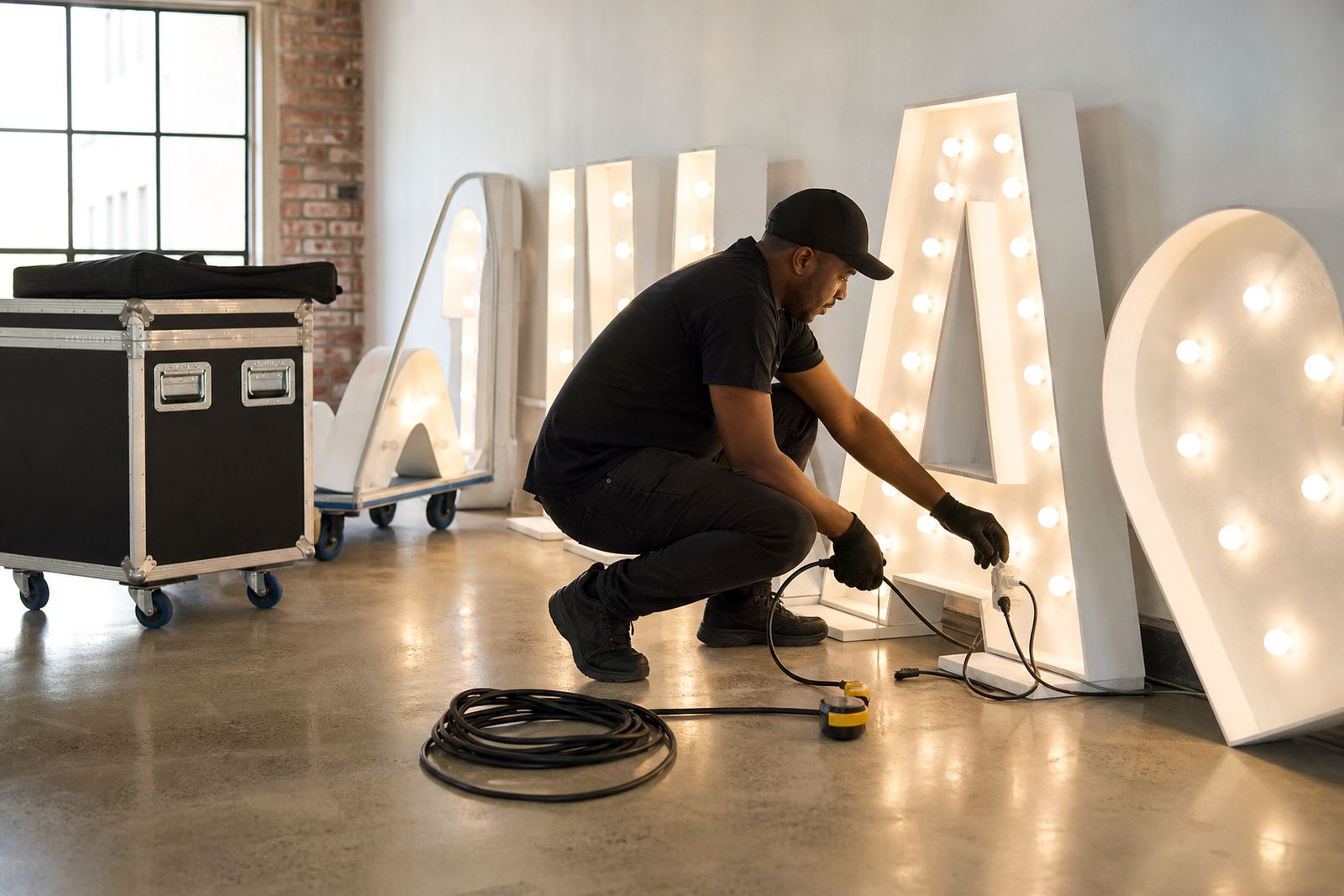
On site, the setup team positions the lightboxes and illuminated letters where they read well and sit safely. If the venue has power points nearby, those are used in a way that keeps cabling neat and reduces trip hazards. Cable runs are kept clear of walking lines, doors and service areas, and the layout is adjusted if the floor is uneven or the placement area is tight.
Outdoor placement needs extra attention to ground conditions and shelter. Indoor placement is usually easier to control, but it still needs careful spacing so the lights do not block exits, tables or photography angles.
- Venue power points are checked before connection
- Safe cable routing is used around guest areas
- Indoor and outdoor placement are handled differently
- Photo area layouts are checked for clear sightlines
6. Collection after the event and closing the booking
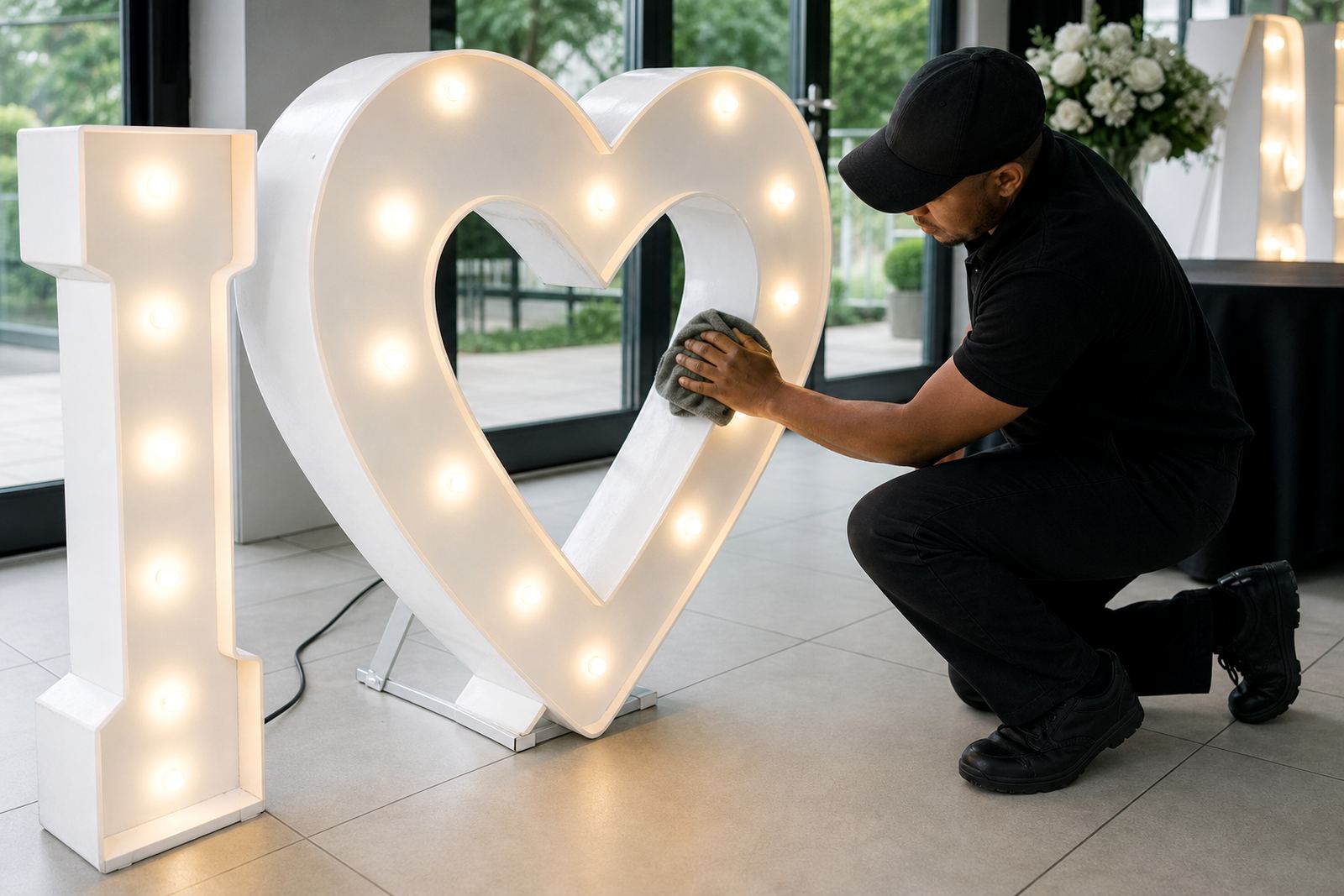
When the event finishes, collection is arranged according to the venue rules and the agreed access point. The team removes the hired items, checks the load-out path and clears the space without leaving loose cabling or stray fixings behind. Where the venue requires a late night pickup, that is planned around closing time and staff availability on site.
Once the items are back at the Midrand base, the booking is closed off and the equipment is checked for the next hire. That final step matters most after long event days, outdoor placements or multi-item installs where each piece has travelled and been handled on site.
- Collection follows the agreed event end time
- Venue rules for access and exit are respected
- Items are checked after return to base
- Future hires can use the same booking notes if the setup is similar