
1. Measure the entry route before the truck arrives
Start with the practical path from the gate or loading point to the final display spot. Check gate width, corridor turns, lift size and any stairs that may affect moving lightboxes or freestanding letters into place. In Midrand, Sandton and central Johannesburg venues, tighter service entrances are common, so it helps to note where trolleys can move safely and where hand-carrying may be needed.
Tell the venue team if the display must pass through a ballroom, foyer or marquee opening. A few centimetres can make the difference between a smooth install and a difficult carry, especially where decor, pillars or temporary partitions narrow the route.
- Measure the narrowest doorway or gate
- Check for stairs, ramps and sharp corners
- Note whether the access path runs inside the venue or outside.
- Note if a lift is available for upper levels
2. Match the power point to the display plan
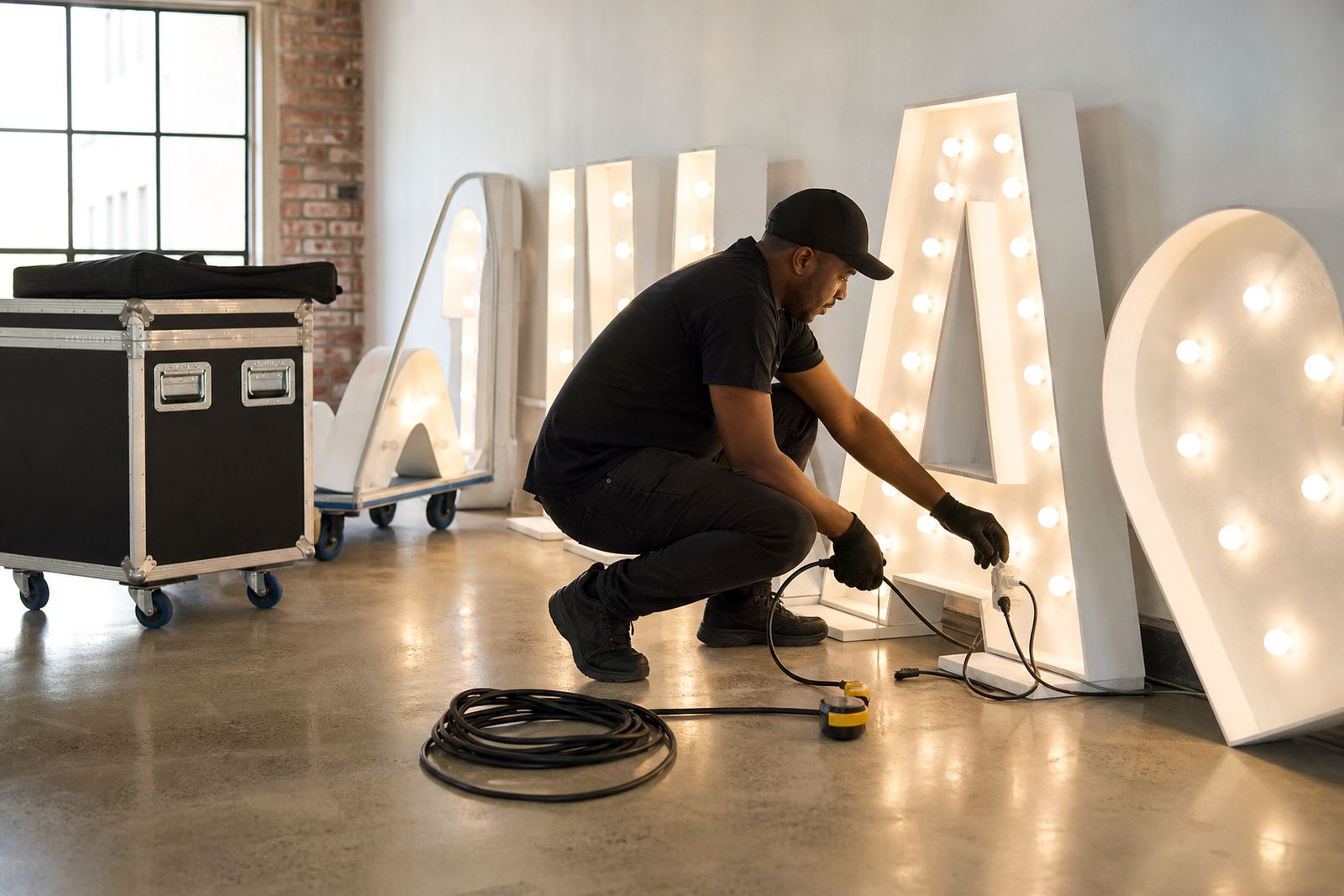
LED lightboxes and illuminated letters need a suitable power point close to the final position. The venue should indicate where mains power is available and whether that point is on the same wall, behind a stage, or across a walkway. A quick look at the floor plan helps avoid long cable runs that cross guest routes or sit where people may trip.
If the display is for a photo area, welcome board or head table backdrop, the power point should be planned before decor is placed. Safe cabling matters most where guests move around chairs, draping and flower stands. Power should be stable, with the socket position noted clearly for the setup team.
- Show the nearest socket to the display spot
- Confirm whether extension routes stay out of walkways
- Keep cable paths away from wet areas
- Point out any restrictions on tape or floor fixing
3. Allow proper clearance around the sign
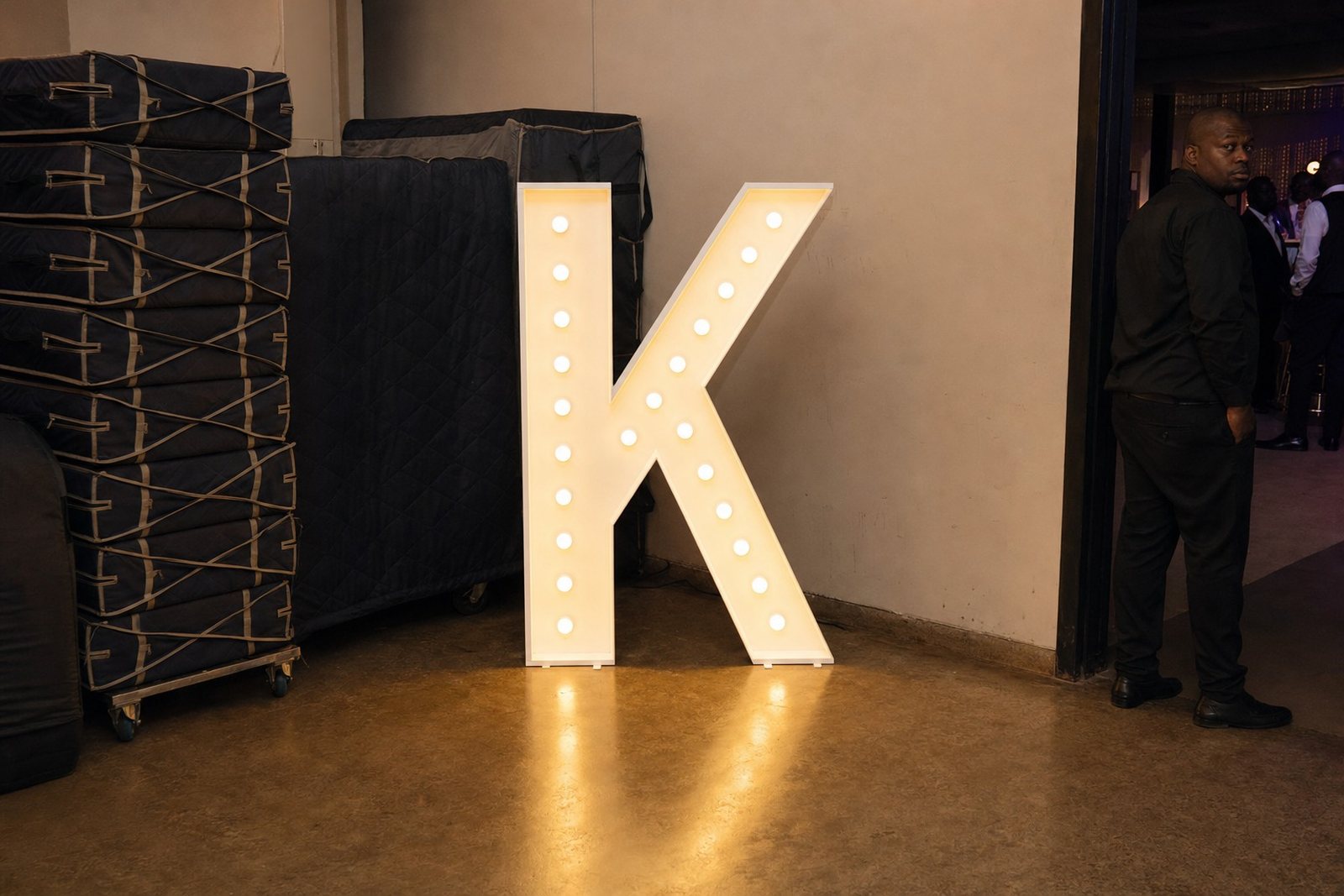
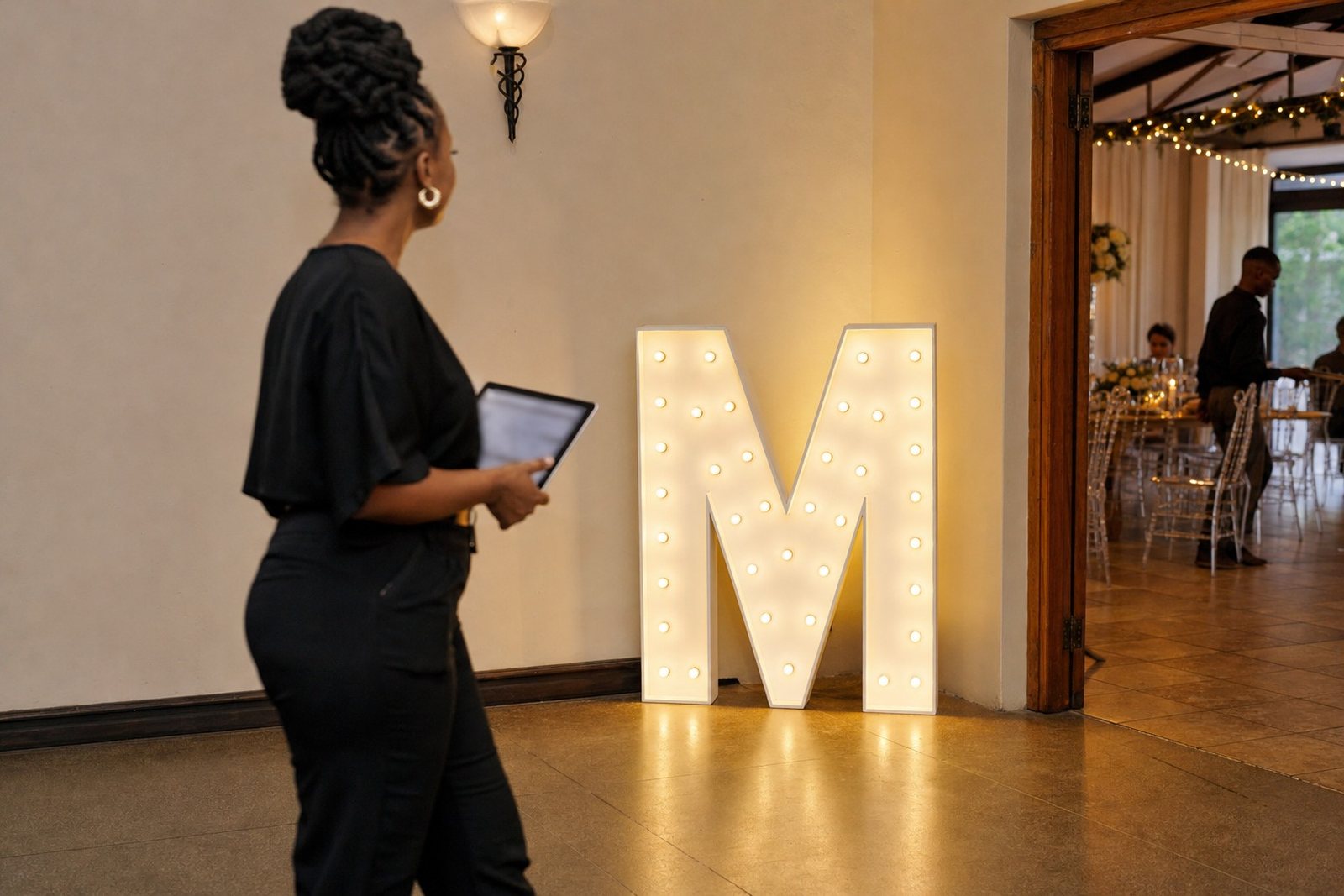
Placement space is about more than fitting the item in a gap. The sign or lightbox needs enough room around it so it can be seen properly and so guests do not crowd the structure. For marquee letters at a reception, the spacing around the name or initials should allow clear viewing from the entrance, dance floor and photography angles.
For outdoor setups in Gauteng, the ground should be level and firm. Uneven paving, loose gravel or soft lawn can affect stability, so the venue should mention surface type in advance. If the display sits near a wall, backdrop or floral frame, allow enough depth for the item and any supporting hardware.
- Allow clear sight lines from guest areas
- Check floor level and surface type
- Leave space for safe placement and removal
- Avoid tight corners behind decor or furniture
4. Share the venue rules that affect setup
Some venues have controlled delivery times, loading rules or limits on where equipment may be placed. That is common in hotel ballrooms, conference centres and estate venues around Pretoria, Rosebank and Centurion. If there are noise limits, access control points or marshals on duty, the setup team should know before arrival.
Also mention whether the venue allows temporary signage, freestanding decor or outdoor placement after dark. These details shape the install plan and the collection route. A clear note about floor protection, wall contact and prohibited fixtures avoids delays at the point of setup.
5. Lock in the collection window before the event starts
Collection works best when the venue knows when guests are expected to leave and when the room will be clear. This is especially useful for late evening weddings, awards dinners and private functions where the display must stay in place until the programme ends. The team should know who can release the items, and from which entrance the collection will happen.
If the event is running in multiple spaces, such as a ceremony area and a separate reception room, say which items move first and which stay until the final close. That reduces confusion when the room is being reset for the next service or handed back to the venue team.
6. A short checklist the venue can work through
Settle these with the venue or coordinator before setup day. That keeps the display plan practical and avoids guesswork once the truck is on site. A proper note on access, power and placement often saves time at busy venues across Johannesburg, Sandton and Durban.
- Confirm the exact display location
- Confirm the nearest power point
- Check the route from loading area to display area
- Confirm any venue access rules
- Confirm who will sign off on placement
- Confirm the collection point and collection timing
For larger events with more than one illuminated item, it helps to mark the order of installation. The team can then place the main sign first, then the smaller pieces around it, without blocking the room or disturbing the rest of the decor.
7. If the display is outdoors, note the weather and surface
Outdoor placement needs a bit more detail than an indoor room. The venue should say whether the ground is paving, grass, decking or a temporary platform. On exposed sites, wind movement and damp ground can affect where the item is positioned and how cables are routed, especially near gardens, patios or poolside areas.
For coastal events or humid conditions, equipment handling needs care around moisture and surface grip. A few added notes from the venue make it easier to plan safe placement without moving the display twice.