
1. Set the branding job before the first lightbox is moved
Start by deciding what the illuminated pieces must do in the room. A foyer usually needs a clear welcome point, a stage needs strong name recognition, and a networking area often works better with shorter wording that can be read while people are walking past.
For conferences, product launches and awards evenings, the message should be easy to take in from a few metres away. Keep the wording tight, avoid busy extras, and leave enough breathing room around each sign so the venue does not feel packed. In a ballroom or hotel foyer in Midrand or Sandton, that spacing matters because people move through the area in waves and need to see the layout quickly.
- Choose the message first, then match the sign size to the space.
- Decide whether the sign is for greeting, wayfinding or photo moments.
- Check where guests will stand, pause and take pictures.
2. Choose the right illuminated format for the room
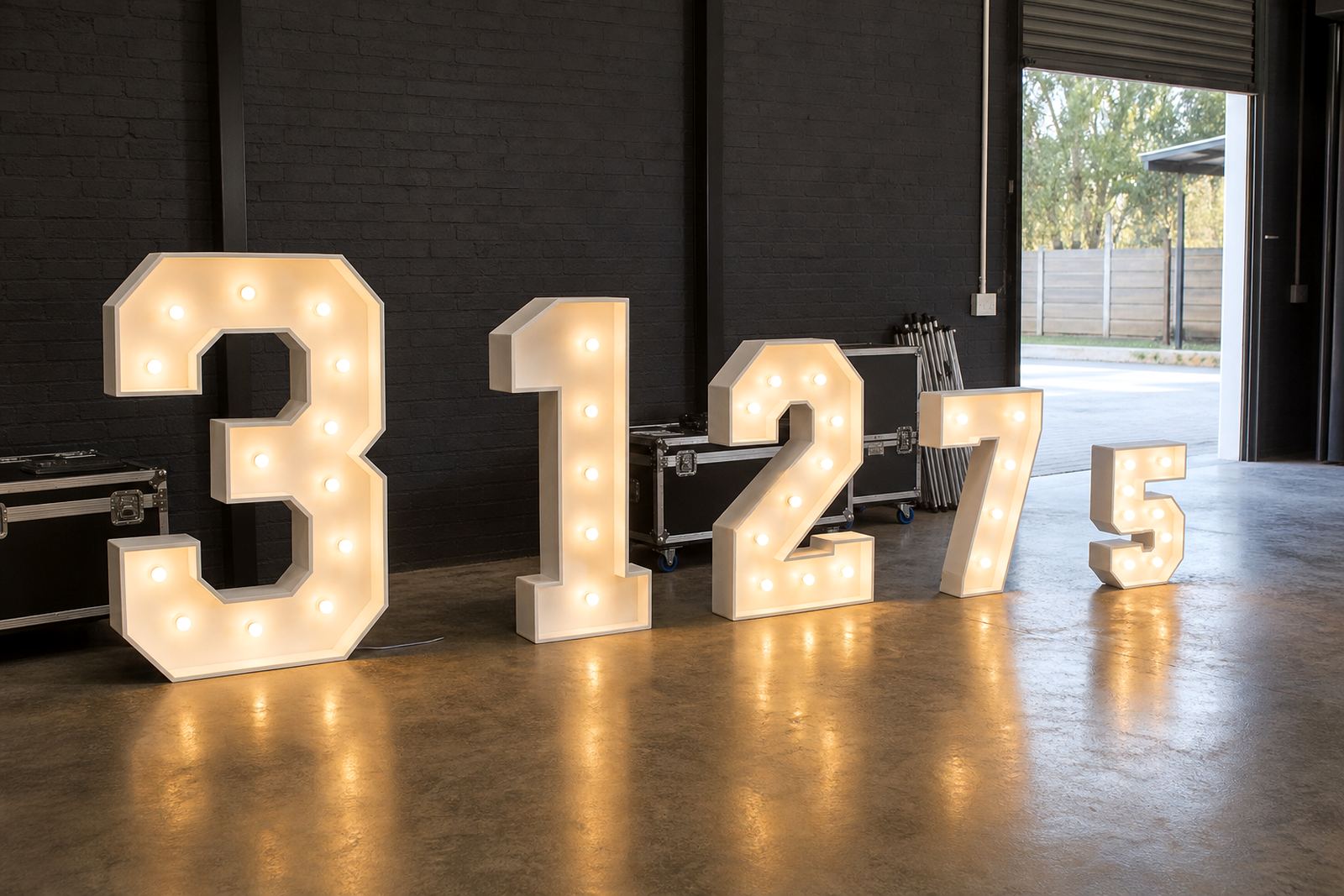
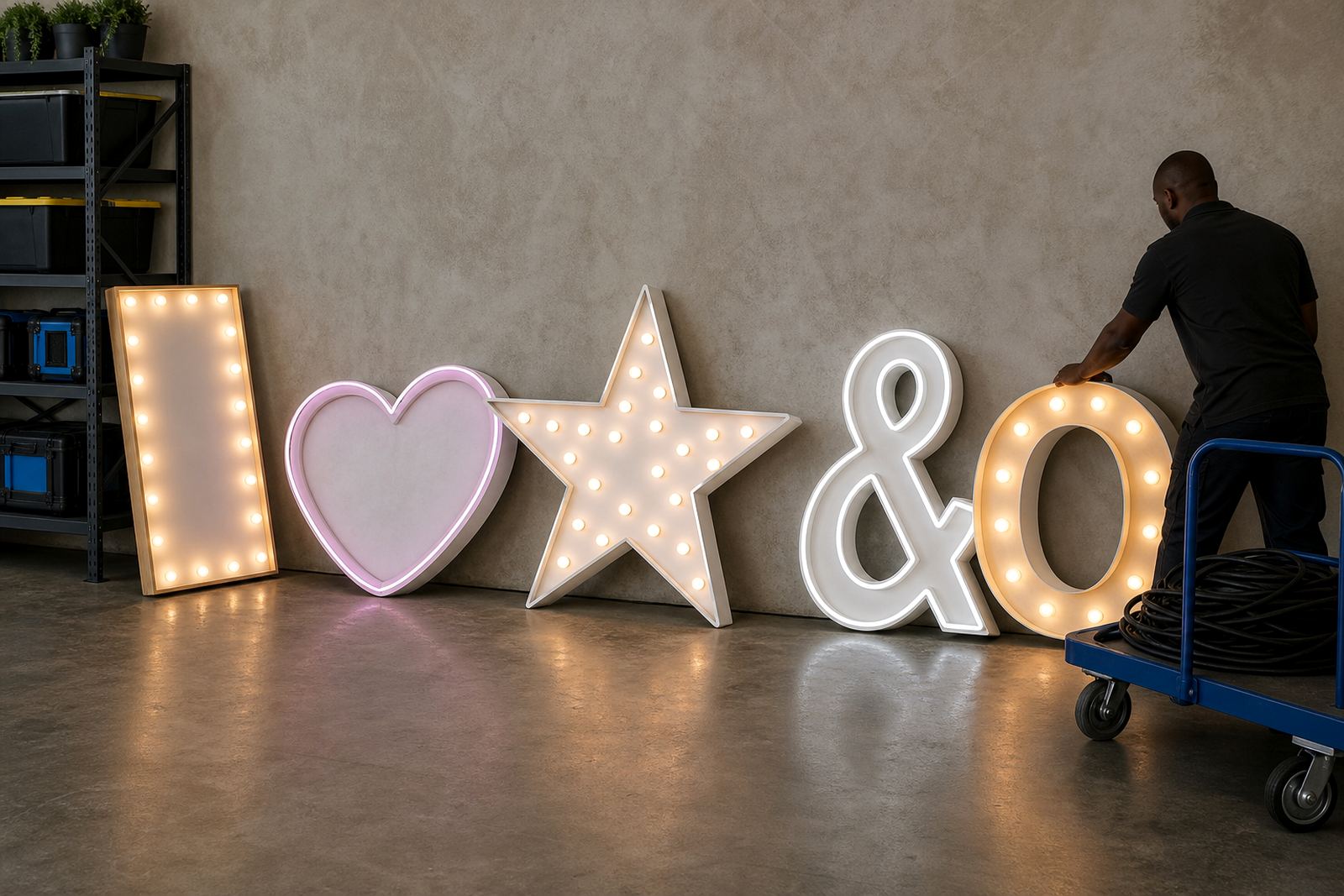
LED lightboxes work well when a logo, brand name or short campaign line must stay visible under venue lighting. Marquee letters suit initials, short names and bold photo moments, while neon-style signs bring a cleaner decorative look for bars, lounges and feature walls. Each format carries differently, so the room shape and ceiling height matter just as much as the wording.
In a low foyer, a tall sign can dominate too much. In a wide stage setting, a smaller unit may disappear beside screens and draping. That is why a practical layout checks sightlines from the entrance, the seating area and the camera positions before the install is confirmed.
- Use a lightbox when the logo or wording must stay crisp.
- Use marquee letters for initials, launch names or bold headings.
- Use a neon-style sign where the event needs a lighter visual touch.
- Size the sign to suit how far people will stand from it in the room.
3. Plan power points and cable runs before setup day
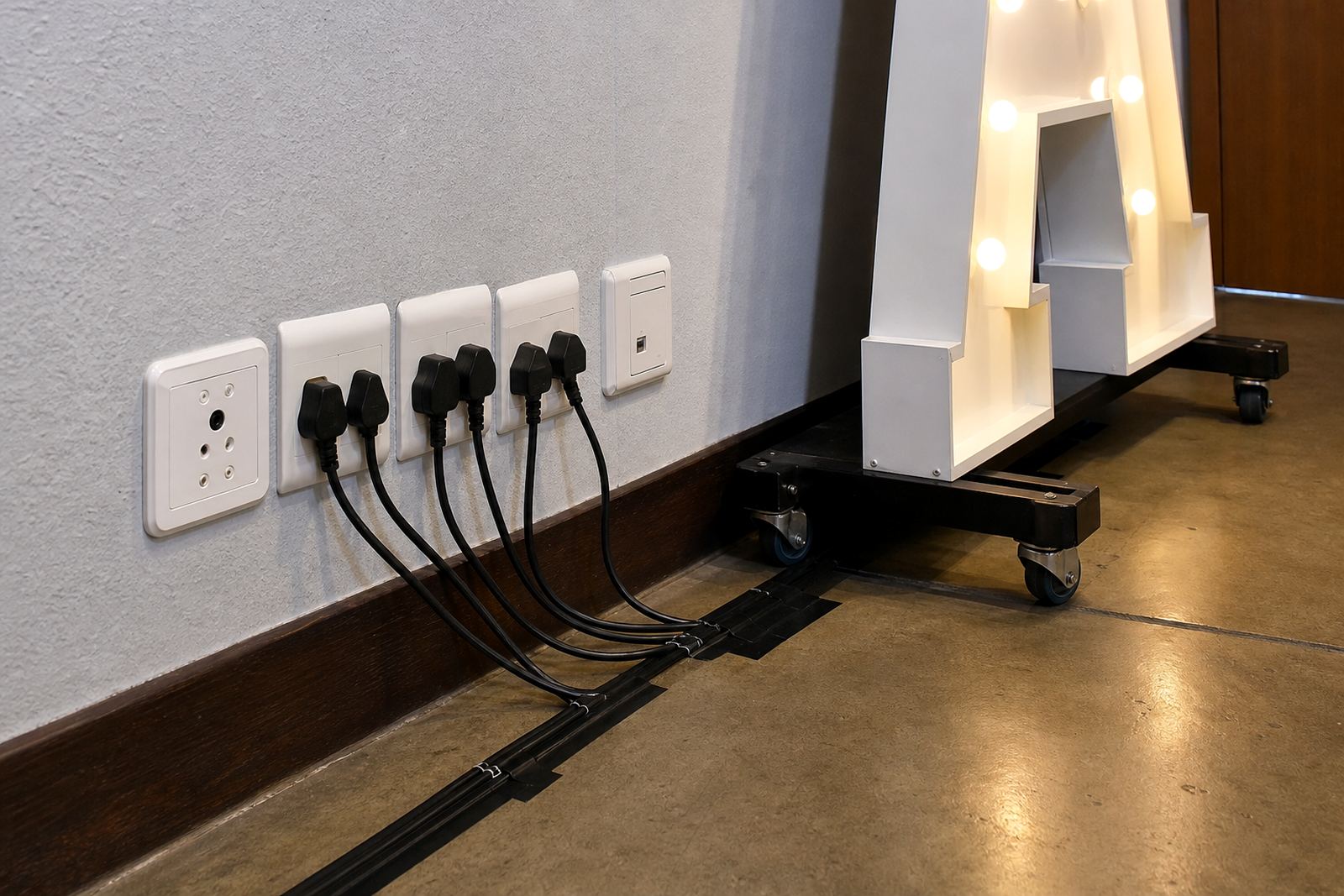
Most illuminated branding depends on a proper mains connection, so the venue power points must be checked early. The aim is not only to find a socket, but to place the sign where the cable can run safely and stay out of walkways. A clean installation keeps the area neat and helps avoid cables being lifted, twisted or covered by furniture.
At corporate venues, the safest route is usually along the edge of the room or behind scenic elements. If the sign sits near a stage or photo wall, the cable should be guided where staff can still reach it without disturbing guests. For outdoor placements, the plan needs extra attention for weather exposure, surface stability and access to power points that are actually usable on the day.
- Confirm the nearest power point and the cable path.
- Leave clear access for staff and event security.
- Keep cabling tucked away from high foot traffic.
- Ask for a layout that fits the venue rules and floor plan.
4. Use foyer branding to direct movement, not just decorate
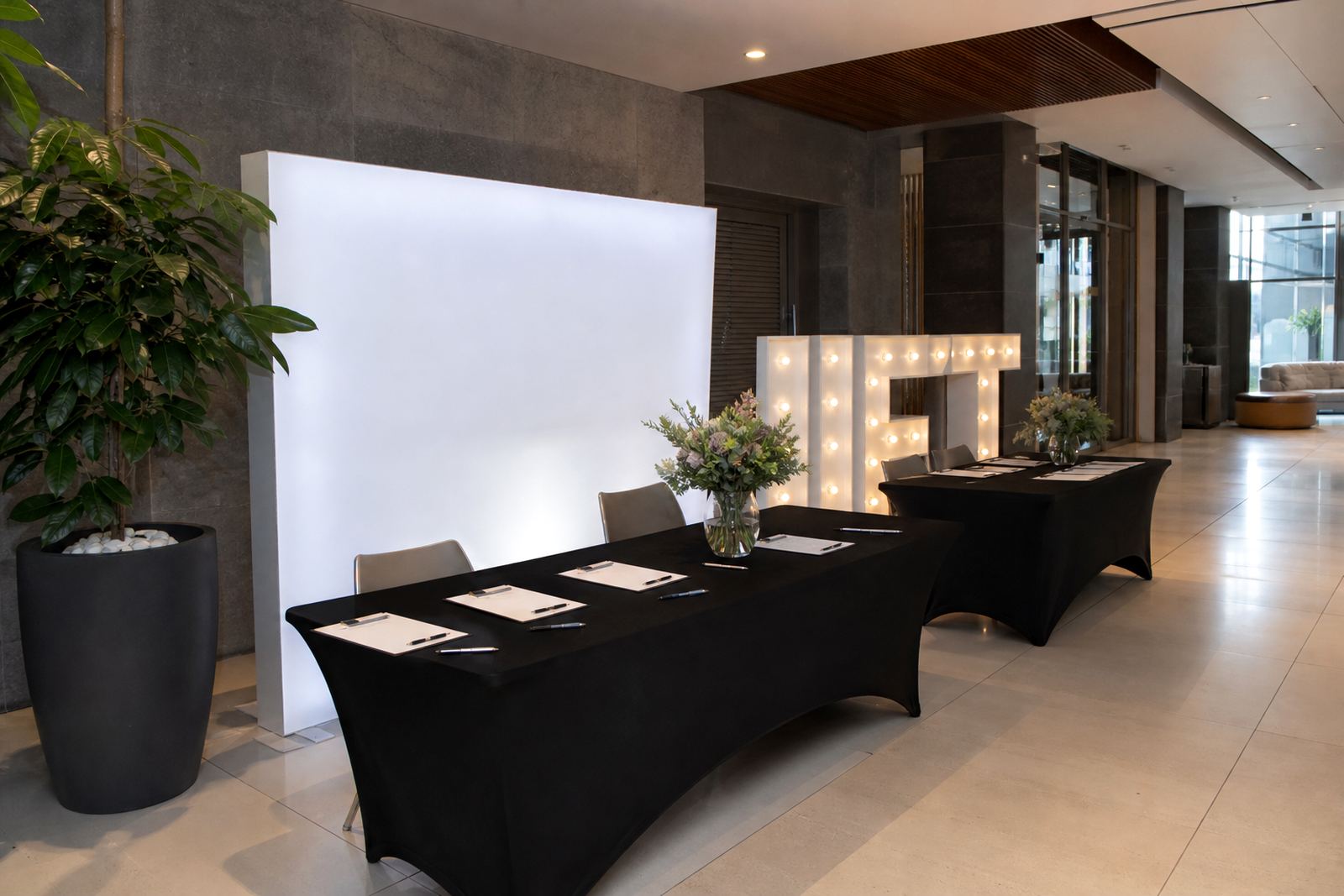
A foyer is often the first place guests stop, so illuminated branding there should guide movement as well as look smart. A lightbox beside registration can anchor the check-in point. A marquee word near the entrance can frame the arrival photo. A smaller illuminated message can mark the route to a networking room or private function area.
Spacing is important in these areas because people cluster naturally near doors, counters and escalators. If a sign sits too close to a traffic line, it can become awkward to read and harder for staff to work around. For larger buildings in Johannesburg or Pretoria, a second sign may help divide the arrival space from the rest of the programme.
Good foyer branding also keeps the visual language steady. If the stage uses one font style and the entrance uses another, the event can feel split in two. Matching the shape, brightness and wording keeps the branding consistent from the moment guests walk in.
5. Build the stage and networking area around the camera angle
Stages are judged from several directions at once: the audience, the speaker position and the camera. That means the illuminated brand should be readable without fighting the screens, lecterns or floral pieces nearby. A sign can look excellent in person, yet still fall flat on camera when it is positioned too high, set too low, or placed near another light source.
Networking areas need a different approach. Guests stand, move and talk in short bursts, so the branding works best when it gives them a place to gather rather than a backdrop that feels crowded. A clean wall, a lit word or a simple branded feature often does more than a long list of decorative items.
- Check the main camera line before deciding on sign height.
- Keep the illuminated branding clear of speaker sightlines.
- Leave space for photos, handshakes and small group chats.
- Choose a single standout feature, not a mix of elements that compete with each other.
6. Delivery, set-up and collection that fit the event schedule
For corporate work across Midrand, Sandton, Centurion, Rosebank, Fourways, Pretoria, Johannesburg and Durban, the logistics matter as much as the sign itself. Delivery has to fit the venue access times, the setup has to sit comfortably with other suppliers, and collection needs to follow the end of the programme without blocking the exit flow.
A good event handover includes the exact placement, the power point check, safe cable routing and the order in which each item is installed. Multi-item installs are easiest when the branding sequence is planned in advance, especially for launches that combine a stage sign, a foyer piece and a photo area. For venues with late finishes, collection should be planned so the room can close out without stress.
Midrand is a practical base for moving equipment into Gauteng and further out when the programme calls for it. The right plan keeps the illuminated pieces tidy, visible and ready for the parts of the event that matter most.