
When the dance floor closes, the job is not finished
After midnight collection sounds straightforward until the venue starts clearing tables, the DJ is packing down, and guests are still drifting toward the exit. LED lightboxes, marquee letters and illuminated signs need careful switch-off, removal and loading, because panels, wiring and frames are easier to damage when everybody is in a rush.
A good late collection starts earlier in the evening. The team checks where the items stand, which cables run across the floor, and how the pieces will move out without blocking staff or tripping anyone. In Midrand and Sandton, that often means working around hotel loading bays, security gates, lift access and the venue's own closing routine.
What the venue needs ready before pack-down starts
Many late collections go smoothly when the venue has a few practical details in place. That includes access for a driver or loading team, permission for after-hours movement, and a clear point where the items can be handed over. If the display was set near a wall, dance floor or stage edge, someone needs to know exactly how it was installed earlier in the evening.
- Someone at the venue should be available to hand over the equipment.
- Clear access to the display area and the loading point
- Lights switched off and power disconnected safely
- Enough space to carry larger letters without scraping finishes
- Any venue rules for after-hours noise, gates or security checks
On busy corporate nights in Pretoria or Centurion, these details matter even more because staff teams often rotate between event areas, kitchens and parking access. The collection crew works best when the path out is already understood.
Safe cable routing still matters at midnight
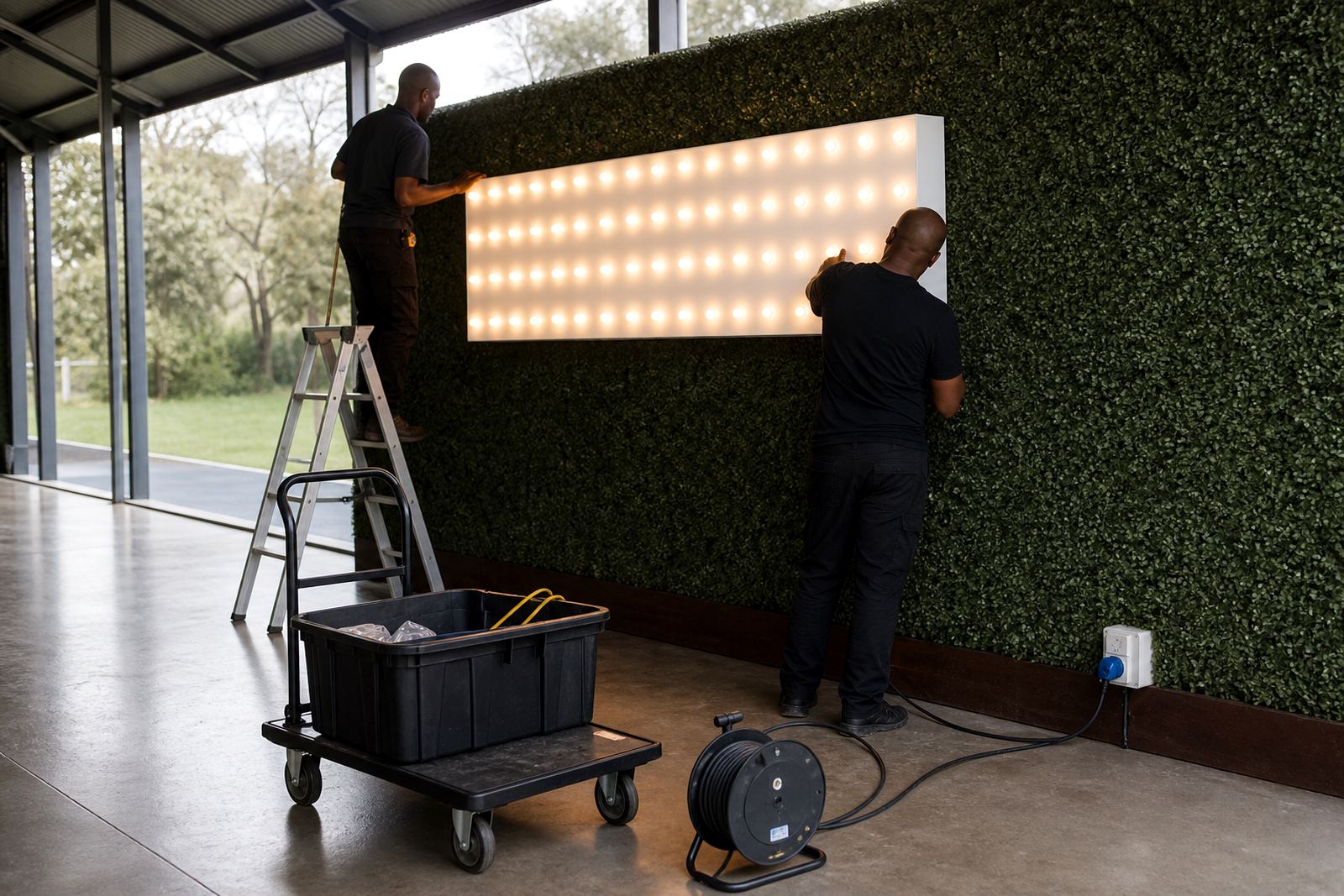
Late-night work can tempt people to hurry, but cable handling still needs the same care as setup. Cables should be disconnected cleanly, coiled properly and kept away from wet floors, spilled drinks and sharp fixtures. That protects both the equipment and the venue floor finish, especially where polished tiles or timber boards are involved.
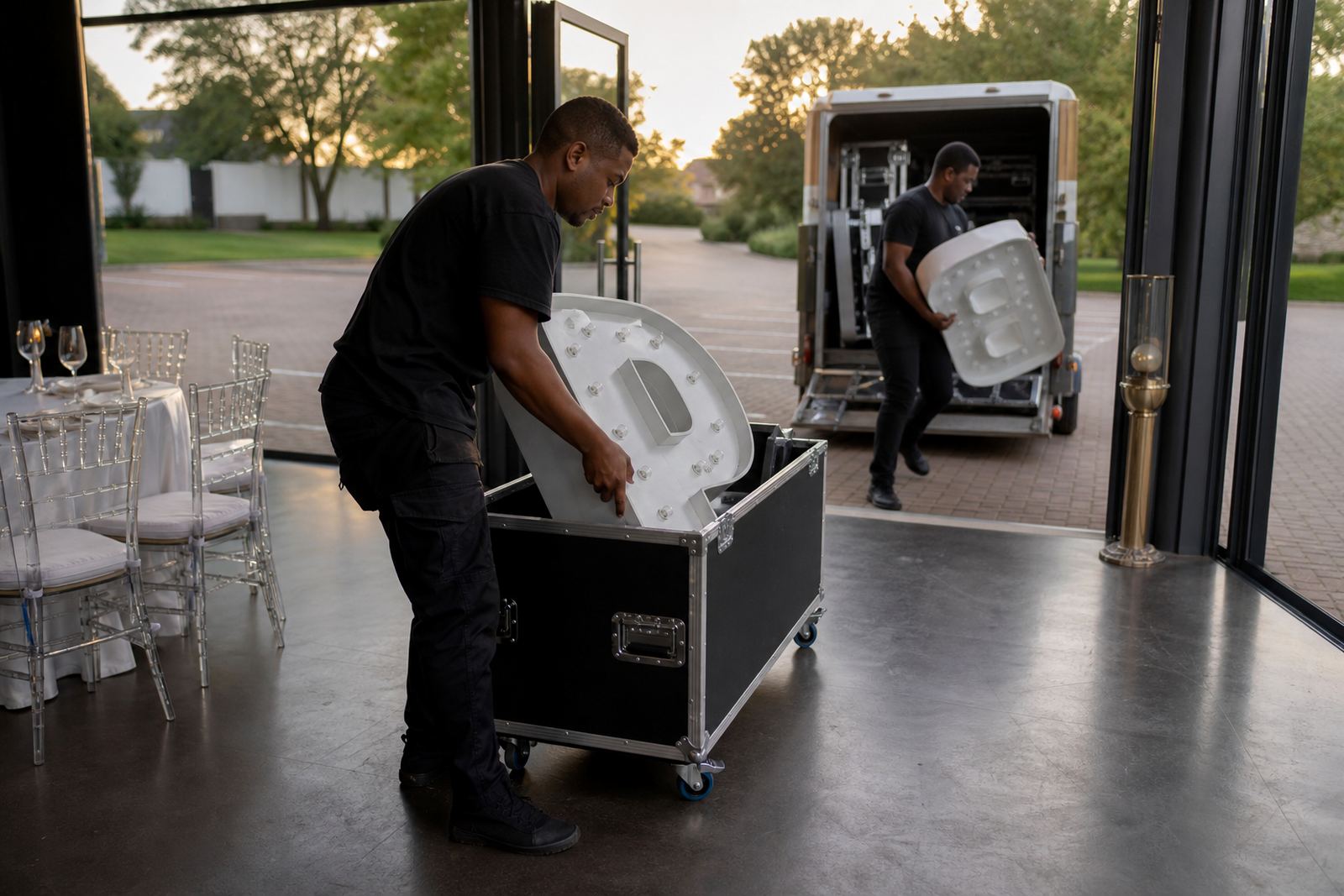
LED lightboxes and illuminated letters are usually built to be visible, not to be dragged. Handles, panel edges and power leads all need proper lifting and stacking. If the display sat outdoors for a launch in Johannesburg or Durban, the crew also checks for moisture, loose ground anchors and any dirt that could shift into the packing area.
How a late collection changes with the venue type
Every venue behaves differently after midnight. A wedding hall in Rosebank may be quiet by the time collection starts, while a conference space in Fourways might still have AV teams, cleaners and security moving through the same corridor. Outdoor marquees, rooftop venues and restaurant courtyards each create their own pack-down pattern.
That is why a late collection is planned around access rather than around guesswork. The team reads the space, works around the event close time and leaves the venue in a state that suits the next shift of staff.
- Indoor venues often need lift bookings or service-door access
- Outdoor venues may need extra checks for wind, damp ground or unstable surfaces
- Hotel and conference venues can require quiet movement through public areas
- Private homes usually need careful loading where parking and neighbours are close by
Late wedding collection in Midrand
A typical late collection can start after a wedding reception in Midrand, once the speeches are done and the lights are being lowered. The marquee letters near the dance area are switched off, the LED lightbox by the photo wall is cleared, and the team confirms which pieces were used indoors and which sat closer to a doorway or garden edge.
From there, collection becomes a sequence of checks rather than a scramble. The crew removes cabling, lifts the items in the right order, and loads them without forcing them through a crowded aisle. If the venue has strict after-hours access, the handover is done at the agreed point and the floor is left tidy. Those small steps save a lot of damage on the way out.
Why timing matters more than speed
Late-night collection is not about rushing the job. It is about matching the event close time, the venue's access rules and the condition of the items being removed. When a display is collected too early, guests still want photographs. When it is handled too late, staff are tired and movement through the venue becomes awkward.
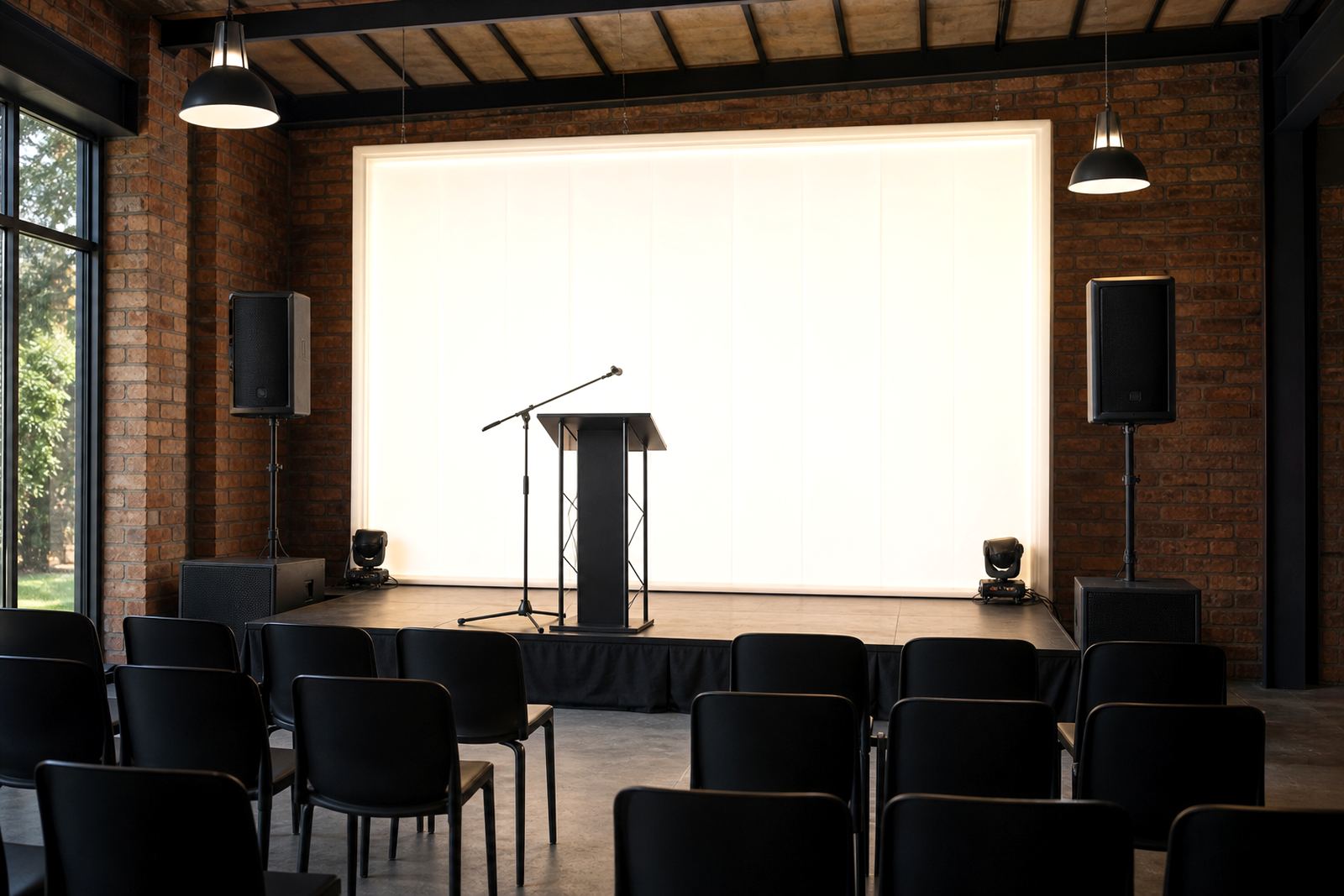
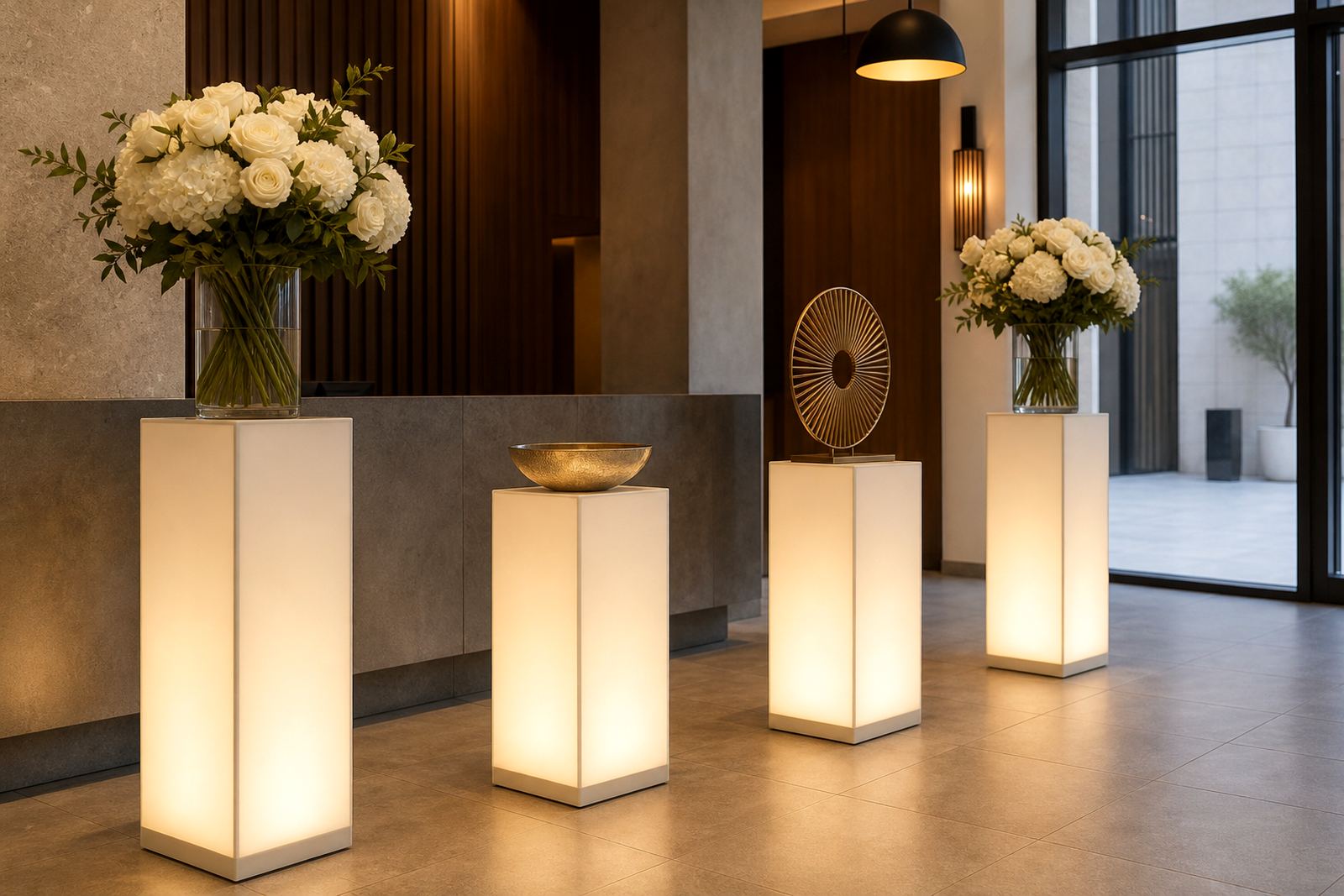
The practical answer is a collection window that fits the venue, the layout and the load-out route. That helps with larger corporate installations too, especially where multiple items were placed across a foyer, stage or brand wall.
- Keep the display route clear from the start of the event
- Leave enough space near the installation for safe lifting
- Confirm where the vehicle can stop for loading
- Make sure the venue team knows which items stay until close
What a careful after-midnight pack-down leaves behind
When the collection is handled properly, the venue should feel like the installation was never in the way. Floors stay clean, cables are cleared out, and the path to the loading area remains usable for staff. That matters just as much for a party in Sandton as it does for a launch in Durban, because the final impression is tied to how the space is left behind.
Late collections work best when everybody knows the sequence, from switch-off to loading. For LED lightboxes and illuminated letters, that sequence protects the equipment and keeps the venue side calm. It is a small part of the event, but it carries the same weight as the opening set-up.