
Start with the route people actually walk
Guest flow begins before anyone sits down. The first steps usually run from the parking area or drop-off point to the entrance, then to reception, seating and the main event space. A sign that looks good but faces the wrong way will not help that movement, so placement matters as much as the wording and the light itself.
At a wedding in Midrand, a welcome lightbox near the entrance can set the tone while also pointing guests toward the reception table. In a corporate venue, a pair of illuminated signs may work better at the lobby entry and the corridor turn before the main hall. The aim is not to fill every wall, but to place each item where people pause, choose a direction, or ask for the next step.
- Put the first sign where guests make their first decision.
- Place direction signs before a corner, doorway or staircase.
- Use a brighter sign at the main gathering point.
- Keep lettering readable from normal walking distance.
Lightboxes that guide without crowding the room
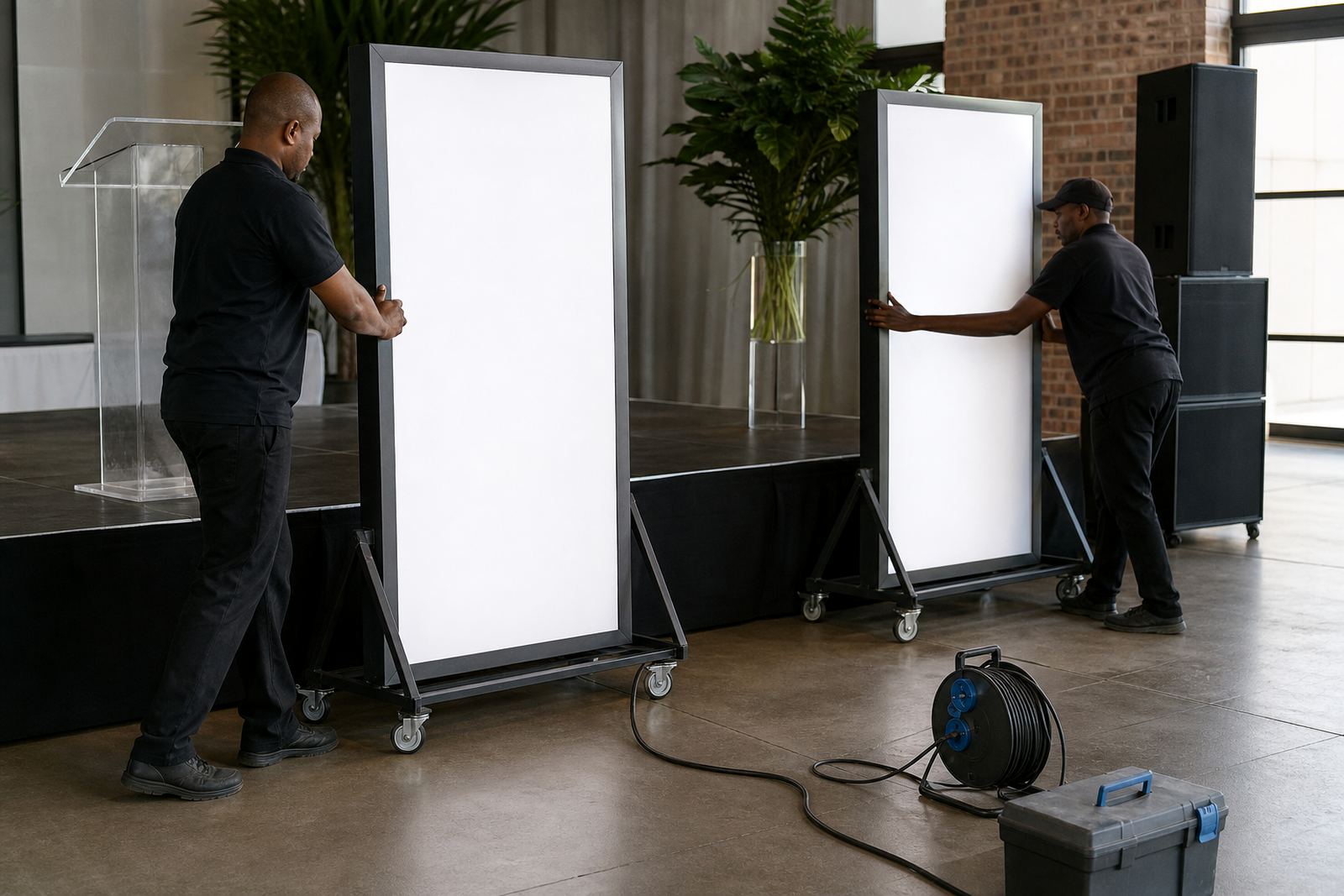
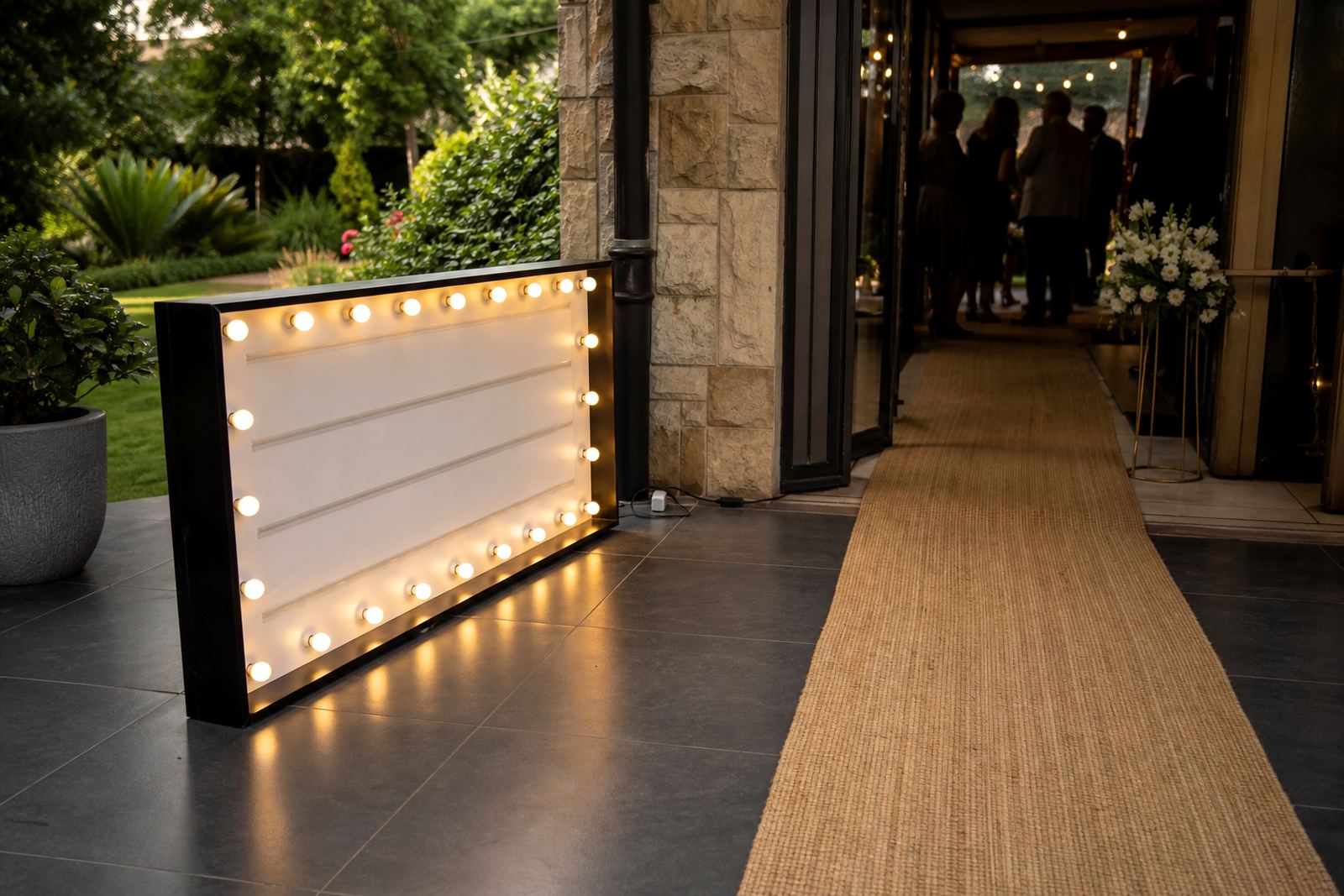
LED lightboxes suit entrances, registration tables and photo areas because they show a clear message without taking up much floor space. For events in Sandton or Centurion, a slim lightbox can sit beside a walkway, on a plinth, or near a feature backdrop where guests naturally slow down. The light helps the text hold its shape in a hall with mixed lighting, and it stands out in evening settings where overhead fixtures may be softer.
Placement should respect table widths, drape lines and the path used by waiters or ushers. A sign placed too close to a service route becomes a snag point. A sign placed too high can look impressive but loses its use. The best position is the one that supports the movement of people and still leaves the room open.
- Use one message per sign when the room already feels busy.
- Keep stand bases clear of chair legs and cables.
- Angle the face toward approaching guests, not only the photographer.
Marquee letters at entrances and focal points
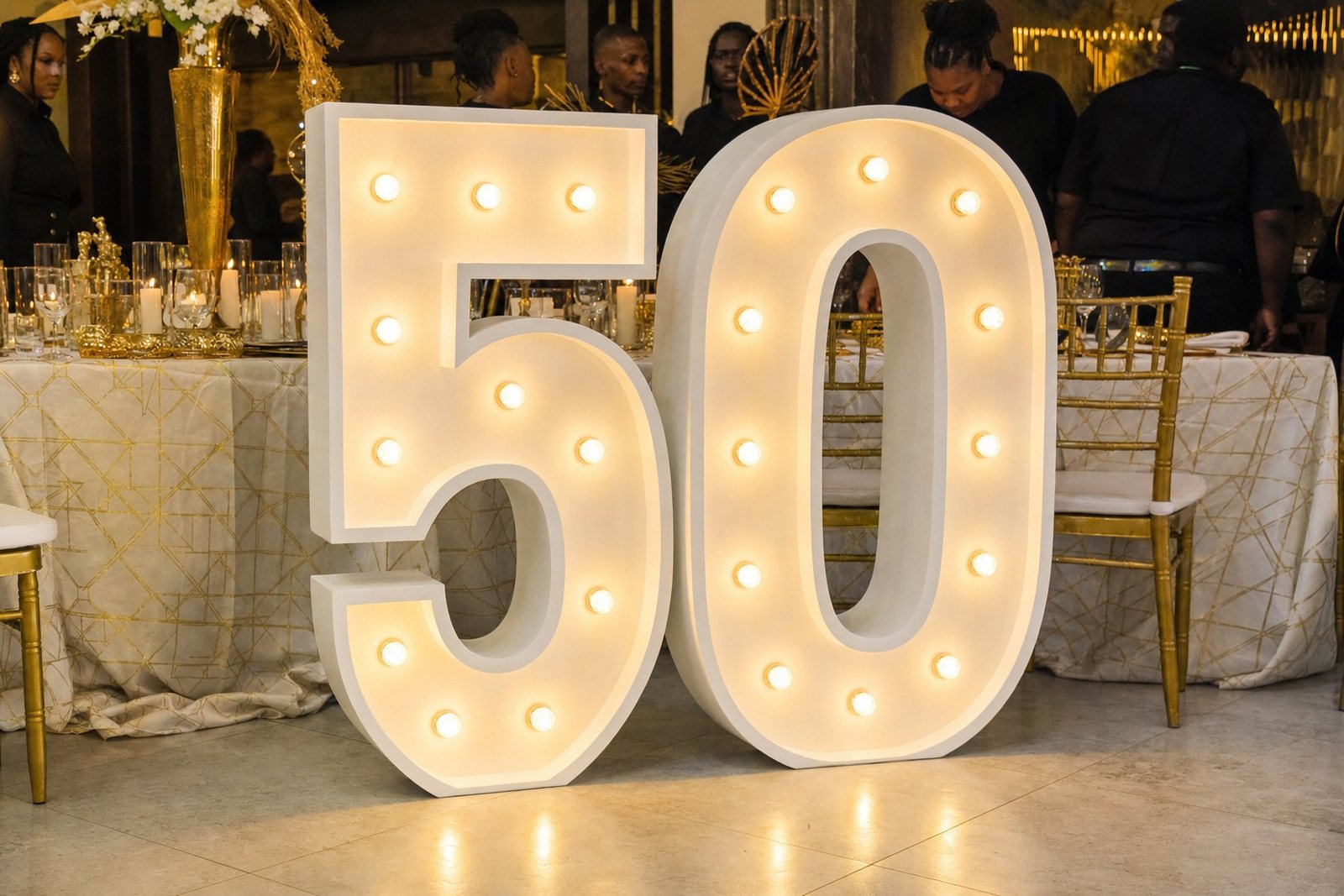
Marquee letters work best when they mark a place where people naturally gather. Initials near the entry, a short word beside the dance floor, or a set against a photo wall can help guests read the space at a glance. In larger halls, they also break up open floor space and give visitors a visual anchor.
For outdoor functions, surface choice becomes important. Grass, paving and deck areas all need different support so the letters stay steady. In Durban, where coastal humidity can affect fittings and finishes, the setup should allow for secure placement and sensible cable management. The team also checks where the nearest power point sits, because an illuminated letter needs a safe line to it, not a cable stretched across a footpath.
- Place marquee letters where people stop naturally for photos.
- Leave enough room for guests to stand without blocking movement.
- Check the route from the power point to the sign before fixing position.
Dining areas need signs that reduce small confusion
Once guests are seated, signs can make the dining flow easier. Table numbers, menu markers and directional lightboxes to the bar or buffet all reduce the need for repeated questions. In venues where the room is split across more than one level or a long corridor, signs help keep the movement steady instead of creating clusters near one doorway.
The wording should stay short and legible. A table sign with an elegant script still needs enough contrast to be read under warm hall lighting. If guests move between a cocktail area and a seated dinner, a simple sign near the transition point can point them onward without interrupting the atmosphere. The practical part is not hidden, it sits quietly inside the décor.
- Use clear wording for bars, buffet tables and restrooms.
- Keep the sign size in proportion to the room.
- Avoid placing several messages too close together.
Safe cabling and clean placement matter more than people think
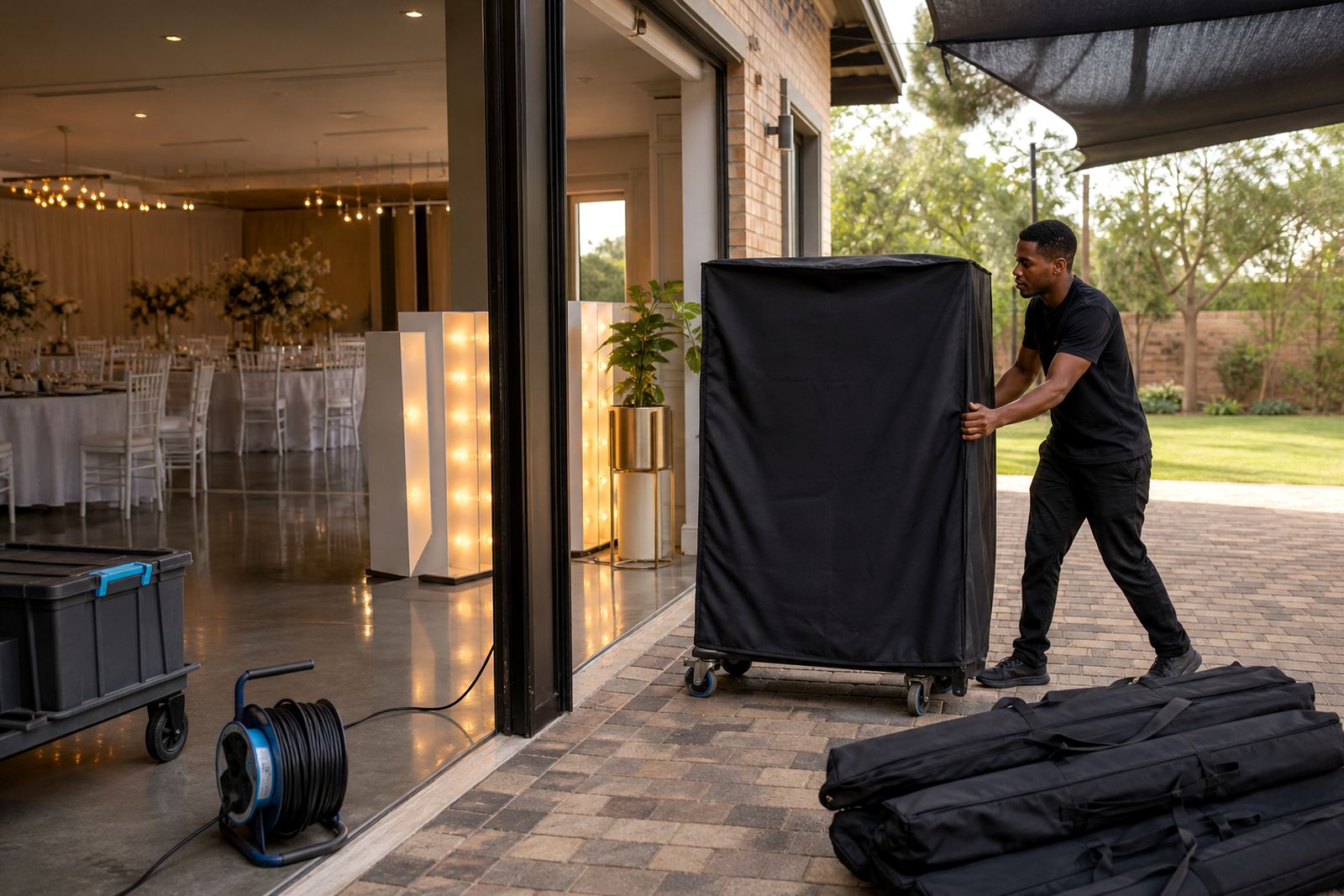
Illuminated signs depend on power points, extension lines and careful routing. That means the visible result depends on the invisible work behind it. Cables should run along walls, under mats where suitable, or through planned service routes, never across a main walking line where heels, trolley wheels or children might catch them.
For indoor set-ups in Johannesburg or Pretoria, the power point check helps confirm where a sign can sit without stretching the layout. For outdoor installations, ground conditions and weather exposure need attention too. The crew looks at cable length, stand stability and the safest path to the source, then sets the sign where it supports the room instead of interrupting it. Small details like this keep the setup tidy and usable for the full event.
- Mark every cable route before placing the sign.
- Keep joins away from guest movement.
- Use the nearest practical power point, not the most visible one.
A Midrand layout that moves guests from entrance to dance floor
A good example starts with a welcome lightbox at the entrance, then a second sign at the reception table pointing toward seating. From there, marquee letters can mark the photo area or the main feature wall. Later in the evening, a smaller illuminated sign near the dance floor helps identify the space without pulling attention away from the room itself.
That kind of layout works well for Midrand venues, and it also travels well to Johannesburg, Pretoria, Sandton, Centurion and Durban. The setup may change with the floor plan, but the thinking stays steady: guide guests where they need to go, keep the room open, and let the signs do more than sit pretty. Delivery, venue set-up, post-event collection and late night collection all sit around that plan, so the flow stays orderly from first arrival to final pack-down.
When the signs match the route, the whole event feels calmer. Guests move with less hesitation, staff spend less time redirecting people, and the room keeps its shape from one part of the evening to the next.