
A sign only behaves well when the plug point makes sense
LED lightboxes, illuminated letters and neon-style signs all need a sensible power point nearby. If the nearest socket is tucked behind draping, under a stage skirt or across a walkway, the whole set-up becomes harder to place neatly and safely. The sign may still work, but the cable run starts to shape the room in a way nobody planned for.
At a venue, power access is not only about whether there is electricity in the building. It is about where the socket sits, how far it is from the display, and whether the route is clear of guests, décor and service traffic. A clean set-up usually starts with that small detail, then the rest falls into place more easily.
- Shorter cable runs are easier to conceal
- Socket position can affect sign placement
- Clear access helps avoid last-minute changes
What gets checked before the lettering goes up
For event work, a plug point check is practical housekeeping. The team looks at where the sign will stand, how many items need power, and whether the venue has a point that suits the layout. A single illuminated word is one thing. A photo wall with several pieces, or a marquee letter cluster, needs more thought.
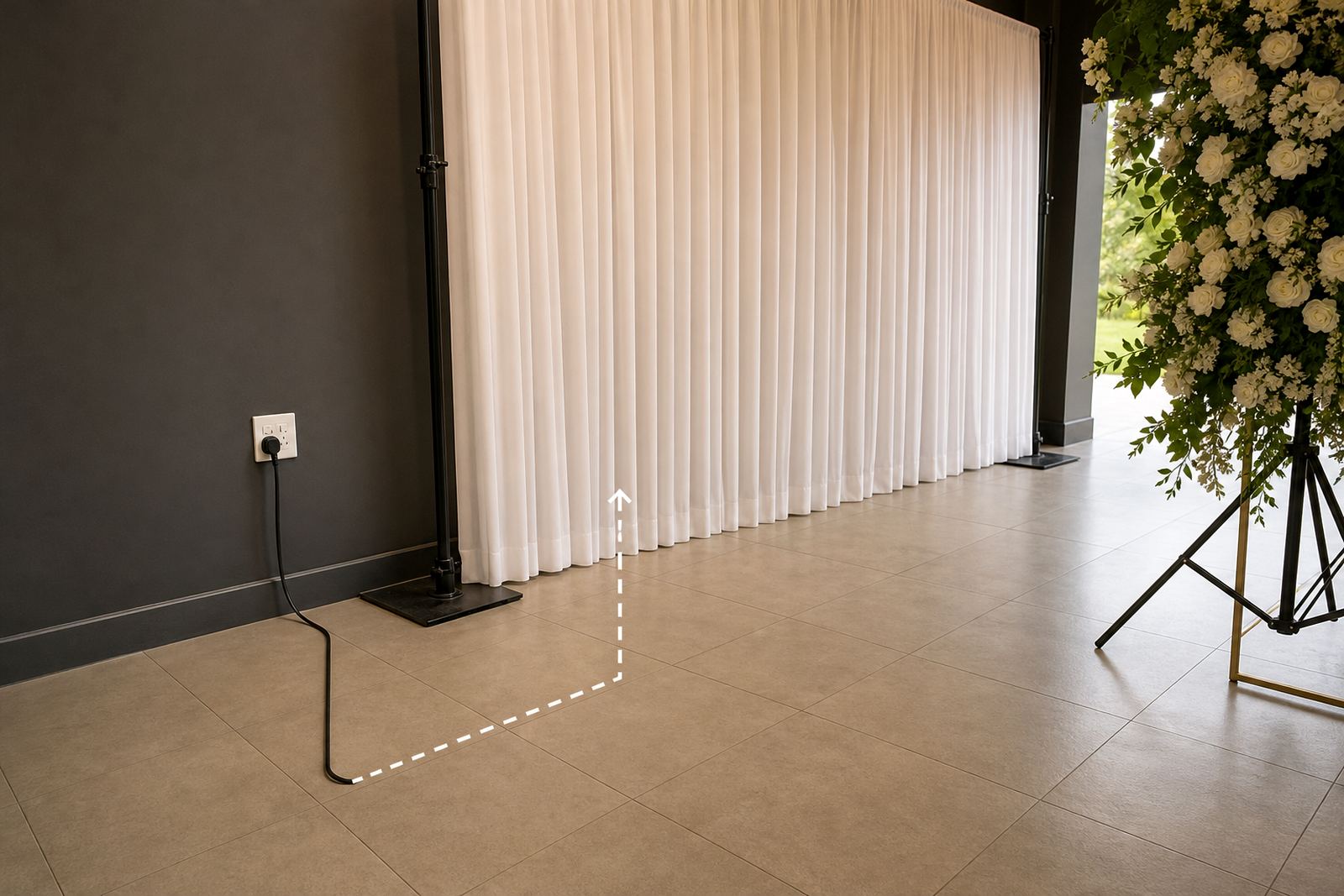
In halls, hotels, marquees and private homes, socket location can vary quite a bit. One room may have a neat wall point close to the dance floor. Another may only have access near the edge of the room, which means careful routing across a longer stretch. That is where safe cable placement matters, especially when people will walk, dance or stand for photos nearby.
- Confirm the nearest usable socket
- Check whether several items share one zone
- Plan where the cables leave the display
- Keep access clear for the venue team
Safe cabling keeps the display tidy and usable
Cables need to be placed neatly and with a clear route. When they are taped, clipped or guided along a sensible line, the sign sits better in the room and the floor stays easier to move across. That matters at weddings where dresses trail, at corporate functions with guests in formal shoes, and at launches where cameras move through the space.
Safe routing also protects the equipment itself. A loose cable pulled by a foot or trolley can knock a lightbox off line or shift a letter base. In some venues, especially around Midrand, Sandton and Rosebank, the finishes are polished and the floor surface can make cable placement more visible. Good routing keeps the finish neater and the risk lower.
It is worth allowing for the real shape of the venue, not just the floor plan on paper. Corners, columns and service routes can affect where a cable travels. A careful installation uses the room as it is, not as it was imagined from a distance.
When the nearest socket is not near the display
Sometimes the best-looking spot for a sign is not the easiest one for power. Even so, the display plan does not need to be scrapped. It means the route must be planned properly, with the power point, sign position and guest flow all considered together. Longer routes are possible, but they need more attention so they do not cut across entrances or food service areas.
For outdoor placement, the picture changes again. The socket may be inside a venue wall or in a sheltered service point, while the sign sits on a terrace, lawn edge or patio. Outdoor surfaces can also be uneven, so the cable route and stand position need to work together. If the ground slopes or the event moves from daytime to evening, the set-up has to remain stable and readable.
- Long cable routes need a tidy path
- Outdoor areas call for extra care around placement
- Guest movement should stay clear of the route
Midrand ballroom with a narrow power route
A corporate evening in Midrand often brings a practical layout question. The organiser may want a bright sign behind the speaker area, but the closest socket is off to one side near a service wall. In that case, the sign can still work well if the route is mapped out early and the cable follows a clean edge, not the middle of the room. The display stays visible, and the floor remains easier to use.
The same issue can show up at a birthday in Johannesburg or a wedding reception in Centurion. One socket can serve a single illuminated phrase, while another section of the room might need a separate point for a photo area sign. The room looks better when the power plan is matched to the layout rather than pushed in at the end.
That is also where delivery and venue set-up matter together. A driver and installation technician needs enough space to move the item in, position it, check the point, and complete the cable route without disturbing the rest of the room. On site, we position the sign, check the socket location and route the cable properly, because where the power point sits affects the full setup.
The small details that protect the finish
Power access affects more than function. It also shapes how polished the whole display feels in the room. If the cable is hidden well, the sign appears intentional and balanced. If the lead is awkwardly stretched or visible across a main walkway, guests notice it before they notice the lettering.
For indoor placement, the cleaner outcome usually comes from three practical steps: measure the distance, check the socket position, and decide where the cable can travel without interruption. For multi-item installs, that process becomes even more important because each piece adds a little more planning. A neat result comes from getting the unglamorous parts right first.
- Measure from socket to display position
- Use a route that avoids guest movement
- Keep the base and cable line tidy
- Match the power plan to the room layout
When the plug point is close and the route is clear, LED lightboxes and illuminated letters do what they are meant to do. They lift the room without drawing attention to the wiring behind them. That is the difference a proper power check makes.