
Where cables cause trouble first
At a wedding entrance or corporate launch, the cable is often the last thing anyone notices until it sits across a walkway. That is where trouble starts. Guests step over it, chairs press into it, trolleys catch it, and the edge of a mat can lift when people pass through in heels or dress shoes.
We see the same pattern in Midrand, Johannesburg and Sandton venues. A neat line along a wall is usually safe enough, but a loose run across an open floor needs more thought. The same applies near stage steps, buffet routes and the gap between a seating block and the photo area.
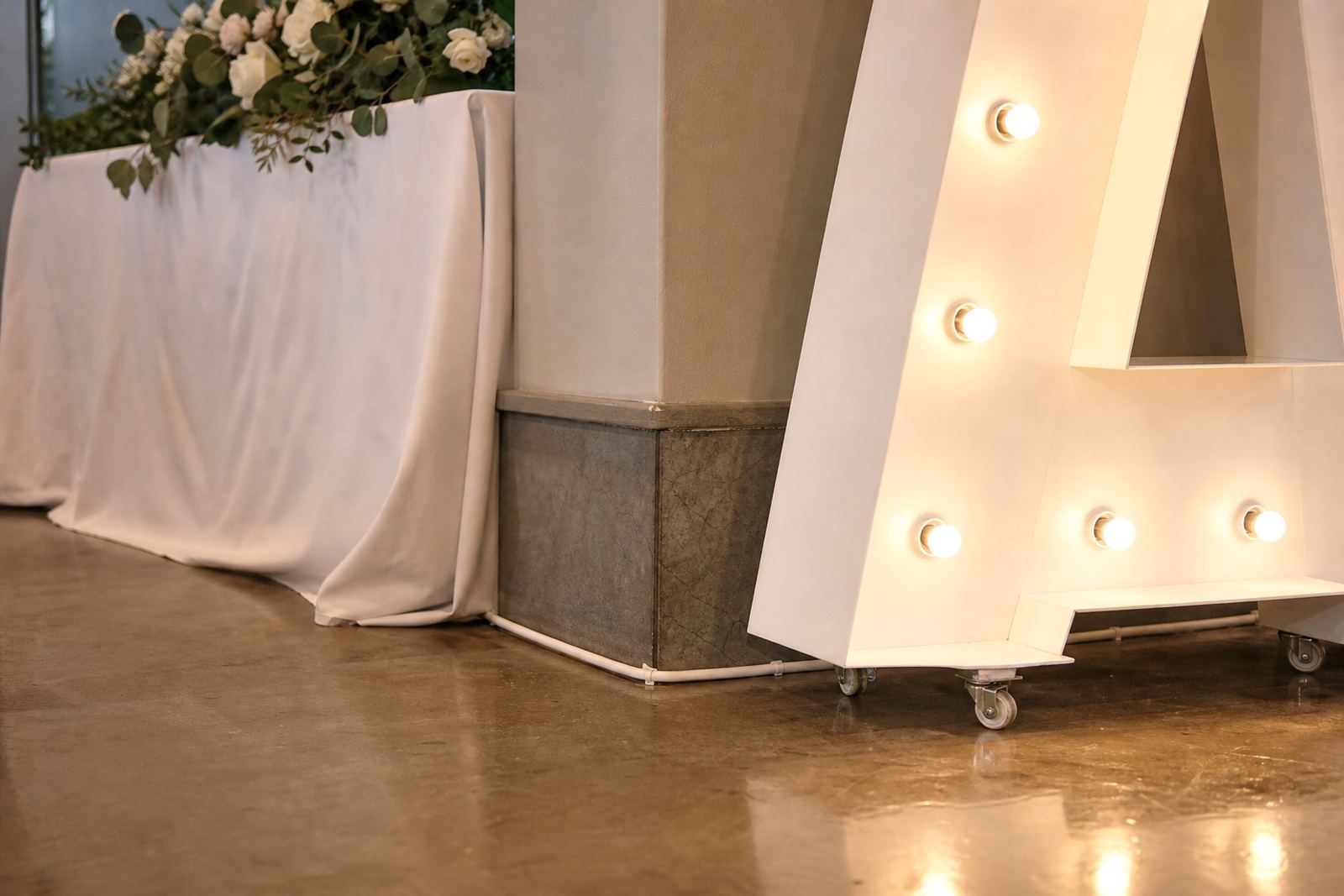
When LED lightboxes or marquee letters sit in a focal spot, the cable should disappear into the layout rather than sit outside it. That keeps the room easier to move through and lowers the chance of a plug getting pulled during setup or later in the evening.
Power point checks before the lights go in
Every venue brings its own power points, and not all of them sit where the decor needs them. A good setup starts with checking where the nearest outlet is, which side of the room it sits on, and whether the cable path will cross foot traffic or stay tucked away. The aim is to place the lightbox or illuminated letters where the power can reach them cleanly.
For indoor jobs, the power point check matters as much as the wording on the sign. For outdoor placements, the distance from the source, weather cover and safe cable direction all need attention. A cable that looks fine from a distance can still create a trip point near the edge of a lawn or tented area.
- Look for the closest outlet before finalising the sign position.
- Check whether the route crosses an entrance, aisle or dance floor.
- Keep plugs and joins off busy walking paths where possible.
- Use a route that leaves enough slack for final positioning but not excess cable on the floor.
That planning makes the final layout tidier and safer, especially when the room is packed and people are moving between tables, the bar and the dance floor.
Safe cable routing around entrances and photo spots
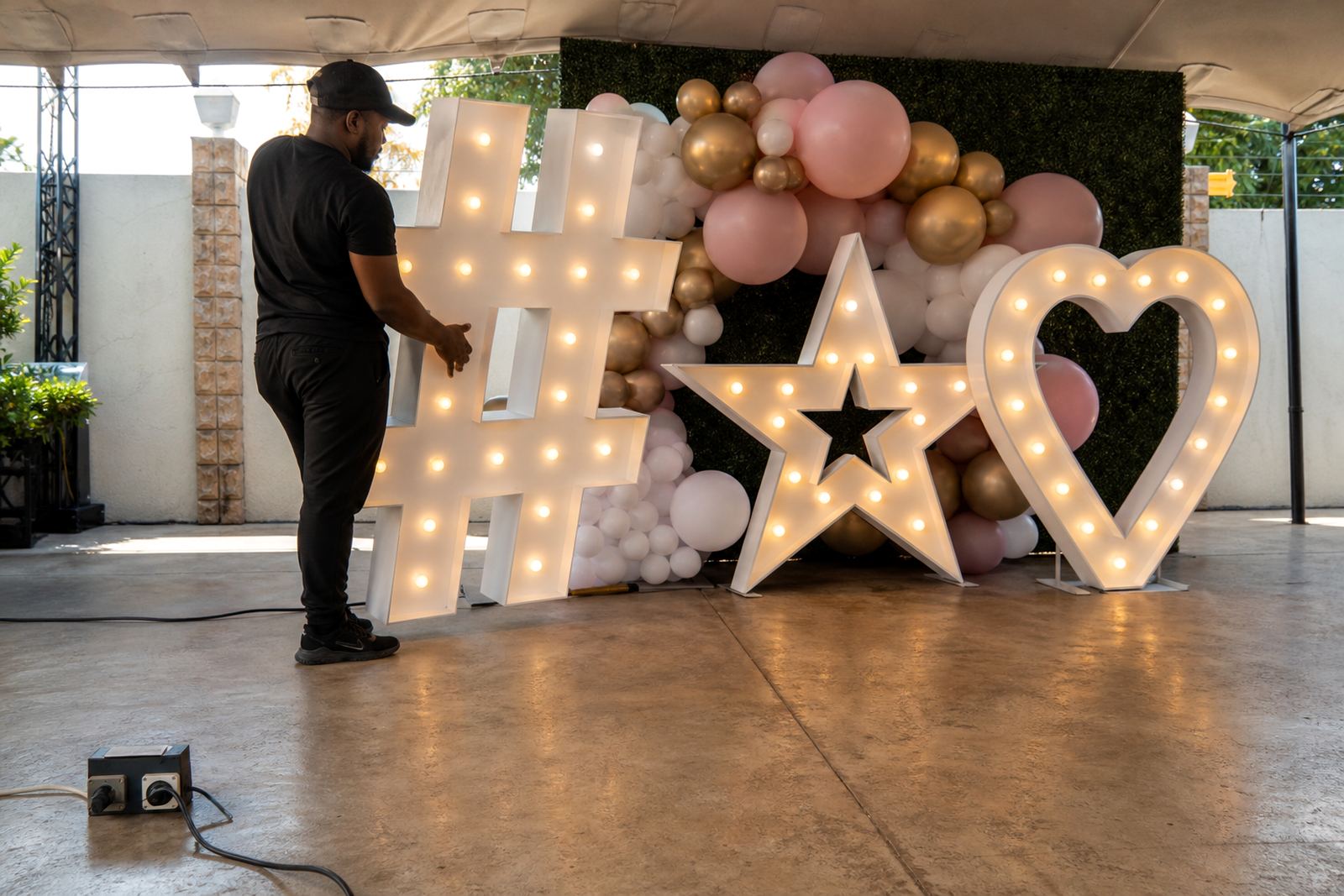
Entrances carry the most foot traffic, so cable placement there needs extra care. When a neon-style sign or branded lightbox sits near the doorway, the cable should follow the side of the wall or another edge that guests do not cross. If the sign belongs in a photo corner, the line can often run behind decor, a planter or a display plinth instead of across the open floor.
Photo areas also need room for guests to step in and out without lifting cables with their shoes. A clean route helps the whole space feel deliberate. It also avoids that awkward moment when someone notices the cable and starts pointing it out to others.
- Keep cables away from the main step-in point at entrances.
- Use wall edges, furniture lines or display pieces to hide the run.
- Leave access for the technician, but not a loose loop underfoot.
- Protect joins and plugs where guests may gather for photos.
A detail like this shapes the feel of the room, because the sign should sit naturally in the setting, not look like loose equipment lying on the floor.
Dance floors need a different plan
Dance floors are hard on cable work because the traffic never really stops. People move fast, shoes drag, and chairs often get shifted while the evening is still underway. When a lightbox or illuminated letter display sits near the floor edge, we plan the cable route from the start as part of the layout.
We avoid running cables where guests will spin, step back, or gather in a tight group. If the sign must face the dance area, the cable route can often be kept behind the setup line, along the perimeter or behind another decor element. It is a small job, but it matters when the room gets busy.
On larger corporate evenings, the pressure is different. Staff move crates, audio teams shift kit and caterers work through the same space. A cable that sits neatly at the start of the night still has to survive that movement later on, so the route should be strong enough for the whole programme.
What a tidy setup looks like on the day
A neat setup is not only about hiding the wiring. It is about making the route sensible from the first position to the final collection point. The cable should run where it can be checked, kept flat and left clear of chair legs or loose decor. If the sign is outdoors, the route needs to stay dry and protected where conditions allow.
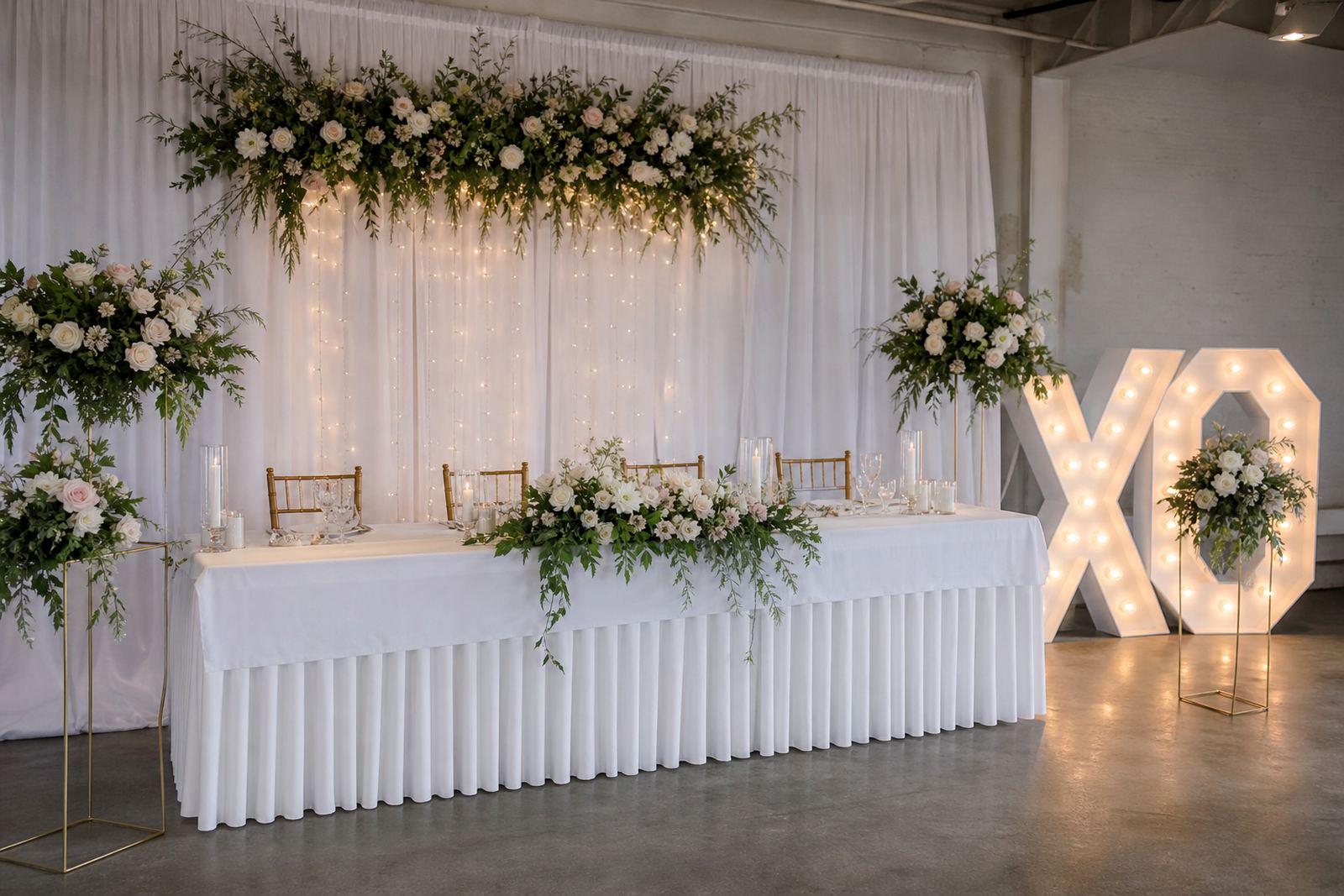
For weddings in Gauteng, that usually means a lightbox at the entrance, a marquee letter display near the reception space, and a cable line that sits along a boundary rather than cutting through the centre. For a launch in Sandton or Rosebank, the same thinking helps around media walls, reception counters and guest photo stops.
- Set the sign where the cable can follow an edge or back line.
- Keep the power source close enough to avoid long loose runs.
- Check the final view from the guest approach, not just from the technician side.
- Make sure collection can happen without pulling equipment through a crowded area.
Often, the right result is one guests do not mention at all. The sign stands out, the cable does not, and the room keeps its shape through the evening.
Keeping a Midrand room clear
On a corporate evening in Midrand, the sign had to sit near the main entrance while guests also moved between the welcome table and a seating zone. The cable could not cross the centre walkway, so the route followed the edge of the wall and then tucked behind a decor feature near the display point. That kept the floor clear and left the entrance looking orderly.
The same method helps in Durban too, especially where event spaces carry more humidity and the team has to think carefully about placement, cable condition and clean handover after the event. A cable that is left loose in a busy room becomes a problem fast, particularly when guests are arriving in groups and moving between spaces at pace.
We route cables safely during set-up so guests can move through the space without tripping and the display area stays neat. It is part of the hire job, just like delivery, set-up and collection. If the cable work is done properly, the lightbox or illuminated sign does its job without becoming a hazard or an eyesore.