
Start With the Ground Under the Display
Begin with the surface where the unit will stand. Level paving gives the cleanest result, while grass, gravel and loose decorative stone need extra care so the frame does not sink or tilt. On outdoor lawns, a unit can shift after a few hours if the ground is soft or damp.
Check for dips, slopes, drainage channels and any trip points close to the display. In Gauteng, many venues use mixed surfaces around lawns, terraces and walkways, so the placement has to suit each section rather than the venue as a whole.
- Look for firm, flat ground before unloading.
- Avoid standing the unit across joints, drains or loose paving.
- Keep the display clear of narrow walk routes and fire exits.
- Leave enough space for safe access during set-up and collection.
Covered Areas Need Weather Thinking Too
A covered courtyard or pergola gives some shelter, but it does not remove every outdoor issue. Wind can still move lighter décor pieces, and moisture from evening air can settle on metal frames, plugs and cables. Even a roofed space needs attention to where water runs after rain.
When a sign or letter set sits under cover, we still check the edges of the roof line, nearby gutters and any splash zones. That matters at venues with open sides, where rain can blow in from the side and settle on the floor.
- Keep illuminated units away from dripping edges.
- Leave room for air movement around the back of the display.
- Use weights or stabilising methods where the surface calls for it.
- Place décor so the first row of guests can still move comfortably.
Power Points, Cable Runs and Safe Reach
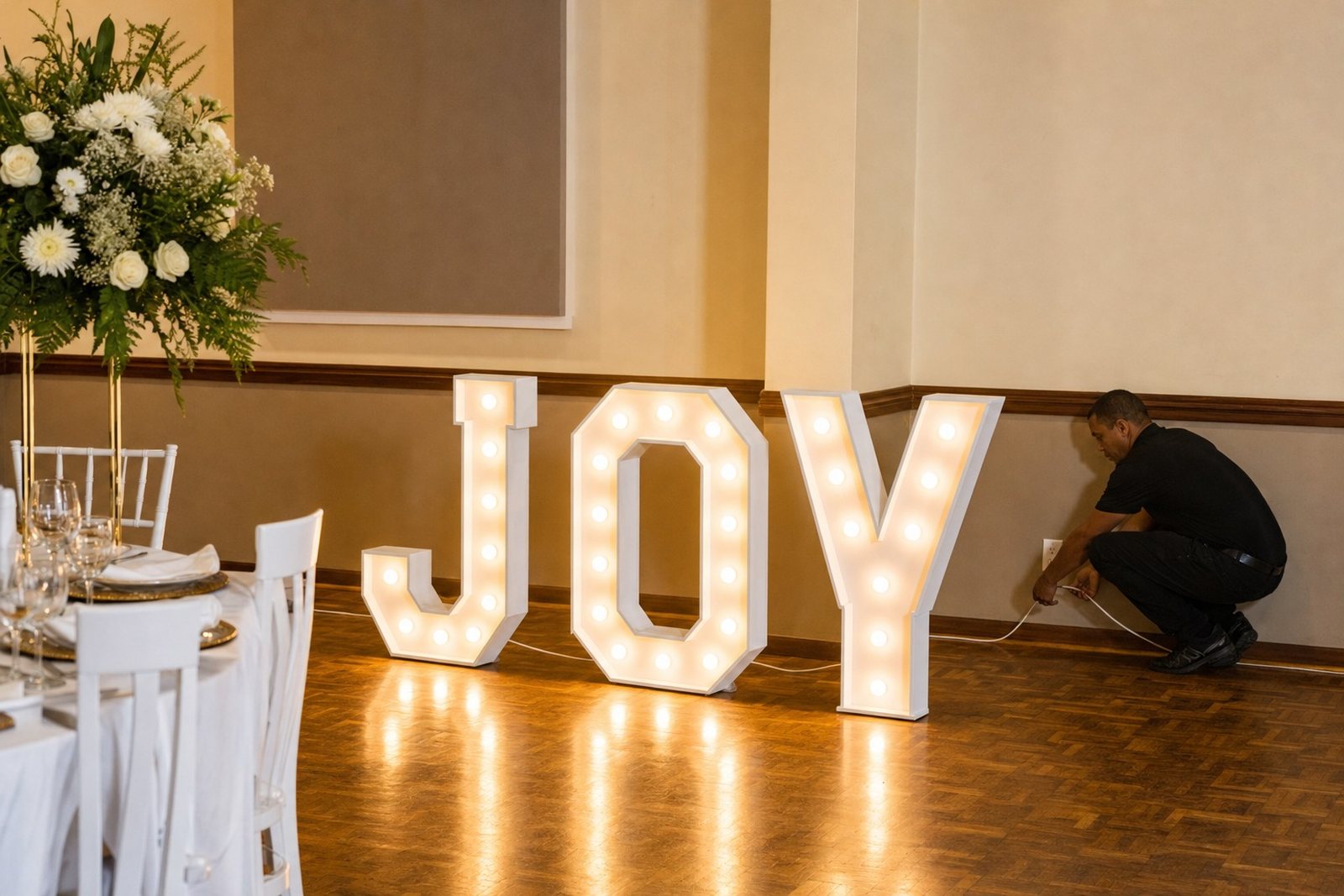
Illuminated units need a sensible route to power. The nearest socket is not always the best socket, especially if it sits behind a buffet line, a speaker stack or a busy service lane. The cable path should stay tidy, short where practical and protected from feet, trolleys and chair legs.
Before placement, check where venue power points sit and whether the cable can run without crossing a main walkway. Safe cable routing matters most where children are moving, where guests wear heels and where outdoor surfaces are uneven. If the setup is in a marquee or tented area, the route should stay clear of wet ground and doorway pinch points.
- Identify the closest usable power point first.
- Keep cable connections clear of wet areas and away from where people walk.
- Use cable covers where guests will walk over the line.
- Allow enough slack so the unit is not pulled tight.
Wind, Weight and the Shape of the Display
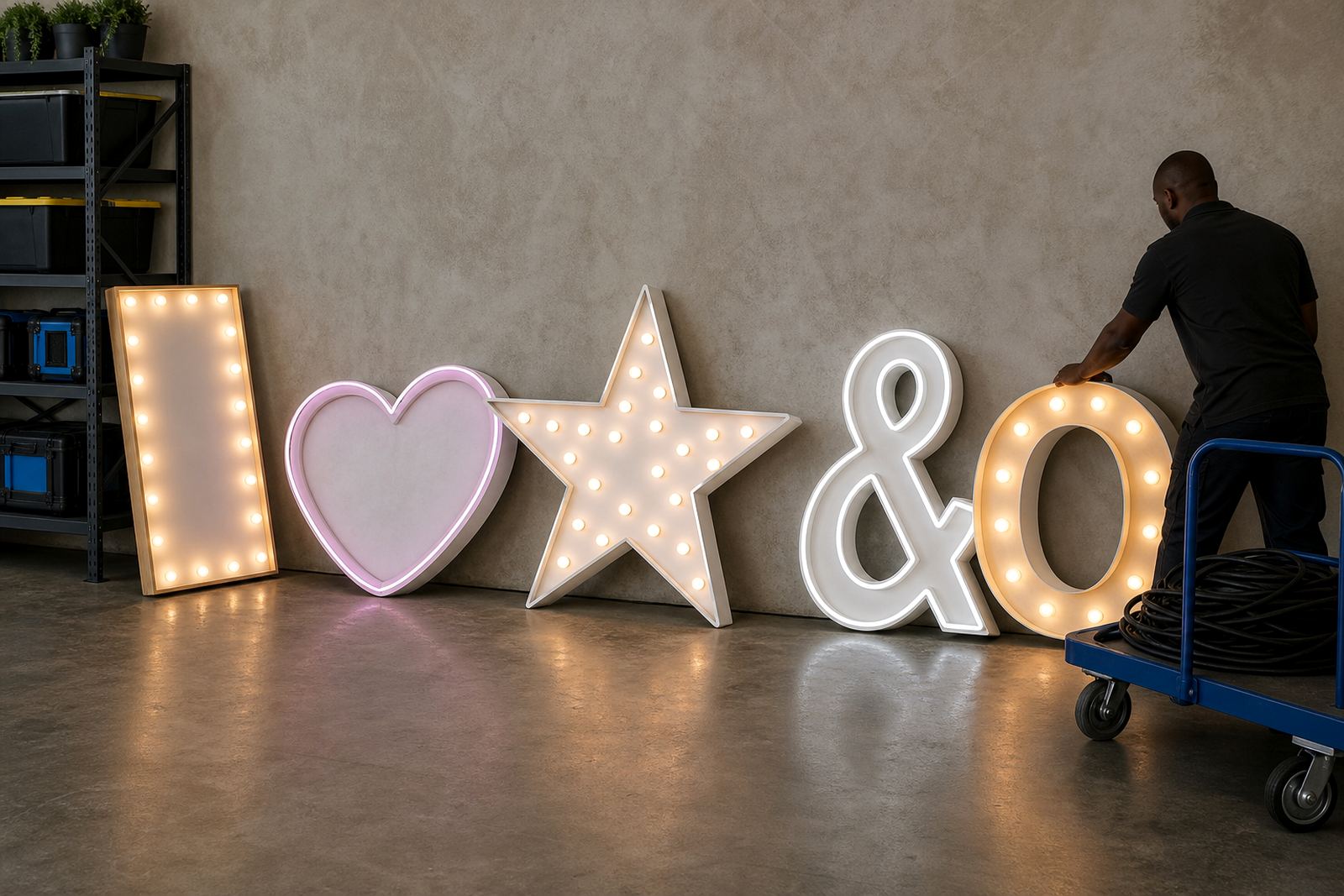
Large letters and lightboxes look steady in photos, but outdoors they still need proper support. Tall pieces can catch wind, and narrow bases can move if the venue floor is smooth. A display that looks fine from the front may still lean if the weight sits unevenly at the back.
For outdoor photo areas, the layout should suit both the camera angle and the weather conditions. A straight line works well for a formal entrance, while a deeper layout can help when the backdrop needs more presence. The final arrangement should feel balanced, not crowded.
- Use the right support for the size of each illuminated unit.
- Keep taller pieces away from open corners where wind pushes through.
- Balance grouped letters so the heaviest units sit securely.
- Allow enough open room so our installation team can work safely.
Wet Weather Planning Without the Drama
Outdoor work in Gauteng and along the coast can mean damp mornings, sudden showers or humid evenings. Moisture changes how fast surfaces dry and how easily cabling slips. A wet floor at a venue is not just untidy, it can affect how safely the installation sits.
If rain is in the forecast, covered placement is usually better than open exposure. Where the event must stay outdoors, the display needs more care around raised edges, pooling water and the direction of foot traffic. The equipment should never sit where water collects after cleaning or rainfall.
- Watch for puddles under awnings and around garden edges.
- Keep connections away from standing water.
- Choose a position that stays usable if the floor gets damp.
- Allow for extra care when moving units on slippery ground.
Set-Up Sequence for a Clean Result
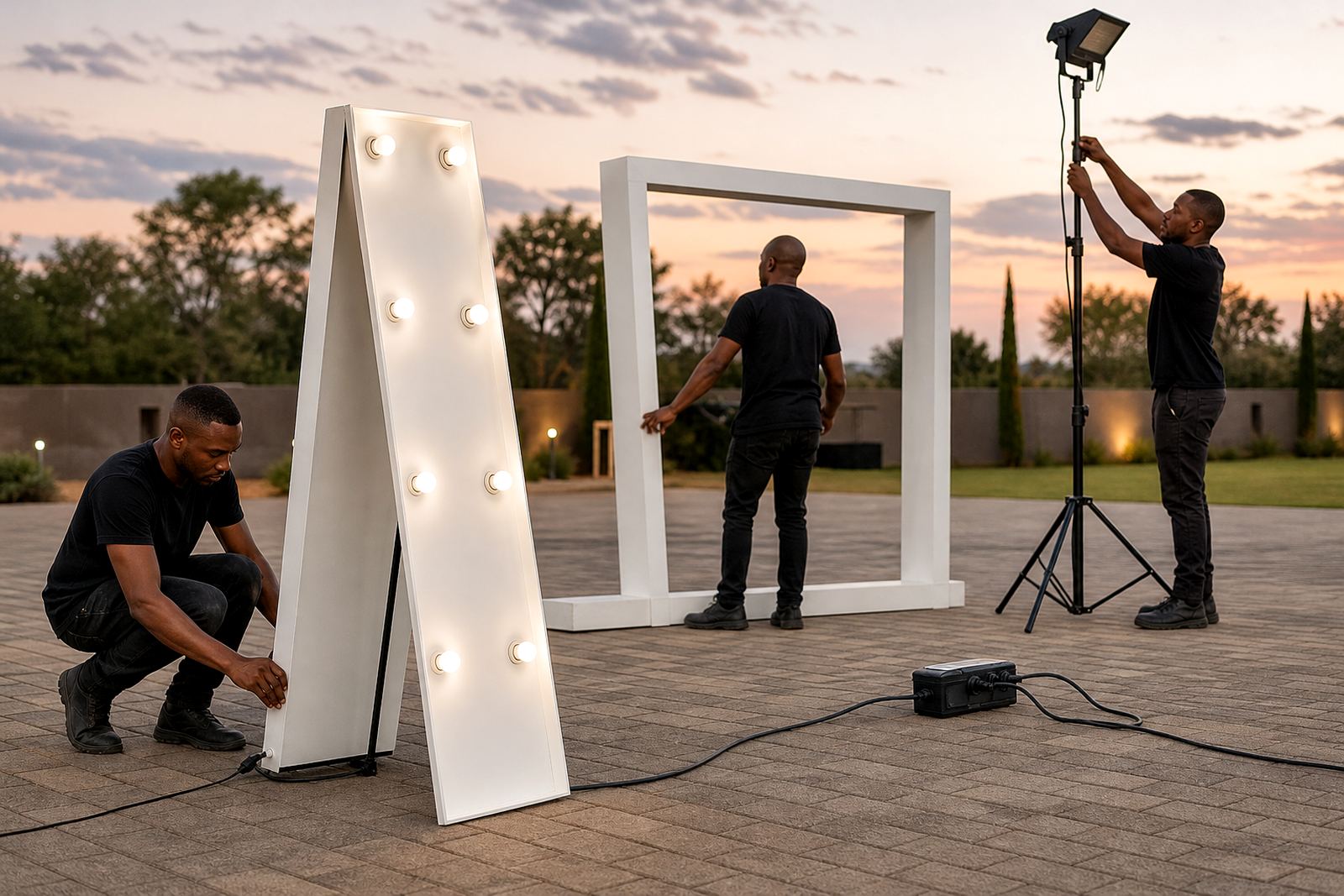
A tidy outdoor install follows a clear sequence. First the ground is checked, then the power point is confirmed, then the unit is positioned and tested. After that, the cable line is dressed so it sits neatly and does not distract from the display. That order keeps the setup calm when the venue is already busy with chairs, flowers and final guest prep.
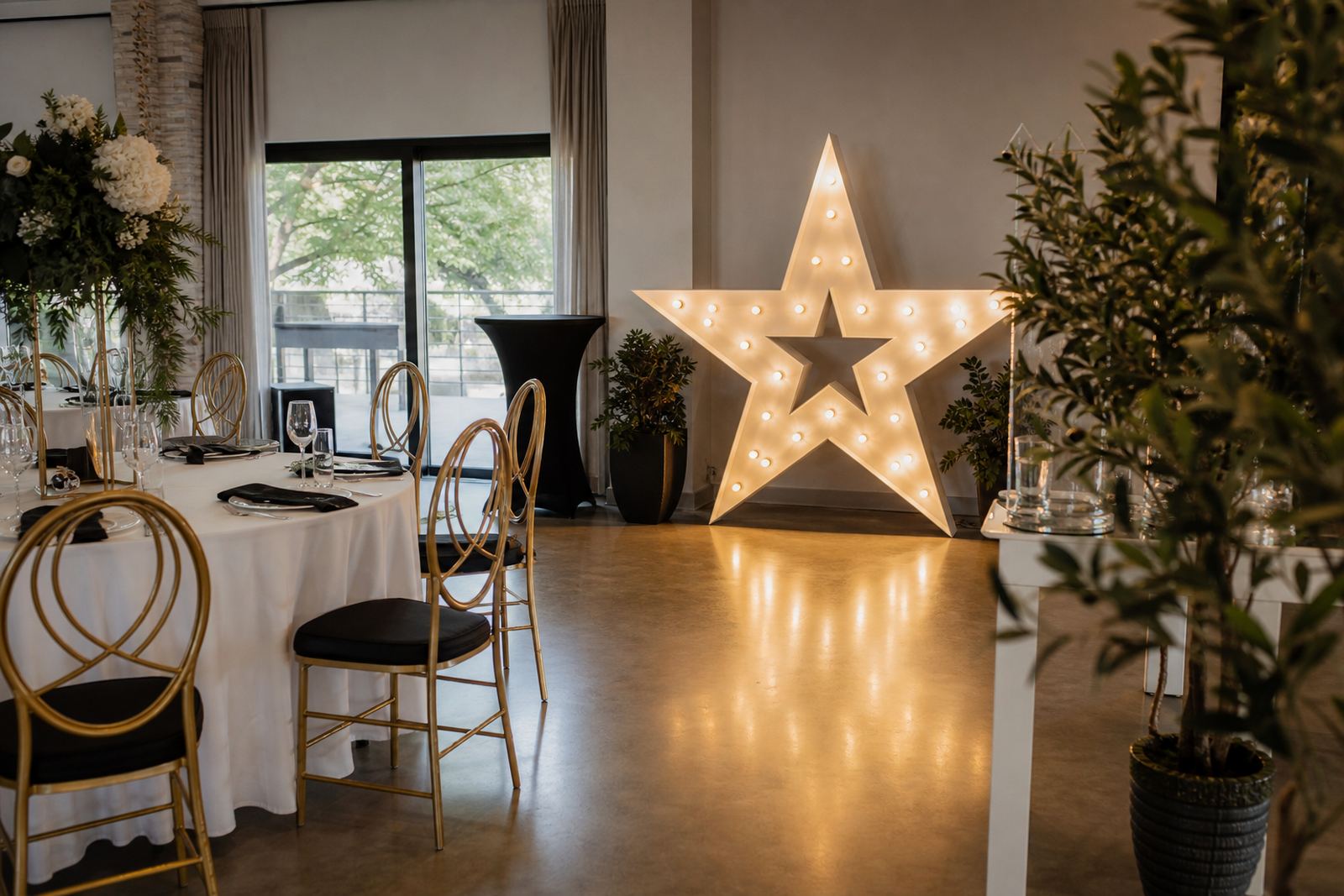
For weddings, parties and corporate functions, the display should be placed where it works for photos and foot traffic at the same time. A unit near an entrance needs a different layout from one standing beside a dance floor or stage. A few layout changes can help the space feel better arranged overall.
- Confirm the surface and power point before carrying in the unit.
- Set the main piece first, then align the supporting items around it.
- Test the illumination before guests arrive.
- Check that the final route for cables stays neat and protected.
Final Walk-Through Before Guests Arrive
Once everything is in place, walk the area from the guest side. Look at the display from a few steps back, then from close range. A letter that seems straight from the technician’s side can look off-centre from the camera position, so the viewing angle matters.
Check that nothing blocks the glow, that cables are not visible in the main photo line and that the unit still stands firmly after the first round of movement around it. Outdoor setups reward patience and a careful eye, especially when the event space is large and the light changes through the evening.
- Stand where guests will stand and check the view.
- Look for cable shadows, reflections and uneven spacing.
- Make sure the surrounding décor does not crowd the sign.
- Confirm the display still feels stable after final adjustments.