
Start with the floor line, not the light
Safe cabling begins where people will walk, turn, pause and take photos. Entrance paths, table edges, bar areas and dance floors need different cable routes, because a cable that is fine beside a wall can become a trip point in the middle of a venue. When we plan a lightbox or illuminated sign installation, the cable path matters as much as the display position.
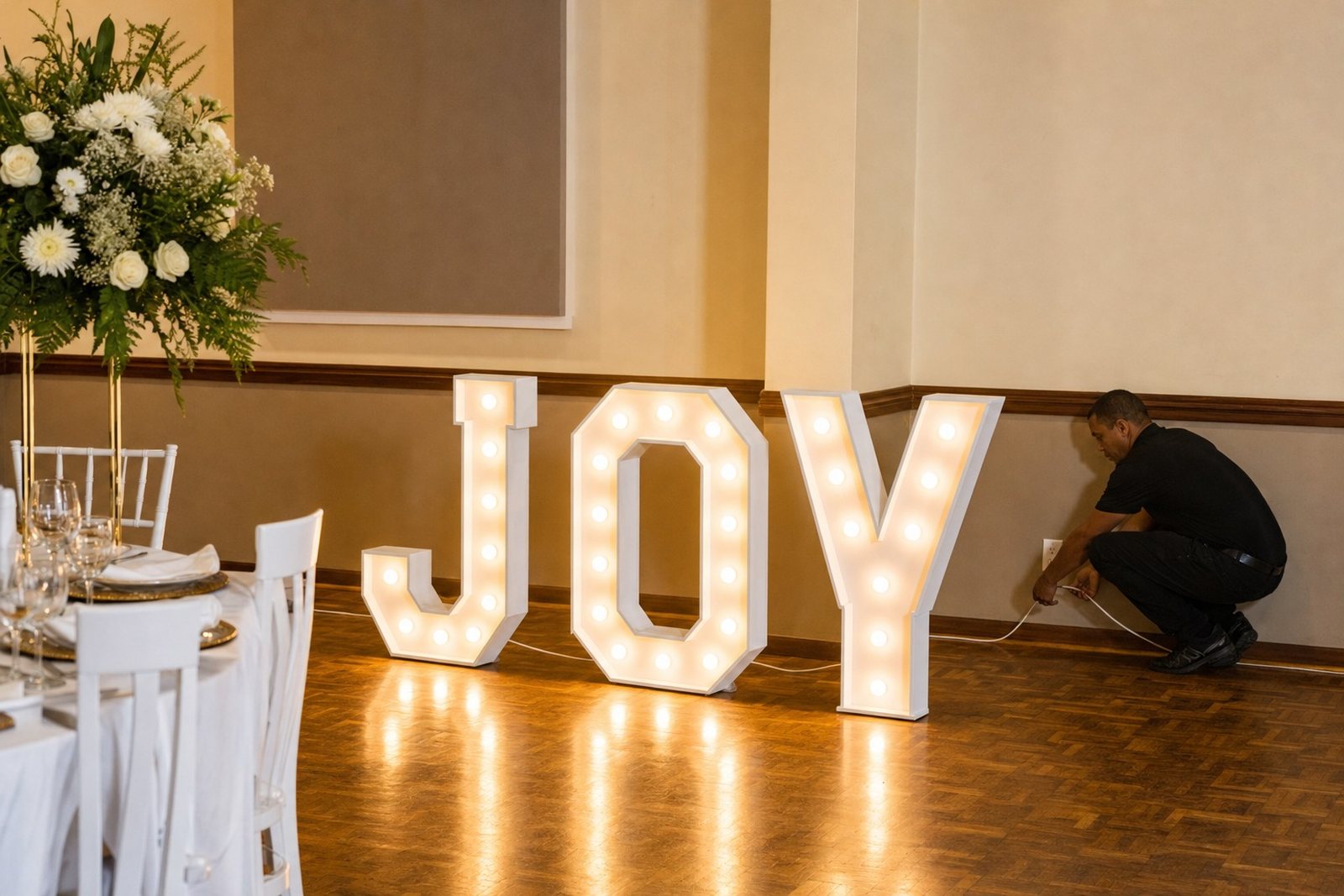
The first check is always the venue power point and the nearest practical route to the unit. In Midrand, Sandton and Pretoria halls, the wall socket is often not where the display needs to stand. That is normal. The job is to keep the route short, tidy and away from open walking lines, while still leaving enough slack for safe placement and final adjustments.
- Mark where guests will walk first.
- Note any doorway swing, steps or loose rugs.
- Check where the nearest wall socket sits.
- Keep cables off entrance mats and narrow aisles.
Power point checks that save trouble later
Venue power points need a quick practical check before any installation starts. A socket hidden behind draping, a plug point low near a skirting board, or an outlet shared with catering equipment can affect the whole layout. For LED lightboxes and marquee letters, the supply should suit the load of the display and the route should stay clear of traffic. If the venue has outdoor areas, the point must be protected from weather and kept where the cable can be secured properly.
We check the point where the cable comes into the space. A cable running across polished floors, stone paving or outdoor decking needs different treatment from one tucked along a wall. In Durban, humidity and evening sea air can mean extra care around outdoor plugs and joins. The goal is not only to power the piece, but to keep the line neat and stable through the event.
- Confirm the socket location before the unit is moved in.
- Avoid sharing a point with heavy catering gear.
- Keep joins dry and raised where conditions call for it.
- Use the shortest practical route to reduce clutter.
Keeping entrances clear for guests and staff
Entrances need clean movement. A welcome sign, lightbox or brand wall may sit close to a doorway, but the cable should never cut across the space where guests arrive in groups. The route must stay flat, visible to the setup team, and tucked out of the way of shoes, trolleys and service staff. At corporate functions in Centurion and Rosebank, the pressure points are usually arrival lanes and registration areas, where people move in clusters and look ahead rather than down.
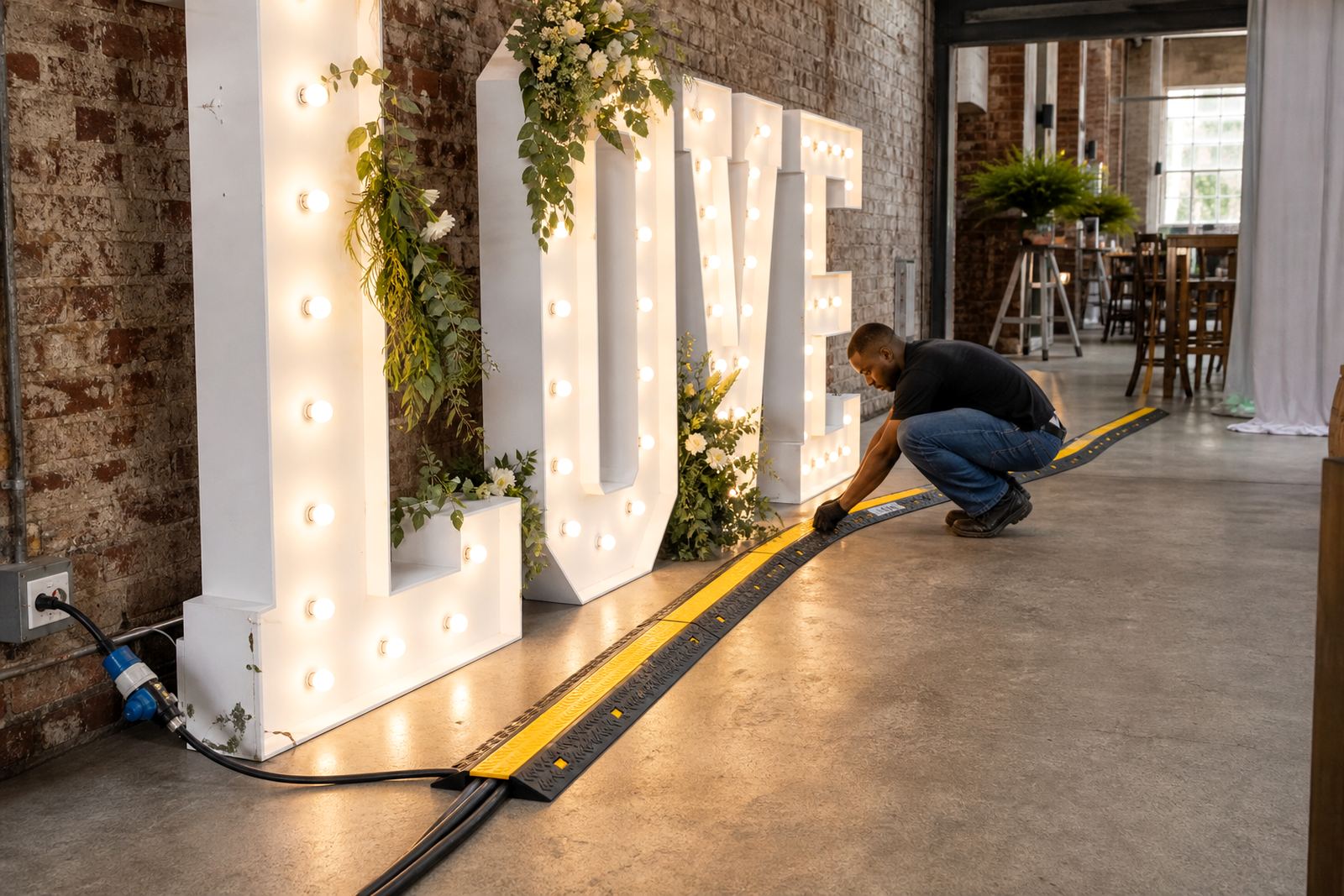
Where a cable has to cross a narrow section, it needs a proper protective route and a fixed line. Loose tape lifted by shoes is not enough. The same applies where a marquee letter sits near a step or a pillar. Safe cable routing is about preventing movement, not just hiding the wire.
- Do not cross a main entrance unless there is no other route.
- Keep cable bends gentle, not tight and strained.
- Protect any crossing point with suitable floor cover.
- Leave access clear for venue staff and emergency movement.
Seating areas need quiet cable discipline
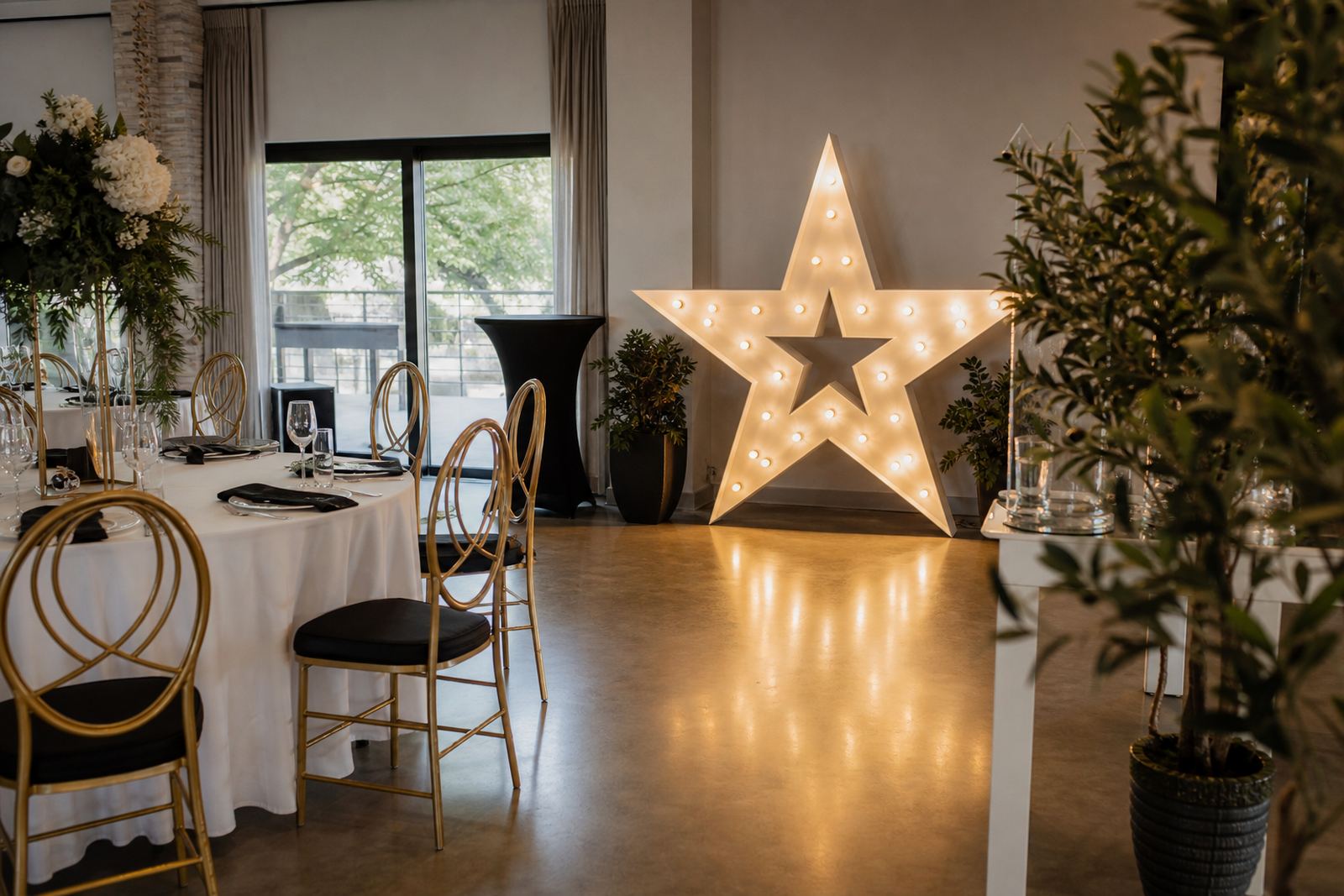
Seating zones around weddings and launches often look calm, but cables can still cause trouble under chairs, around tables and beside service aisles. A cable that disappears under a tablecloth may seem neat, yet it can still pull when a chair shifts. For photo area layouts and table-adjacent lightboxes, the cable should run along the outer edge, not through the main seating path.
Marquee letters and illuminated signs near a head table or cake display also need careful spacing. The display should read clearly from the room without placing the cable where feet, napkins or decor will catch it. Megan Shezi on the setup side will often plan the line from the plug point outward, so the display sits where the route stays clean instead of forcing a messy path at the last minute.
- Run cables around the outside edge of seating zones.
- Keep them away from chair legs and service aisles.
- Do not trap cable ends under decor pieces.
- Leave a little slack at the unit, but not loose loops.
Outdoor placement needs extra caution
Outdoor placement changes the cable plan completely. Garden lawns, paved courtyards and rooftop areas all ask for firmer fixing and a better view of the route from the start. Uneven ground can hide a cable dip, and evening events add low light to the problem. That is why outdoor runs need to be planned with the same attention as the display itself.
For events in Johannesburg, Sandton or further afield, outdoor cabling should be kept away from standing water, loose gravel and foot traffic from service access points. If a display has to sit beyond a doorway, the cable should exit cleanly, cross the threshold safely and then stay controlled all the way to the final position. The tidy look matters, but the secure route matters more.
- Keep outdoor cables above damp ground where possible.
- Avoid loose gravel, puddles and traffic lanes.
- Check threshold points for trip edges.
- Use a stable route that suits the surface type.
What the installation crew checks on site
A proper on-site cable check is practical and unhurried. The crew looks at the wall socket, the display position, the walking line and the finish around the base of the unit. If the route needs tightening, the fix happens before the display is left in place. That includes multi-item installs where several lightboxes or letters share the same event space and each cable must stay separate, clear and easy to trace.
Ruan Moagi on delivery and installation, together with Megan on setup, will usually check that the line is not under tension and that the route still works after the final placement. The cable should not change shape when guests move around it, and it should not rely on decor to hold it steady. Neat cable work needs to match the standard of the finished setup.
- Check the socket, cable route and final unit position together.
- Make sure each display has its own clear line.
- Test for strain at bends and joins.
- Review the route after the room is fully set.
A short checklist before guests enter
Before doors open, the final sweep should be done from a guest point of view. Look at the entrance, the dance area, the seating line and the photo spot, then see whether any cable still reads as a trip risk or a visual distraction. If the answer is yes, the route needs a small correction. A neat cable path should look calm from a few metres away and stay steady under normal movement.
For venue teams and event planners, this final check is worth doing even on a tight schedule. Safe cabling protects people, protects the display and keeps the room looking organised. It is one of those jobs that only stands out when it has been ignored, which is why it deserves proper attention every time.
- Walk the route slowly from the entrance inward.
- Check corners, threshold points and loose edges.
- Look for any cable crossing a seating or dance lane.
- Make sure the display still sits square and stable.